The Cape Town Outbreak
World War ZThe Cape Town Outbreak is the decisive early outbreak through which the plague’s reality first becomes visible beyond rumor and encrypted reports. It begins in the impoverished township of Khayelitsha, where an ordinary walk home after a restaurant shift turns into a shooting, a hospital admission, and an encounter with victims whose bodies and behavior defy the diagnosis of rabies. The outbreak then travels through stories, broadcasts, intelligence assessments, and commercial claims, becoming at once a medical crisis, a political embarrassment, and a market opportunity.
Khayelitsha and the First Encounter
The outbreak enters the narrative through a survivor from Khayelitsha, one of the four principal townships outside Cape Town. Born around the time of postapartheid South Africa, he grew up amid grinding poverty after his father moved the family from their tribal homeland in expectation of immediate housing and employment. By the time of the outbreak, he was working night shifts waiting tables at T.G.I. Friday’s at Victoria Wharf. At about five in the morning, walking home from a successful shift and still buoyed by news of the Springboks defeating the All Blacks, he sensed gunfire before consciously hearing it.
The response is initially shaped by the township’s normal conditions. His slogan, “One man, one gun,” expresses a world where gunfire is familiar and survival depends on instinctive movement rather than institutional protection. He crouches, triangulates the shots, and searches for cover, but the shanties offer almost none: their wood, corrugated tin, and plastic walls are vulnerable to both fire and bullets. He runs toward a light between the structures, crashes through a shack, reaches open ground, and is struck in the shoulder before losing consciousness.
Hospital Confusion and the Failed Diagnosis
At Groote Schuur Hospital, the injured man wakes in a recovery ward whose cleanliness makes it seem almost unreal. Morphine blurs his judgment, and he experiences the medication as pleasurable enough to detach him from the seriousness of his wound. He learns that police shot him in the shoulder, but the revelation barely registers. The more consequential clue is beside him: another patient is hurriedly wheeled away when his breathing stops, while hospital staff discuss an outbreak of “rabies.”
The diagnosis is immediately unstable. In the hallway, medical workers argue that rabies cannot explain what is happening to the patients. One voice insists that rabies does not do that to people; another responds that fifteen cases are already downstairs and that many more may still be outside. The survivor hears the exchange while intoxicated and cannot identify who is speaking, but the memory persists. The scene’s importance lies in the gap between official language and observed reality: “African rabies” is a provisional label that conceals a process involving death and reanimation, while the hospital is already overwhelmed before the wider public understands the danger.
The outbreak is also reconstructed indirectly. At a wedding reception, a professor from Hebrew University recounts stories heard from a cousin connected with work in South Africa. The stories invoke golems, but unlike the obedient figures of legend, these supposed golems are linked to reanimated human bodies that become violent. The professor had been recovering at Groote Schuur after a shark-bite injury sustained during an “Adrenaline Tour,” and had not personally witnessed the cases; his account was assembled from what hospital staff told him. This chain of hearsay nevertheless supplies intelligence that, combined with decrypted Chinese messages, is passed to higher authorities.
From Local Crisis to Global Perception
The Cape Town outbreak is first encountered internationally through mediated fragments. Scrambled Chinese messages, although perfectly decoded at the level of their characters, describe a viral outbreak that kills its victim and then reanimates the corpse as a homicidal berserker. The recipient initially assumes that the references to dead bodies must conceal a weapons system or secret war plan, especially because the messages cease when the Taiwan Strait crisis begins. The outbreak therefore exists first as something disbelieved, mistranslated, or strategically reinterpreted.
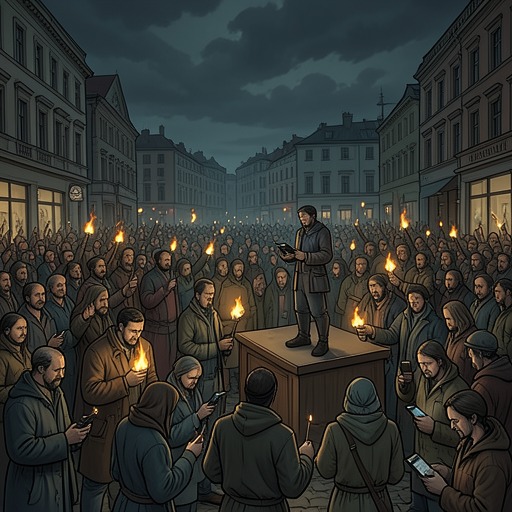
Public perception changes through broadcast media. A report on the Cape Town outbreak contains only ten minutes of factual coverage, followed by an hour of speculation about what would happen if the virus reached the United States. The imbalance between evidence and conjecture becomes one of the outbreak’s defining mechanisms. The event is no longer merely a medical emergency; it becomes a spectacle through which fear can be circulated, amplified, and monetized.
The same pattern appears in Kuwait City, where Saladin Kader watches an Al Jazeera broadcast from behind the counter of a crowded Starbucks. Customers respond with jeers and catcalls, treating an Israeli warning about “voluntary quarantine” and African rabies as a Zionist lie. The political identity of the messenger makes the information easier to reject, while the offer of asylum to foreign-born Jews, people with Israeli-born parents, and Palestinians with historic ties to Israel is overlooked amid the uproar. The outbreak thus encounters denial not because no warning exists, but because national hostility, inherited grievance, and disbelief determine which parts of the warning can be heard.
Exploitation, Panic, and Social Breakdown
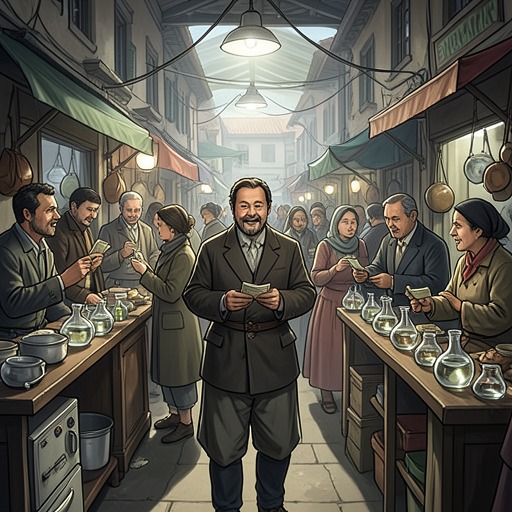
The outbreak becomes a commercial opportunity almost as soon as it becomes news. A businessman later recalls hearing the first report and immediately recognizing a market for a supposed rabies vaccine. His proposal depends on fear rather than efficacy: because rabies has no cure, a vaccine can be sold as preventive protection to people who merely fear infection. Contacts in the biomedical industry, on Capitol Hill, and along Pennsylvania Avenue make it possible to produce a prototype and submit a proposal within weeks.
This fraudulent promise briefly appears to stabilize the economy. The manufactured vaccine, Phalanx, protects consumers from fear rather than from the actual plague. Its sales help revive the biomedical sector, lift the stock market, create the appearance of recovery, restore consumer confidence, and stimulate a temporary economic rebound. The seller consequently claims that Phalanx ended the recession, even though its success rests on the public’s misunderstanding of the outbreak.
When the press finally reports that no wonder drug exists, the commercial structure collapses. The vaccine promoter blames the journalist who exposed the truth and calls the resulting financial and social spiral the cause of the Great Panic. He refuses personal responsibility, arguing that customers chose to buy and that he never directly harmed anyone. The outbreak exposes the violence hidden inside this logic: a population already facing an incomprehensible biological threat is encouraged to purchase reassurance, and the destruction that follows is treated as the consumer’s fault rather than the seller’s consequence.
The panic produces physical flight on a massive scale. Roads fill with sedans, trucks, buses, recreational vehicles, tractors, a cement mixer, and even a flatbed carrying a billboard for a gentlemen’s club. People ride on roofs and between luggage racks, while abandoned suitcases, boxes, furniture, and a smashed grand piano mark the road behind them. Some travelers walk beside the traffic; others barter by displaying goods or exposing themselves. Congestion turns violent as drivers flash headlights, ram one another, and fight beside immobilized vehicles, while injured or dying people are passed by those still moving in the same direction.
At the coast, flight becomes a deadly scramble for ships. Hundreds attempt to swim from a shipbreaking yard toward vessels offshore as inland fires backlight the human mass. Small boats shuttle refugees for payment, demanding everything the passengers possess. The Delmas, already moving at flank speed, drags the stern of the Tulip into deep water; the Tulip rolls over and sinks within seconds with at least a thousand people aboard. The outbreak’s social order has not simply collapsed into fear: money remains valuable, transport remains privately controlled, and escape is rationed according to access, speed, and possession.
The Wider Ecological and Human Consequences
The outbreak’s consequences extend beyond the first human cases. During the resulting war, refugees and military forces move through landscapes in which animals respond to the dead, the living, and the collapsing human infrastructure. On a narrow Himalayan road, hundreds of monkeys flee among stalled vehicles and over people’s heads as the living dead fill the surrounding streets. They scramble up telephone poles, and their instinctive recognition of danger contrasts with humans still struggling to carry suitcases, boxes, and even a desktop computer monitor. A bus overturns in the crush, a woman clings to an indistinct bundle, and the surrounding crowd continues past without stopping. The memory leaves the witness unable to distinguish the refugees from the monkeys in recurring dreams.
Military dogs become both diagnostic instruments and combat partners. Early in the war, dogs are used for triage, sniffing for infection as people pass cages, following an Israeli method adopted by many countries. The animals’ terror response is dangerous: some attack civilians, other dogs, or their handlers, and handlers lose hands, arms, and throats. Yet the same involuntary reaction is treated as a lifesaving biological alarm. Later programs attempt to integrate that instinct into formal training rather than merely exploit it, producing escort dogs capable of protecting long-range missions from feral packs.
The altered ecology also produces new predators. Feral dog packs threaten missions in low-infestation zones, while F-lions—large, catlike predators associated with mountain lions, saber-toothed ancestry, or exceptionally hardened domestic cats—become an even more frightening danger. Their growth is linked to an environment in which rats function as a new food base, living among corpses and multiplying in trees and ruins. The outbreak therefore reorganizes relations among humans, domestic animals, scavengers, and predators; infection is not the only force transforming the world.
Marine life suffers an equally irreversible consequence. Several million starving refugees and navies converted into fishing fleets drive the destruction of whales. Helicopter-dropped torpedoes stun the animals, after which factory ships kill them while underwater detonations carry for miles through the sea. The California gray, once recovering from near-extinction and sufficiently accustomed to humans to permit close encounters, disappears along with blue, finback, humpback, and right whales. A few belugas, narwhals, and orca pods may survive, but the loss of the California gray is treated as unrecoverable: even successful genetic preservation could not recreate the living population and its particular history.
Historical Significance
The Cape Town Outbreak is significant because it marks the passage from isolated warning to systemic catastrophe. Its first witnesses encounter gunfire, hospital deaths, contradictory diagnoses, and rumors of reanimation before they possess a vocabulary for the event. Governments and intelligence services receive fragments but reinterpret them through strategic assumptions; the public receives warnings but filters them through political hatred; markets convert fear into a product; and the eventual panic turns roads, ports, hospitals, and ecosystems into zones of competition.
The event also establishes the narrative’s recurring contrast between human denial and nonhuman perception. Monkeys recognize the danger before crowds do, dogs detect infection before institutions can explain it, feral animals exploit abandoned spaces, and whales become casualties of the emergency economy. The outbreak is therefore not only the beginning of the Zombie War’s human crisis. It is the moment when a local failure of recognition becomes a planetary transformation, and when the cost of mistaking fear for information is paid by people, animals, and places far beyond Cape Town.