The Chinese submarine exodus
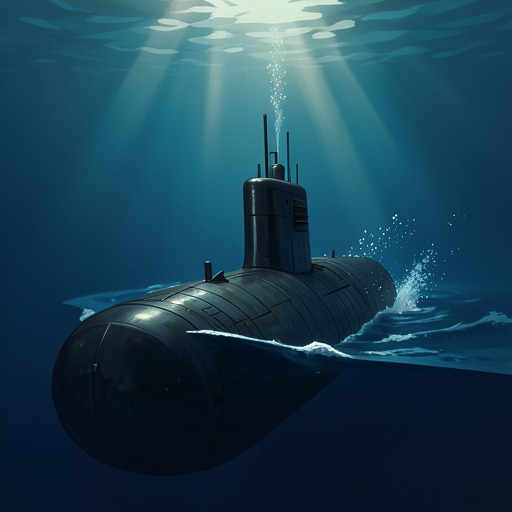
World War ZThe Chinese submarine exodus is the covert departure of Admiral Zheng He, one of China’s most advanced ballistic-missile submarines, from a nation being overwhelmed by the living dead. Its decisive significance lies in the reversal at its center: Captain Chen and his crew do not abandon China because they have ceased to care about it, but because they believe that preserving any fragment of its civilization requires escaping the state that is destroying itself.
A Nation Drowning in Numbers
Captain Chen’s decision begins with a grim assessment of the military strategy being used against the outbreak. China’s generals continue to rely on mass mobilization, treating the country’s enormous population as a “bottomless well” of manpower. Yet every soldier killed becomes another active zombie, turning the supposed advantage of numerical superiority into an expanding source of enemy strength. The country is therefore not merely losing battles; it is allowing its own population to be converted into the force that will outnumber it.
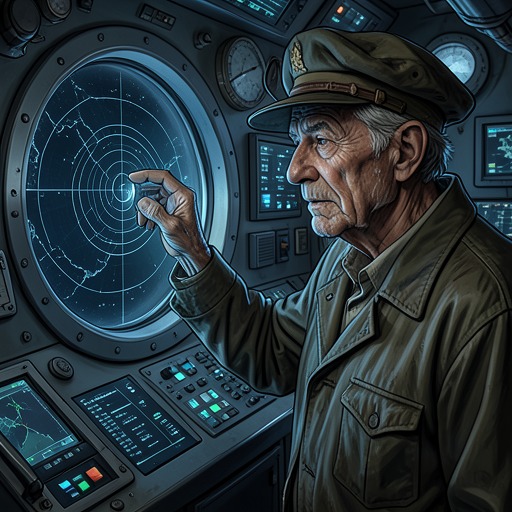
The speaker recalls that Captain Chen understood the ultimate consequence of this strategy. If there had been any realistic hope of winning by conventional means, Chen would have taken up a rifle and attacked the living dead. Instead, he became convinced that the continuation of the war might lead to the disappearance of the Chinese people and, eventually, of humanity itself. His proposed escape consequently emerges not as a private flight from danger but as what he regarded as the only remaining chance to preserve something of civilization.
The Submarine as Lifeboat and National Treasure
The vessel chosen for the escape was Admiral Zheng He, one of only three ballistic-missile submarines in China’s fleet and the newest of the Type 94 class. Its construction embodied several layers of national history and technological power: Russian assistance, black-market technology, the products of espionage directed against the United States, and nearly five thousand years of continuous Chinese history. It was described as the most expensive, advanced, and powerful machine China had ever built.
That status made the plan morally and politically almost inconceivable. The crew would not simply be deserting in the middle of a war; they would be stealing one of the motherland’s most valuable national assets. Admiral Zheng He becomes a literal lifeboat from a sinking country, but the image carries an uncomfortable implication: the state’s most sophisticated instrument of national defense can no longer save the nation from within its own system. Only Captain Chen’s force of personality and intense patriotism persuaded the speaker that theft and escape were preferable to obedient destruction.
Three Months of Secrecy
Preparation took three months under conditions of near-constant siege at Qingdao, the submarine’s home port. Army units were repeatedly called in to maintain order, and each successive force was less trained, less equipped, younger, or older than the one before it. Surface-ship captains were required to surrender crew members considered expendable so that the shore defenses could be reinforced, while the base perimeter came under attack almost every day.
Against this background, the crew had to provision Admiral Zheng He while making the departure appear to be an ordinary, routinely scheduled patrol. Emergency supplies were smuggled aboard, along with family members whose presence could not be officially acknowledged. People were brought onto the submarine at night in uniform; children and elderly relatives were concealed inside supply crates. The operation thus depended on the same military discipline that bound the crew to the failing state, redirecting obedience toward a secret mission outside that state’s control.
The secrecy was absolute. Every crew member was ordered to remain silent, because discovery by the Ministry of State Security would have created a danger potentially worse than the zombies themselves. Most of the families did not understand what was happening or what the submarine intended to do. Their concealment protected the mission, but it also meant that the people being rescued could not fully consent to the perilous journey.
Departure from Qingdao
Captain Chen wanted to wait for additional stragglers, especially family members who might be only hours or days away from reaching the port. He understood that leaving them behind could mean abandoning people who might still have been saved. At the same time, delay could expose the entire operation and doom everyone already aboard. He therefore gave the order to cast off despite his reluctance.
The commander attempted to conceal his feelings from the crew, but the speaker saw them in Chen’s eyes as the fires of Qingdao receded. The image makes departure both a tactical success and an emotional defeat. The submarine escapes the immediate collapse, yet its movement away from the burning port is also a visible separation from the homeland Chen is trying to preserve.
To maintain the appearance of a normal patrol, Admiral Zheng He first proceeded toward its assigned patrol sector. Only after reaching that point would the deception end, and even then the ultimate destination was unknown. The exodus therefore begins with a double uncertainty: the crew knows why it must flee, but not where survival will lead them.
Meaning and Consequences
The submarine exodus belongs to the wider pattern of institutional failure exposed by the Zombie War. Elsewhere, authorities hide the true nature of the crisis behind the placebo of Phalanx, imprison people without formal charges, impose harsh emergency punishments, and confine refugees in resettlement centers. In each case, official systems preserve order through concealment, coercion, or exclusion rather than through a genuine solution. The escape of Admiral Zheng He is different only in its objective: it also breaks the law, but it does so to preserve human and cultural continuity rather than to maintain a collapsing political structure.
Its tension comes from the fact that patriotism has not disappeared; it has become incompatible with obedience. Captain Chen’s loyalty to China compels him to reject the orders of the Chinese military leadership. The submarine is both a stolen weapon and a vessel carrying families, a product of national power and a refuge from national catastrophe. That contradiction gives the event its lasting force: survival is achieved not by saving the existing order, but by carrying a fragment of its people and history beyond the reach of its failure.