The Great Panic
World War ZThe Great Panic marks the decisive moment when the outbreak ceased to be a crisis that authorities could conceal or manage locally and became a global collapse of confidence, movement, and public order. Its power came not from a single attack but from interacting failures: governments suppressed information, commercial interests monetized fear, medical systems became possible transmission routes, refugees crossed borders in unprecedented numbers, and frightened civilians acted on incomplete instructions. The panic therefore became both a consequence of the outbreak and an accelerator of it, magnifying the damage caused by the living dead.
Causes and Hidden Beginnings
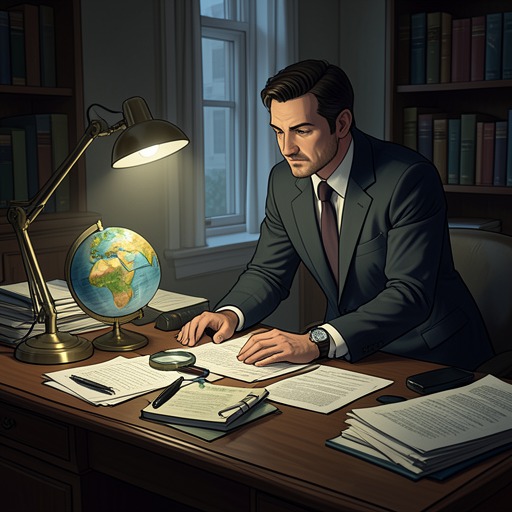
The panic developed in an atmosphere of denial and fragmented knowledge. In Kashi, Nury Televaldi recalls that the government quickly hushed up an outbreak, even as rumors circulated widely. The suppression did not eliminate fear; it deprived people of reliable information and drove those with something to lose toward clandestine escape routes. Televaldi describes professionals, farmers, and low-level officials joining the undocumented population in seeking passage abroad, regardless of the destination. What had once been a narrow smuggling business became overwhelmed by people desperate to leave, turning population movement into one of the crisis’s first international mechanisms.
The same concealment operated through medical commerce. Early investigators recognized that an infection beginning in the heart could reach the brain within seconds, but an infected liver, kidney, or graft of skin might carry only a trace of the virus and transmit it days or weeks after transplantation. In the early stages, surgeons and organ handlers might not know what they were dealing with. The danger was intensified by the Chinese organ trade, including organs taken from executed political prisoners and, according to the testimony, sometimes removed from living victims to preserve their freshness. This meant that the infection could travel through hospitals and international markets without the visible signature of a bite or a reanimated donor. The panic was thus fed by a modern system designed to move bodies, organs, information, and commodities rapidly across borders.
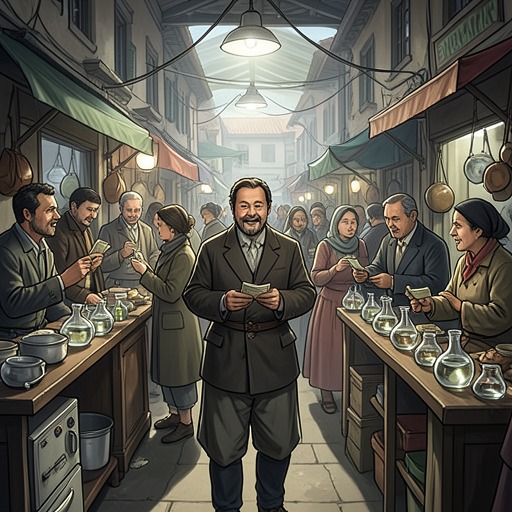
Fear itself also became a commodity. Breckinridge Scott explains that his business philosophy rested on the conviction that fear was the most valuable product in the universe. After the Cape Town outbreak was reported under the misleading name African rabies, he and his associates devised Phalanx, presenting it as a preventive rabies vaccine. The pitch succeeded because a vaccine could be sold to people who were merely afraid of future infection, whereas a cure would interest only those who believed themselves already infected. Industry contacts and political connections produced a prototype and a proposal with extraordinary speed. The commercial response converted uncertainty into demand before the nature of the disease had been established.
Expansion Through Rumor and Commerce
Phalanx briefly created the appearance of protection. Scott claims that sales helped revive the biomedical sector, stimulate the stock market, restore consumer confidence, and end the recession. That apparent recovery rested on a false premise: the product protected people from a disease that was not rabies. When the press finally exposed the absence of a wonder drug, the confidence supporting the artificial recovery collapsed. Scott refuses responsibility and blames the original misclassification, the officials who authorized the product, the journalist who revealed the truth, and consumers who bought it. His defense exposes the moral structure of the panic: responsibility was repeatedly displaced among institutions, experts, corporations, media outlets, and individuals until the consequences belonged to everyone and no one.
The resulting mass behavior was not merely irrational. It was shaped by the information available. Todd Wainio remembers the period before the Battle of Yonkers as a time when people boarded up houses, stole food, acquired guns, and shot at anything that moved. He believes runaway fires, traffic accidents, armed civilians, and the general disorder of the Great Panic initially killed more people than the zombies. The outbreak therefore produced a secondary disaster in which fear transformed ordinary infrastructure and household decisions into instruments of mass injury.
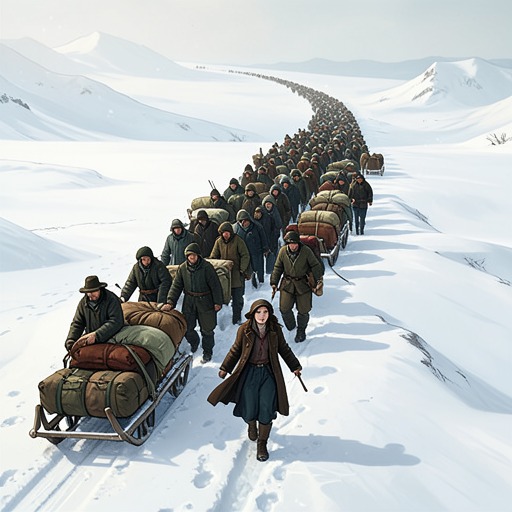
The Great Panic also reorganized migration on a scale that overwhelmed states. In Cuba, five million refugees from the United States, nearly half the indigenous population, arrived by large ships, private craft, and homemade rafts. They were placed under the Quarantine Resettlement Program and initially assigned twelve- to fourteen-hour days as agricultural laborers on former state-run sugar plantations. The refugee population was not confined only by the biological threat; it was absorbed into an emergency labor and security system whose protections were weak and whose guards could use violence while insisting that survival itself was a sufficient concession. Refugee movement became both evidence of the panic and a force that transformed the societies receiving it.
Government Response and Public Disorientation
Authorities attempted to restore confidence through spectacle as well as defense. Wainio understands why leaders wanted a single, visible stand at Yonkers: a major battle could demonstrate that the government remained in control and calm a population in terror. The location possessed genuine tactical advantages. Yonkers lay in a valley near the Hudson River, while the Saw Mill River Parkway cut through the defensive line and refugees streaming along the freeway drew the dead toward the position. Yet the battle’s political purpose exceeded its military preparation. A natural choke point became a stage on which authority attempted to prove itself, and the failure of that performance deepened public distrust.
Afterward, official guidance remained dangerously thin. Wainio recalls that citizens were repeatedly told only to go north because the living dead would freeze in extreme cold. The public received no adequate instructions about where to go, what to bring, or how to survive the journey. In his neighborhood, a small attack on a homeless man became the immediate reason his father decided to leave. At home, his father learned to load a new rifle while his mother nailed up the windows, as television coverage alternated between live images, recycled footage from Yonkers, and contradictory experts. The repeated command to go north offered a slogan in place of a plan, converting national policy into an uncoordinated refugee rush.
Military operations were likewise distorted by incomplete information. In a mountainous deployment, troops questioned villagers about missing family members and alleged attacks by rabid animals or people, then stripped civilians so medics could search their bodies for an unspecified sign. Soldiers did not understand the mission, and even the discovery of a weapons cache—seventy-four rifles, older forty-sevens, and abundant ammunition—did not produce a transparent response. The weapons were left behind after a private meeting between a civilian known as Rat Face and village elders, whose frightened reaction suggested that the operation involved political or social pressures beyond the soldiers’ knowledge. The panic weakened the chain between orders, explanation, and action, leaving armed forces to enforce policies they could not interpret.
Psychological and Systemic Consequences
The panic continued after defensive lines stabilized. Roy Elliot describes Asymptomatic Demise Syndrome, also called Apocalyptic Despair Syndrome, as a condition that killed roughly a hundred people a day during the early stalemate months, alongside hunger, disease, interpersonal violence, and the living dead. The victims did not necessarily commit suicide or suffer serious wounds. Some were healthy; others had only minor, treatable ailments. They went to sleep and did not awaken, having lost the will to endure another day. Elliot recognizes the condition as helplessness made lethal, an extreme wartime form of surrender that could occur when people believed tomorrow could bring only further suffering.
Elliot’s own response illustrates the struggle over morale. Once celebrated as a gifted film director, he found himself reduced to an F-6 while the world collapsed around him. Learning that the government was trying to conceal the syndrome triggered the realization that he could fight this enemy through his professional skills. The crisis therefore produced not only despair but also new forms of civilian mobilization, as people attempted to counter psychological collapse by making the threat visible and giving suffering a public shape.
The panic exposed the vulnerability of systems that had seemed too large or sophisticated to fail. Humanity depended on more than three thousand satellites for communication, navigation, surveillance, and weather forecasting. Their loss would have severed links as fundamental to modern life as roads had been to ancient societies or railways to industrial civilization. The survival strategy was consequently selective: no one could save every satellite, but a few dozen essential systems had to remain in orbit for the war effort. The crisis revealed that technological interdependence could preserve civilization only if its most fragile connections were identified and defended in time.
The same pattern appeared in industrial logistics. The global economy depended on raw materials, manufacturing, and transportation, but the living dead controlled most of the world’s landmass. American production was forced to depend on the resources of the western states, while the merchant fleet was crowded with refugees and fuel shortages kept much of the navy in port. The panic was therefore not simply a burst of public emotion; it was a material contraction in which displaced populations, blocked routes, scarce fuel, and interrupted production undermined the capacity to resist.
Political Reckoning and Historical Significance
The Great Panic also prepared the conditions for rebellion and political transformation. In China, the collapse of confidence was sharpened by official lies surrounding the Three Gorges Dam. The leadership described its failure as an unforeseen tragedy and an unavoidable accident, despite the dam’s construction on an active fault line, previous earthquakes associated with reservoir weight, and cracks detected before completion. The abandonment of seismic warning stations and emergency spillway controls made the disaster appear not merely natural but politically produced. Later claims that heroic Chinese military forces had died defending the dam were contradicted by direct observation, making the official narrative an additional provocation.
The consequences of this distrust reached beyond China. Two weeks after the revolution began, the International Space Station received the first and only signal from the Chinese space station, Yang Liwei. The communication was a reminder that the planetary emergency had fractured even the links joining humanity beyond Earth. The Great Panic repeatedly turns technological connection into a source of danger and then into a resource that survivors must preserve: organs can carry infection, media can amplify fear, ships can spread displacement, satellites can sustain coordination, and truthful signals can become politically explosive.
Yet the event did not produce one uniform political outcome. In Cuba, the arrival of refugees first strengthened coercive containment, but the later decision of world governments to attack transformed the island into the Arsenal of Victory: a breadbasket, manufacturing center, training ground, air hub, and dry dock for thousands of ships. Refugees supplied skills and practical experience, while Cubans and Nortecubanos helped reclaim one another’s societies. The emergency economy created an overnight middle class and encouraged freedoms that had previously developed only cautiously. The same disaster that produced camps, forced labor, and abuse also rearranged economic power and made democratic aspirations materially consequential.
The Great Panic is therefore best understood as a chain reaction rather than a single episode of mass fear. Its decisive failures were failures of interpretation and trust: outbreaks were renamed, evidence was suppressed, commercial promises outran medical knowledge, official instructions became slogans, and catastrophic infrastructure failures were recast as accidents. Against those failures, survival depended on more exact knowledge, functioning logistics, disciplined institutions, and the recovery of a collective will to act. The event’s historical significance lies in showing that the living dead did not conquer a stable world; they entered a world already made vulnerable by its own interconnected systems and by the human tendency to sell, conceal, or politically manage fear.