The Xilinhot strike
World War ZThe Xilinhot strike is the rebellion’s final and most morally consequential military act in China: a single nuclear missile destroys the Politburo’s hardened bunker at Xilinhot, ends the internal war, and makes renewed resistance to the living dead possible. Its decisive irony is that China can be saved only by attacking the part of China that still claims authority over it.
Political and Military Background
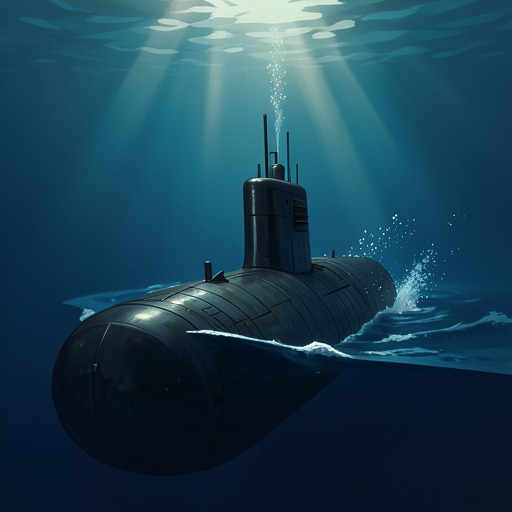
The strike occurs after the submarine crew has survived the destruction of the Three Gorges Dam and the civil war that followed. The submarine that finds them belongs to the loyalist forces, while Commander Chen Zhi Xiao has sided with the rebels; his mission is to locate the crew and escort them home. The reunion beneath the Arctic ice briefly appears to mark the end of the wider conflict, as the two crews meet under the twilight and imagine reclaiming the country and driving out the living dead.
That hope collapses when the crew learns that the Politburo remains in its leadership bunker at Xilinhot. The old leaders still control at least half of China’s dwindling ground forces and are expected to refuse surrender. Their continued command threatens to prolong the civil war until neither side has enough soldiers, ammunition, or time left to fight the real enemy. The issue is therefore not simply who governs China, but whether China will retain any organized human military at all.
The Last Nuclear Asset
The rebellion has almost no strategic options left. China’s land-based missile silos have been overrun, its air force is grounded, and its other two missile boats were caught in port while the living dead swarmed through their hatches. Commander Chen informs the crew that their submarine carries the only nuclear asset remaining in the rebellion’s arsenal. Every delay means more deaths and more ammunition diverted from the campaign against the undead.
The weapon is a single massive multimegaton warhead, originally designed to penetrate the hardened surface of the NORAD facility in Cheyenne Mountain, Colorado. The Politburo bunker at Xilinhot was built to imitate that installation in almost every important respect, making the warhead suitable for the attack. Its original purpose and its new target create a grim symmetry: a weapon designed to destroy an external command fortress is turned inward against China’s own political sanctuary.
The Decision and Strike
The captain accepts the burden of authorizing the launch. In the moment before firing, he declares that the order and its consequences belong to him. The statement places responsibility at the center of the action rather than allowing the crew to hide behind procedure, collective necessity, or superior orders. The strike is presented not as an impersonal technical operation but as a conscious act of national self-destruction undertaken in the name of national survival.
The missile hits Xilinhot directly. As the submarine withdraws beneath the surface, the crew receives word that the loyalist forces have surrendered and reunited with the rebels. The civil war ends because the bunker that sustained the Politburo’s authority has been eliminated, and the remaining military factions can finally turn their forces toward the living dead.
Consequences and Reunification
The immediate consequence is the reunification of China’s divided military. The loyalists and rebels stop spending soldiers and ammunition against one another and join the larger war. The strike therefore functions as both an execution of a regime and a forced political settlement: it removes the leadership that would not surrender, then creates the conditions under which the opposing armies can become one force.
The crew later hears that China has begun instituting its own version of the Redeker Plan. This news places the strike within a broader national strategy of ruthless wartime survival, in which preservation of the state and concentration of military power take precedence over ordinary moral limits. The attack on Xilinhot is thus not an isolated burst of violence; it belongs to a pattern in which leaders claim that extreme measures are necessary to keep humanity organized against extinction.
Moral and Narrative Significance
The Xilinhot strike concentrates the book’s recurring conflict between obedience, conscience, and responsibility. Elsewhere, soldiers are made accomplices in executions and are taught to defend violence as an order imposed from above. The logic of the strike is more complicated: the captain does not deny agency, but explicitly claims it. The homeland is attacked not because it has become irrelevant, but because allowing its divided leadership to survive would destroy the possibility of saving it.
The action also reverses the ordinary meaning of victory. There is no clean homecoming after the crews reunite beneath the Arctic ice, because defeating the external enemy requires first destroying an internal authority. The strike ends one war only by accepting the permanent cost of having attacked one’s own country. Its historical significance lies in that contradiction: China’s military is made whole through an act that leaves the nation morally wounded, yet still capable of resisting the living dead.