The Zombie War
World War ZThe Zombie War was the defining conflict of the modern world: a planetary catastrophe in which the living dead seized most of the world’s landmass, human institutions nearly collapsed, and victory required societies to rebuild warfare, logistics, politics, and collective memory at once. The event is known by many names, including The Crisis, The Dark Years, The Walking Plague, World War Z, and Z War One, but the name The Zombie War emphasizes both its unprecedented scale and the emotional burden carried by those who survived it.
Names, Scale, and Historical Recovery
The conflict acquired competing names because it was experienced simultaneously as a medical crisis, a social collapse, an invasion, and a world war. The term World War Z suggests a possible sequel that the narrator rejects, while “zombie” remains the most globally recognizable word for the creatures that almost ended human civilization. The war’s true subject is therefore not only the enemy but the memories and emotions attached to the years of destruction.
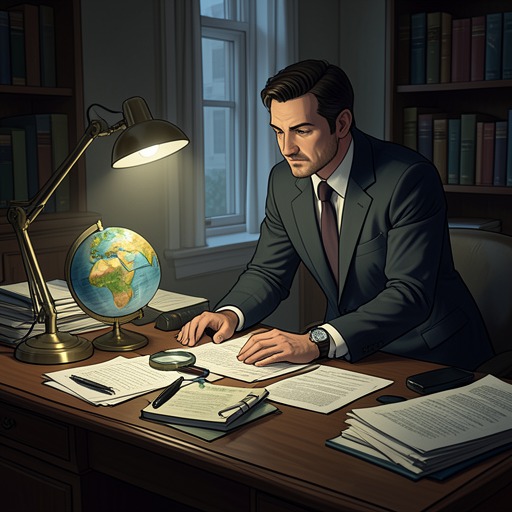
The surviving historical record is deliberately divided between official data and personal testimony. The narrator originally worked for the United Nations Postwar Commission and supplied material for its report, but almost half of that work was removed because it was considered too intimate and too full of opinions and feelings. The official report preserved cold facts, figures, and an objective after-action structure; the book restores the human factor that such a record excludes. The narrator presents the testimonies as a defense against historical detachment, arguing that future generations may care less about casualty statistics than about people whose lives resembled their own.
The book is written only twelve years after VA Day in the continental United States and barely a decade after Victory in China Day, with some people treating VC Day as the conflict’s official endpoint. That short interval gives the war an unstable historical status: peace has lasted about as long as the war, but many survivors may die before their societies fully recover. Malnutrition, pollution, the return of previously eradicated diseases, and shortened life expectancy threaten to erase the memories of those who fought and suffered. The record is consequently an act of urgency, produced before time can become another enemy.
Causes and Global Circulation
The war’s origins are inseparable from global systems that moved bodies, commodities, technology, and disease across borders. In Kashi, Nury Televaldi describes how the outbreak transformed smuggling. Before the crisis, routes through Thailand, Myanmar, or the ex-Soviet republics were expensive and unattractive; once rumors spread, desperate professionals, farmers, officials, and undocumented migrants paid whatever they could to escape. The outbreak thus converted existing illicit networks into channels for mass flight, showing how fear and population movement could outrun official containment.
The evidence also points to international organ trafficking as a possible route of transmission. In the early stages, when nobody understood the disease, infected organs may have been removed from newly infected or even living victims, packed in ice, and shipped abroad. China’s prewar position as the world’s largest exporter of human organs created a global market for potentially infected corneas, pituitary glands, kidneys, blood, eggs, and sperm. This possibility expands the war’s origin beyond bites and illegal immigration: hospitals, medical supply chains, and the commerce of human tissue could also have carried the infection.
Economic fear intensified the crisis. Breckinridge Scott recalls the prewar maxim that fear was the most valuable commodity in the universe and built his business around the principle “Fear sells.” When reports of African rabies and the Cape Town outbreak reached the media, he saw an opportunity to market a preventive vaccine. The commercial pitch exploited a crucial difference between treatment and prevention: people might buy a cure only when they believed themselves infected, but they would continue buying a vaccine as long as they feared the disease was still somewhere beyond their door.
The war also exposed the dependence of modern life on global supply chains. A bottle of root beer required ingredients from multiple countries, and a desktop computer or nuclear-powered aircraft carrier depended on far more elaborate networks of raw materials, factories, transport, fuel, and maintenance. During the war, most of the world’s landmass belonged to the living dead, American production relied largely on what could be harvested in the western states, merchant ships were crowded with refugees, and fuel shortages immobilized much of the navy. The crisis therefore attacked not only populations but the logistical architecture that made industrial civilization possible.
Course and Military Transformation
The military situation was defined by an enemy that did not obey the ordinary conditions of war. General Travis D’Ambrosia estimates that roughly two hundred million zombies remained on the continental United States alone. Even after human forces understood the enemy’s origin, physiology, strengths, weaknesses, motives, and mentality, victory appeared doubtful. Traditional military theory had been built around forces that had to be bred, fed, and led; the living dead required none of these things. They did not need recruitment, supply lines, or commanders, forcing human armies to write a new book of war from the beginning.
The crisis produced chaotic mass movements as well as formal campaigns. On a Himalayan road, Sardar Khan remembers thousands of refugees trapped among abandoned vehicles, people still struggling to save suitcases, boxes, and even a desktop computer. Monkeys climbed through the traffic and escaped up telephone poles, while a bus tipped over without moving because its doors were blocked by the press of bodies. A woman fell halfway through a window while clutching an uncertain bundle, and the crowd continued past without stopping. The scene collapses the distinction between civilized travelers and fleeing animals, making panic itself one of the war’s most revealing forces.
Human forces eventually adapted through discipline, specialization, and logistical realism. The strategic problem was not simply how to destroy zombies, but how to manufacture weapons, secure resources, move supplies, and sustain armies across territories that had been devastated or occupied. The Allied victory in the Second World War is recalled as a triumph of industrial capacity, raw materials, and logistics; during The Zombie War, humanity had to reconstruct those advantages while fighting an enemy that controlled most of the planet.
The Honolulu Conference, held aboard USS Saratoga, became a turning point in the international war effort. The ship had changed roles from aircraft carrier to decommissioned hulk, evacuee transport barge, and floating United Nations headquarters. The gathering was intended to exchange tactics and technology, study the British system of fortified motorways, demonstrate new capabilities, and restore international trade. It became something closer to an ambush when the American ambassador’s address forced the delegates to confront the scale of the remaining threat and the necessity of a coordinated offensive.
Society, Refugees, and Political Reordering
The war displaced populations on a scale that transformed national systems. Cuba received refugees from the United States, mainland Latin America, Africa, western Europe, Spain, and Canada. The largest group consisted of Americans: approximately five million boat people, nearly half of Cuba’s indigenous population, arrived by large ship, private craft, and homemade raft. They were placed under the government’s Quarantine Resettlement Program and initially assigned to work twelve- to fourteen-hour days as agricultural laborers on former state-run sugar plantations.
The resettlement centers were officially designed to contain infection, but the deeper danger was political and social. Their inhabitants endured coercive labor, harsh guards, beatings, and threats of being thrown to the zombies, even though the camps were not considered equivalent to Cuba’s political prisons. Over time, however, the crisis produced an internal transformation. Economic reform, privately owned newspapers, and the gradual spread of more daring speech allowed new ideas to take root behind the language of quarantine and security.
When the world governments shifted from defense to attack, Cuba became the “Arsenal of Victory”: a breadbasket, manufacturing center, training ground, springboard, air hub for the Americas, and dry dock for thousands of ships. War finance created an overnight middle class, and the country needed the refined skills and practical experience of the Nortecubanos. Refugee labor and international cooperation thus helped turn a formerly isolated society into a central node of the counteroffensive, while the Nortecubanos’ example helped make democracy and freedom tangible rather than abstract.
The political meaning of victory remained contested. After the continental United States was secured, its administration declared victory rather than continuing indefinitely toward a total global reconquest. The decision was shaped by the example of Clement Attlee’s rise after Winston Churchill continued fighting beyond the point at which the British public believed it had suffered enough. The creation of a United Nations multinational force allowed volunteers to continue clearing territories ruled by the dead while giving other soldiers the option to return to private life. The war therefore ended in stages, with military success at home preceding the completion of international recovery.
Animals and the Ecological Cost
Animals were active participants in the conflict, not merely background casualties. Monkeys navigated refugee roads and recognized the danger posed by the living dead, often escaping before humans could react. Military and police dogs were first used for triage, sniffing out infected people in systems modeled on the Israeli practice of sending civilians past dogs kept in cages. Early deployments were dangerous: terrified dogs attacked handlers, other dogs, and suspected patients, causing severe injuries. Their instinctive fear nevertheless became a biological detection system that probably saved millions of lives.
Later programs integrated that fear into formal training. Dogs born after the crisis were exposed to the smell of the dead at an early age, and trainers selected those that would lock eyes with a zombie, stand their ground, bare their teeth, and growl rather than collapse into panic. Mixed-breed dogs were preferred over purebreds because they offered stronger physical constitutions and greater mental stability. Escort dogs then made long-range missions possible through territory threatened by feral animals, and one recorded pair drove off feral packs fourteen times, engaging directly twice.
The war also created new ecological predators. Feral dogs formed killer packs, while F-lions—large, catlike hunters associated with mountain lions, saber-toothed ancestry, or the evolution of surviving house cats—grew to roughly twice the size of prewar domestic cats. Their strength was linked to a changed food chain in which rats, feeding on corpses and breeding in ruins and trees, became the new cattle. Anything capable of hunting those rats had to be more formidable still, making F-lions a serious danger even to trained military dogs.
Marine life suffered a slower but permanent defeat. Michael Choi describes whales as the true losers of The Zombie War because millions of hungry refugees and naval forces converted into fishing fleets placed enormous pressure on them. Helicopter-dropped torpedoes could deafen and disorient a pod long enough for factory ships to approach. California grays, blues, finbacks, humpbacks, and right whales disappeared; only scattered belugas, narwhals, and some orca pods were thought to remain, with pollution and depleted fish stocks threatening even those survivors. The loss of the California gray is presented as irreversible: unlike a machine or stockpile, a species cannot simply be manufactured again once its genetic continuity is gone.
Consequences and Narrative Significance
The Zombie War ended the immediate threat of human extinction without restoring the prewar world. It left shortened lives, damaged bodies and spirits, polluted ecosystems, depleted oceans, transformed economies, altered political systems, and societies still clearing regions controlled by the dead. The conflict’s aftermath is therefore not a clean return but a prolonged reconstruction in which survival itself becomes an inherited obligation.
Its largest historical consequence is a redefinition of what counts as warfare. Industrial output, refugee transport, medical commerce, animal labor, state coercion, democratic reform, and ecological collapse all become parts of the same military history. The war cannot be understood through battlefield maps alone because its decisive movements also occurred through hospitals, smuggling routes, organ markets, quarantine centers, shipyards, factories, farms, and oceans.
The event’s lasting significance lies in the tension between statistics and testimony. Official reports can establish dates, numbers, and strategic outcomes, but individual accounts reveal what those abstractions conceal: a refugee road where nobody stops to help, a dog trained to recognize the dead, a ship transformed into a headquarters, a whale pod destroyed by coordinated machinery, or a society discovering freedom while mobilized for war. By preserving these fragments before time erases their witnesses, the record argues that the human factor is not an ornament added to history. It is the part that explains why the history matters.