The human factor
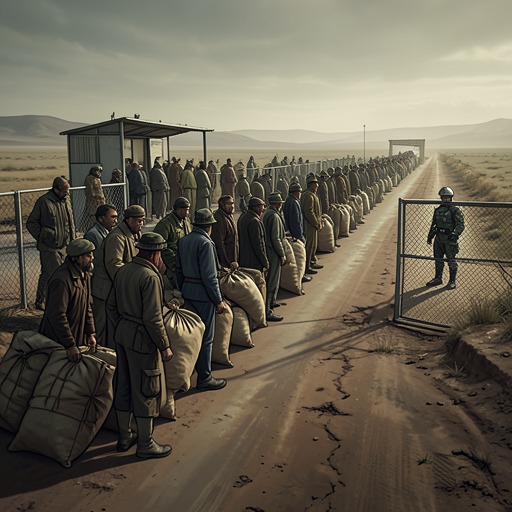
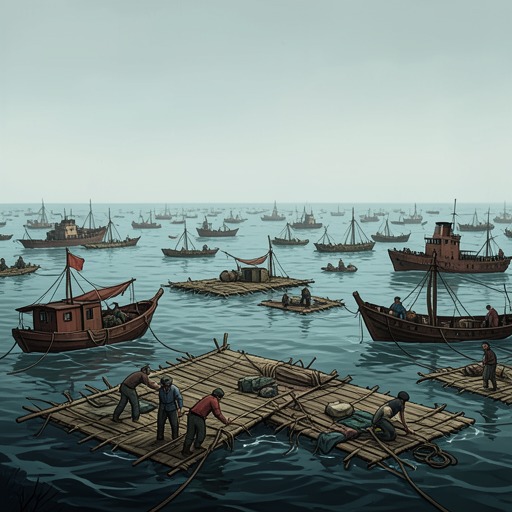
World War ZThe human factor is the principle that gives the history of the Zombie War its moral purpose and narrative form. It names the personal dimension of catastrophe—memory, emotion, opinion, suffering, and individual testimony—that transforms a chronology of hostilities into a record of human experience. The book presents this dimension not as an ornament added to military history, but as the quality separating humanity from the living dead and as a safeguard against repeating the disaster.
Definition and Conflict with Official History
The phrase enters the book through a dispute over the United Nations Postwar Commission Report. The interviewer’s original work was supported by travel funding, security access, human and electronic translators, and a voice-activated transcription assistant, yet nearly half of that work was removed from the final report. The chairperson defended the deletion by arguing that the material was too intimate, containing too many opinions and feelings, and that the report required clear facts and figures unobscured by the human factor.
The official report therefore represents one model of historical knowledge: a cold, objective after-action record designed to let future generations study the apocalyptic decade through data. The book does not deny the value of that record. It acknowledges that the chairperson’s position was correct within the institutional logic of a formal report. Its objection is that accuracy without human presence can become a dangerous form of incompleteness. Casualty statistics and chronologies establish what happened, but personal accounts show what those events meant to people who endured them.
Memory as Historical Evidence
The interviewer’s response is to preserve the deleted material in a separate book. The survivors’ accounts are treated as evidence because they connect the past to readers who may otherwise encounter the war only as an abstraction. The book asks whether future generations will care as deeply about dates and casualty figures as about people whose lives resemble their own; its answer is that identification is not a weakness in historical understanding but one of the forces that keeps history morally active.
This urgency is intensified by time. Only twelve years have passed since VA Day in the continental United States and barely a decade since Victory in China Day, while many regard VC Day as the official end of the war. The postwar period has therefore lasted roughly as long as the conflict itself, leaving little conventional distance for hindsight. Yet postponing testimony carries its own danger: survivors may die before their damaged bodies and spirits can witness the peace they helped create. Reduced global life expectancy, malnutrition, pollution, the return of previously eradicated diseases, and insufficient resources for physical and psychological casualties make memory perishable.
The Book’s Narrative Method
The human factor also describes the book’s formal arrangement. Although the work is primarily a collection of memories, it retains technological, social, and economic details from the original Commission Report whenever those details emerge through the featured voices. Large historical systems are thus not discarded; they are reattached to the people who experienced their effects. Technology, institutions, economies, and military consequences become intelligible through testimony rather than standing apart from it.
The interviewer deliberately minimizes personal authority. The book is presented as belonging to the witnesses, not to the compiler, whose aim is to remain as invisible as possible. Questions appear only to represent the questions readers might ask, while judgment and commentary are held back. This restraint creates a paradox at the center of the method: the compiler foregrounds the human factor by refusing to make the compiler’s own personality the dominant one. The desired human presence is plural and distributed across the survivors’ voices.
Moral and Thematic Significance
The phrase carries its sharpest force in the contrast between human beings and the enemy called the living dead. The human factor is not merely sentiment, nor is it reducible to private emotion. It is the capacity to remember, suffer, interpret, empathize, and recognize historical experience as belonging to persons rather than to anonymous masses. Removing it entirely would risk treating the war as an engineering problem and its victims as entries in a ledger—an intellectual detachment that could make repetition easier.
The dedication extends this principle beyond the book’s stated argument. The interviewer thanks doctors, professors, religious figures, colleagues, friends, and family for “the human factor,” presenting it as something sustained through relationships and forms of care rather than produced by institutions alone. The phrase consequently becomes both subject and method: the reason the testimonies must be preserved, the standard by which official history is judged, and the social bond that makes remembrance possible.
Legacy of the Expression
The human factor is finally the book’s answer to the problem of how a civilization should remember a conflict that nearly caused its extinction. Facts establish the scale of the Zombie War; human testimony preserves its meaning. The expression resists both sentimental erasure and bureaucratic abstraction, insisting that a future capable of learning from catastrophe must retain the people inside the data. In that sense, the book’s record is not opposed to history’s facts. It argues that facts become historical wisdom only when they remain connected to the human lives that give them consequence.