United Nations Postwar Commission
World War ZThe United Nations Postwar Commission provides the bureaucratic and ethical frame for the book’s reconstruction of the Zombie War. Its official report preserves the conflict as a body of facts, figures, logistics, and military lessons, while the book presented here exists because that official history excluded too much of the human experience that made those facts meaningful.
Mandate and Official History
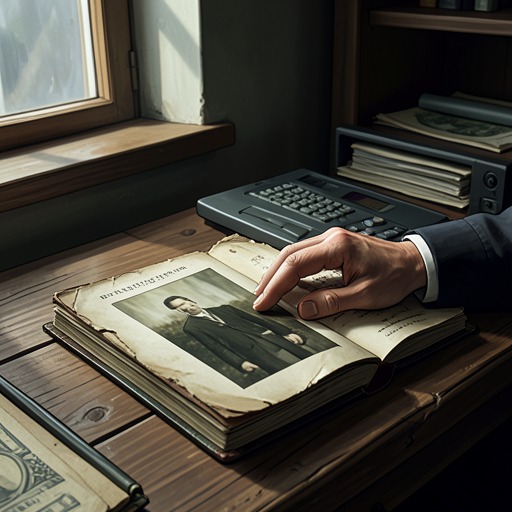
The narrator’s work for the United Nations Postwar Commission began as a labor of love. The Commission supplied a travel stipend, security access, human and electronic translators, and a voice-activated transcription assistant, resources that signaled the value it initially placed on the project. The narrator therefore experienced the deletion of almost half of the material from the final edition as a profound institutional rejection rather than a routine editorial decision.
The chairperson defended the cuts by arguing that the omitted material was too intimate and contained too many opinions and feelings. The Commission’s purpose, in this view, was to produce clear facts and figures: an objective after-action report through which future generations could study the apocalyptic decade without emotional distortion. The dispute established a sharp contrast between the Commission’s documentary ideal and the narrator’s belief that personal testimony is not contamination but the means by which history remains morally intelligible.
Conflict Over the Human Factor
The narrator accepted that the chairperson was correct about the official report’s formal purpose, but rejected the conclusion that human testimony was therefore dispensable. Chronologies and casualty statistics could record what happened, yet individual accounts could show why the past mattered to people who had endured it. The narrator feared that removing the human factor would produce the kind of detachment that allows later generations to repeat a catastrophe, and identified that human dimension as the crucial difference between survivors and the living dead.
The argument ended with the chairperson telling the narrator to write a separate book, since the notes and the legal freedom to use them remained available. That exchange transformed an editorial dispute into the origin of this publication. The Commission thus functions both as the source of the narrator’s archive and as the institution against which the book defines its own purpose: not to replace official history, but to restore what official history had removed.
Methods, Evidence, and Limits
Although the book is primarily composed of memories, it retains technological, social, and economic details from the original Commission Report whenever those details are connected to the featured voices. This relationship gives the Commission’s factual record a continuing presence even after the narrator chooses a different form. The book’s personal accounts are not presented as a rejection of evidence; they are the context in which evidence acquires human meaning.
The narrator also attempts to keep an invisible presence. Questions appear only to represent the questions readers might ask, while judgment and commentary are deliberately restrained. The narrator even proposes that, if any human factor should be removed, it should be the narrator’s own. This self-imposed limitation preserves the Commission’s commitment to factual discipline while redirecting that discipline toward the protection of witnesses’ voices rather than their exclusion.
Institutional Perspective and War Lessons
The Commission’s report also underlies the book’s examination of the material conditions that determined survival. Accounts of the war emphasize that victory depended on manufacturing capacity, natural resources, and the logistics required to move resources to factories and finished materiel to the front. During the crisis, the living dead controlled most of the world’s landmass, while American production depended largely on what could be harvested in the western states; refugees crowded the merchant fleet, and fuel shortages left much of the navy inactive.
The same institutional logic shaped later military decisions. Project Yellow Jacket promised micro-missiles, scattered from transport aircraft and guided by satellites toward the brains of zombies across North America, theoretically ending the war within forty-eight hours. Its failure became an example of the opportunity cost of technologically extravagant solutions. By contrast, Travis D’Ambrosia’s resource-to-kill ratio encouraged weapons and systems judged by their production demands and practical effect, including the Standard Infantry Rifle and other cost-effective tools. The Commission’s archive therefore records not only suffering but the process by which governments learned to abandon prestige projects in favor of sustainable war production.
The Continental Airlift illustrates the scale of that administrative problem. It connected military facilities, refugee centers, factories, mines, power plants, and civilian enclaves across the surviving continental territories, coordinating demands and prioritizing materiel for drops. The operation became the largest undertaking in air force history by statistical scale. Its priorities favored self-sustaining drops—tools, spare parts, and equipment for making spare parts—over recurring deliveries of food and medicine, although autumn deliveries still included fish, wheat, salt, dried vegetables, and baby formula. Specialists such as doctors, engineers, and Special Forces instructors were also inserted into isolated Blue Zones, some of which were eventually overrun. These details show the Commission’s broader subject: survival as an interaction between institutions, resources, expertise, and human endurance.
Memory, Authority, and Legacy
The United Nations Postwar Commission’s authority is deliberately limited by the book’s structure. Its report offers the official, consolidated account, but the narrative distributes understanding among witnesses whose memories are marked by injury, fear, repetition, and uncertainty. Todd Wainio’s scars, his difficulty with familiar smells and voices, and his recollection of the dawn over New York show why the narrator believes that a national victory image cannot contain the whole experience of war. The famous mural turns a private memory into a public icon, yet the testimony preserves the absence of cheering, the unreality of peace, and the survivor’s sense that combat might remain normal forever.
The Commission’s institutional history is therefore both necessary and insufficient. It supplies the data from which future generations can study the war, but the book argues that data alone cannot sustain remembrance. By recovering the material cut from the official report, the narrator converts an archival omission into a counter-archive of voices. The United Nations Postwar Commission remains the book’s hidden architecture: a body devoted to preserving the past that, through its insistence on impersonal clarity, makes a more intimate act of historical preservation necessary.