World Health Organization
World War ZThe World Health Organization functions in the narrative as the world’s imperfect but indispensable epidemiological memory. Its reports do not prevent the catastrophe, yet they preserve the fragments from which Jurgen Warmbrunn can reconstruct what official denial, censorship, distance, and institutional confusion have obscured. Through the organization’s buried records, the plague becomes not a collection of local mysteries but a worldwide pattern of death, reanimation, hostility, and spread.
An Archive Buried in Bureaucracy
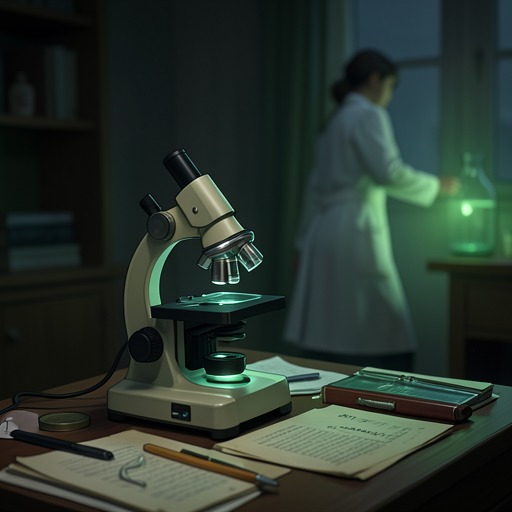
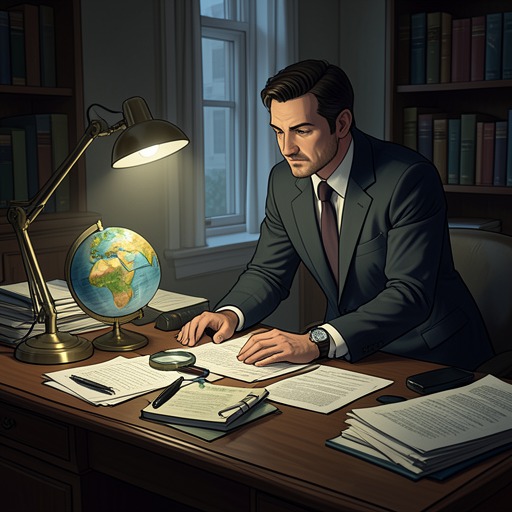
The World Health Organization appears through Jurgen Warmbrunn’s search for reliable evidence after China becomes inaccessible and the Taiwan Strait crisis cuts off much of his intelligence gathering. He encounters abundant Internet speculation, including fantasies about zombies from space and Area 51, but gradually separates such “chaff” from material that can bear scrutiny. Among the useful sources are reports of cases resembling the later Cape Town outbreak, psychological evaluations of Canadian mountain troops returning from Kyrgyzstan, and the blog records of a Brazilian nurse who described the murder of a heart surgeon.
The organization’s significance lies in the scale and disorder of its information. Jurgen Warmbrunn describes the United Nations as a bureaucratic masterpiece in which valuable facts are buried beneath mountains of unread reports. The World Health Organization’s records contain incidents from all over the world, but each has been assigned a plausible local explanation. The archive therefore does not offer a clean official revelation. It offers dispersed testimony requiring comparison, skepticism, and inference.
From Isolated Cases to a Global Threat
By assembling the World Health Organization’s reports, Jurgen Warmbrunn pieces together a coherent mosaic of the new threat. The cases he finds are not merely unusual illnesses: the subjects are dead, hostile, and spreading. This synthesis changes the meaning of earlier incidents that authorities had treated as unrelated accidents, outbreaks, crimes, or medical anomalies. The organization becomes the connective tissue between distant places whose governments have failed, or refused, to recognize their common cause.
The archive also yields a practical discovery. Alongside evidence of the plague’s existence, Jurgen Warmbrunn finds how to terminate the reanimated creatures: destruction of the brain. What later appears to be common knowledge is initially an inference drawn from accumulated evidence. The World Health Organization’s records thus support both diagnosis and response, converting a bureaucratic repository into an instrument of survival.
Information Against Denial
The World Health Organization’s reports stand in sharp contrast to the broader information environment surrounding the outbreak. Chinese messages warning of a virus that killed victims and reanimated their corpses are initially dismissed by Jurgen Warmbrunn as coded references to a weapon system or secret war plan. In the United States, the media and corporate interests allow the first wave of alarm to become old news after Phalanx reaches the shelves and reported cases decline. Alternative outlets continue warning that the dead are walking, but most people tune them out.
That contrast gives the organization a distinctive narrative role. Its records do not automatically overcome denial; they must be found, interpreted, and connected by someone trained to distrust unanimous conclusions. Jurgen Warmbrunn’s Israeli intelligence background has taught him to examine the mirror image behind the obvious message, especially after the intelligence failures surrounding the 1973 Arab attack. The World Health Organization supplies the raw material for that method: hundreds of apparently explainable fragments that become unmistakable only when viewed together.
A Global System Revealed by the Plague
The evidence associated with the World Health Organization also exposes how the disease moves through existing systems rather than through a single, easily controlled route. Nury Televaldi describes the outbreak’s transformation of human smuggling, as professionals, farmers, and government officials urgently seek passage out of China and surrounding regions. Another account suggests that infected human organs, including hearts, kidneys, corneas, pituitary glands, eggs, sperm, and blood, may have entered international markets through the Chinese organ trade. These possibilities widen the map of transmission beyond illegal immigration and make hospitals, medical commerce, and global supply chains part of the epidemic’s history.
The same crisis reorganizes population and production on a planetary scale. Five million refugees from the United States reach Cuba and are placed under the Quarantine Resettlement Program; later, Cuba becomes the Arsenal of Victory, supplying food, manufacturing, training, air transport, and ship repair for the counteroffensive. Such developments help explain why a global archive matters: the plague is not only a medical event but also a crisis of migration, labor, logistics, communication, and political power.
Media, Surveillance, and the Limits of Knowledge
The organization’s documentary function belongs to a wider struggle over how catastrophe is seen. On the International Space Station, crews use pirated signals from military relay satellites to observe battles in extraordinary visual detail, including fighting at Chongqing and Yonkers and the encirclement of Indian troops near Ambedkar Stadium. Yet the observers can watch without hearing, and therefore cannot fully understand what they see. The images reveal bodies and violence while withholding context.
Other communication systems produce a different kind of failure. The Ural’s Information Reception operators receive official findings from governments and think tanks, alongside millions of civilian pleas from people whose children are starving, whose fortresses are burning, or whose defenses have been overrun. They are forbidden to answer because the channels are reserved for official business. The World Health Organization’s reports occupy the opposite end of this spectrum: less immediate than a cry for help, less vivid than satellite footage, but capable of preserving patterns that emotional and political systems suppress.
The organization therefore represents knowledge that is delayed, fragmented, and morally burdened. Its records cannot rescue those whose messages go unanswered, nor can they guarantee that governments will act on what they contain. But they allow later investigators to recover the shape of the disaster. In a world where information is censored, commercialized, misread, or rendered unbearable by direct witnessing, the World Health Organization’s buried reports become one of the few places where the truth remains available long enough to be assembled.