Burned Legion
World of Warcraft Battle For Azeroth, Gameplay, Tips, Characters, Builds, Leveling, Raids, Weapons, Items, Game Guide UnofficialThe Burning Legion is the major antagonistic force whose defeat marks the end of the previous expansion’s central storyline and the beginning of a different conflict in Battle for Azeroth. Its importance is therefore structural as much as military: the Legion’s campaign has concluded, while the game’s narrative turns back toward Azeroth and the rivalry between the Horde and Alliance.
Role in the Expansion Timeline
The Burning Legion belongs to the background of Battle for Azeroth as the enemy overcome during the Legion era. Earlier expansions had moved through the varied realms and lore of World of Warcraft, building toward the final expansion, Legion. That concluding campaign ended the conflict against the Burning Legion, giving the new expansion a point of departure rather than another continuation of the same demonic war.
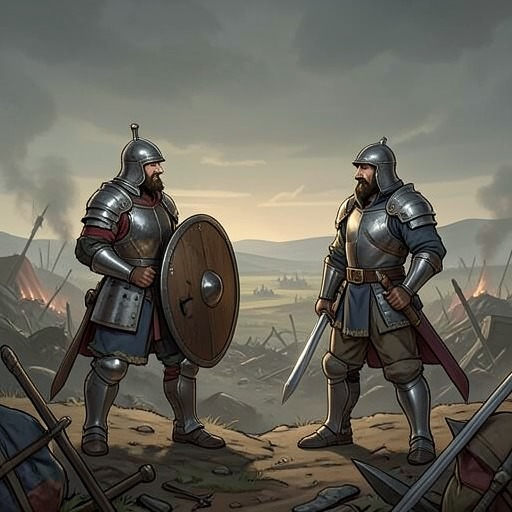
Battle for Azeroth consequently does not begin by simply replacing one large enemy with another. Its announced focus is Azeroth itself and the conflict between the Horde and Alliance. The transition creates a contrast between a completed external threat and a renewed factional struggle: after the Legion has been defeated, the story’s pressure shifts from defending the world against a common enemy to confronting divisions within it.
Narrative Consequences of Its Defeat
The Legion’s defeat changes the scale and emphasis of the game’s setting. The previous storyline had culminated in a conflict that ranged across the broader lore of World of Warcraft, whereas Battle for Azeroth concentrates on the world of Azeroth and the two opposing factions. The text notes that the new expansion is not necessarily built around a single “big bad”; its immediate story is instead the conflict already existing between the Horde and Alliance, with leading figures rising on both sides.
This does not make the Burning Legion irrelevant to the new expansion’s identity. Its completed war explains why the narrative can move into a new phase, and the contrast makes the faction conflict more prominent. The old enemy functions as a historical threshold: once that campaign has ended, the game can introduce new zones, raids, dungeons, features, and an increased level cap of about 120 without presenting them as mere extensions of the Legion campaign.
Contrast with New Systems
The replacement of Artifact weapons by the Heart of Azeroth reflects the same broader movement away from the previous expansion. Artifact weapons had been a major feature of Legion, with special abilities and skill trees for each class specialization. In Battle for Azeroth, the Heart of Azeroth replaces them, and players upgrade the medallion with Azerite to unlock new traits on other armor pieces.
The mechanical change does not erase the importance of the former system. The Heart of Azeroth is described as having an impact comparable to the artifacts while offering character customizations that had not previously been possible. In this way, the defeated Legion and the retired Artifact weapons belong to the same transition: a completed enemy campaign and a replaced progression system make room for a new expansion-wide structure.
Continuing Legacy
Although the Burning Legion’s conflict has concluded, its legacy remains visible in the organization of Battle for Azeroth. The expansion preserves established activities such as battleground and arena PvP, raids, standard dungeons, and Mythic+ dungeons returning from Legion. The new content therefore combines continuity with change: the former expansion’s central enemy is gone, but some of its gameplay traditions remain active while the story and progression systems are redirected.
The Burning Legion’s significance ultimately lies in the boundary it creates. Its defeat closes the last chapter of the Legion era, while Battle for Azeroth opens onto a world where the decisive struggle is no longer against that external force but between the Horde and Alliance. It is the absence of the old enemy that makes the new political and factional conflict the defining narrative of the expansion.