Communities
World of Warcraft Battle For Azeroth, Gameplay, Tips, Characters, Builds, Leveling, Raids, Weapons, Items, Game Guide UnofficialCommunities are cross-server social structures introduced alongside guilds in Battle for Azeroth. Their decisive significance is organizational rather than merely cosmetic: they allow players to maintain a shared group without being tied to one particular server, making social coordination more flexible while leaving guild-specific advancement separate.
Definition and Structure
Communities are presented as companions to guilds, which have long been an integral part of World of Warcraft. Guild membership is restricted by server, so players on different servers cannot simply belong to the same guild. Communities answer that limitation by creating a group that is not attached to any particular server.
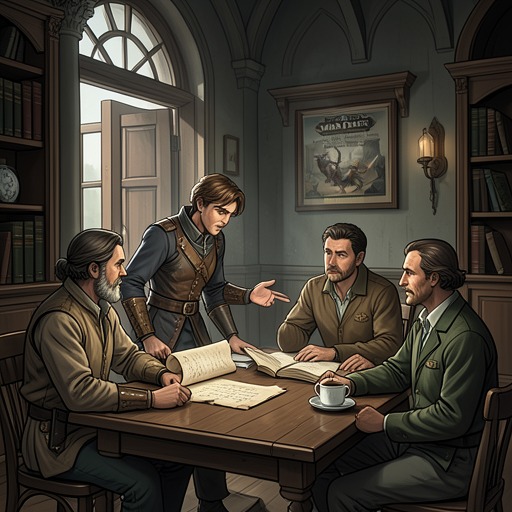
Their structure resembles that of guilds in practical ways. Communities have roles and rosters, giving them recognizable membership and organizational arrangements rather than functioning as an unstructured list of contacts. This resemblance makes them familiar to players who already understand guild-based coordination, while the absence of a server requirement gives them a broader reach.
Membership and Social Reach
The central social change produced by Communities is the ability to connect players across server boundaries. A player can belong to several Communities at the same time, so participation is not limited to a single permanent affiliation. This makes it possible to maintain different circles of association rather than choosing one group as an exclusive social home.
The system therefore expands the network through which players can find companions and organize activity. The book places Communities beside guilds, rather than describing them as a replacement for guilds, indicating a layered model of belonging: guilds retain their established identity and progression, while Communities provide a more flexible channel for players whose contacts extend beyond one server.
Limits Compared with Guilds
The similarities between Communities and guilds stop at several important boundaries. Communities do not have guild leveling features, and players do not receive guild achievements merely because they group with other players inside a Community. Shared participation can therefore create a social connection without transferring the institutional rewards attached to guild membership.
This distinction separates social coordination from formal progression. Communities can gather players, assign roles, and maintain a roster, but they do not turn those activities into guild advancement. The system broadens access to people while withholding the guild’s progression structure, preserving a meaningful difference between the two forms of organization.
Role in the Wider Game Network
Communities belong to a wider set of systems that make player activity portable across boundaries. Other mechanics in the guide similarly move resources, information, or convenience between characters and spaces: the Heart of Azeroth is upgraded with Azerite and unlocks armor traits; Heirlooms provide experience bonuses and can be accessed by characters on different servers or factions under the account-binding system; and Mods such as Altoholic, Wholly, TomTom, and Atlas extend the player’s access to currencies, quests, navigation, and maps.
Communities perform a comparable connective function at the social level. Where account-bound items connect alternate characters and Mods connect players to information, Communities connect players to one another without requiring a shared server. Their value lies less in granting power than in reducing the structural distance between people who might otherwise remain separated by the game’s server organization.
The guide’s discussion of playing with strangers reinforces this practical orientation. Joining a guild of unfamiliar people is described as potentially odd, but useful guild benefits can make such membership worthwhile. Communities offer another route through which unfamiliar or geographically separated players can become part of an organized network, even though the system does not grant the leveling and achievement benefits reserved for guilds.