Dwarves
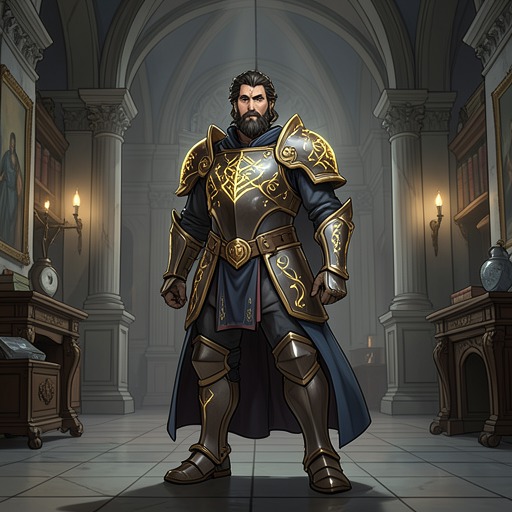
World of Warcraft Battle For Azeroth, Gameplay, Tips, Characters, Builds, Leveling, Raids, Weapons, Items, Game Guide UnofficialDwarves occupy a distinctive place in the racial framework described for Battle for Azeroth: they are an established race whose variant identity is represented through the allied-race system, especially the anticipated Dark Iron Dwarves. Their significance lies not in a personal plot arc, but in how they show the expansion’s method of extending familiar peoples through unlockable variants, unique abilities, and a progression-based reward structure.
Identity Within the Allied-Race System
Dwarves are named among the existing races that provide the foundation for allied races. The book distinguishes allied races from entirely new races: Battle for Azeroth introduces no wholly new class and no completely unprecedented race, but instead adds variant forms of peoples already present in the game. Within that system, Dark Iron Dwarves are identified as an expected addition, making Dwarves part of the expansion’s strategy of revisiting established racial identities rather than replacing them.
The distinction matters because the allied-race model turns racial identity into something partly earned. Allied races possess their own specific abilities, and a player who levels one to the expected level cap can unlock a Heritage Armor set. Dwarves therefore appear in the guide not simply as a pre-existing population, but as a lineage that can be extended into a specialized variant with its own mechanical and visual rewards.
Progression and Player Choice
The guide places allied races within the practical structure of character leveling. Allied-race characters begin at level 20, rather than at the first level used by most classes. That starting point makes the choice of an allied race consequential: once a variant has been unlocked, selecting it gives the player a head start while still requiring substantial advancement toward the level cap.
Dark Iron Dwarves are presented alongside the other expected allied-race additions as part of a system whose future scope remains uncertain. The book states that six allied races could be counted at that point, while also noting rumors that more might be added. Dwarves thus belong to an expanding but not fully settled taxonomy, one in which the boundaries of a familiar race can continue to produce new playable forms.
Relation to the Expansion’s Systems
The racial system is connected to the wider progression economy of Battle for Azeroth. Heirlooms can be leveled alongside a character, provide respectable statistics for the character’s level, and offer experience bonuses across several armor slots. Because these items are bind on account, they can be accessed by alternate characters, including characters on another server or the opposite faction, subject to the stated exceptions. An allied-race Dwarf can therefore participate in a broader account-wide strategy for accelerating progression once the relevant equipment has been acquired and upgraded.
This progression environment also includes changing zone rules and selectable routes. Older content receives level scaling, with Northern Barrens given as an example of a zone scaling from levels 10 through 60 so that its challenges and rewards rise with the character. The guide recommends minimizing unnecessary travel, while tools such as the Hearthstone and the TomTom navigation add-on reduce the time spent moving between objectives. These systems do not define Dwarves as characters, but they shape the practical conditions under which a Dwarf or Dark Iron Dwarf is developed.
Narrative and Mechanical Significance
Dwarves illustrate the expansion’s preference for modification over rupture. Rather than introducing an entirely separate people, Battle for Azeroth uses a known race as the basis for a variant, then attaches access to progression, distinctive abilities, and Heritage Armor. The result is a form of identity that is simultaneously inherited and gated: the racial tradition is familiar, while the playable variant becomes a reward for investment.
The book’s treatment of Dwarves is consequently systemic rather than dramatic. They are associated with the promised Dark Iron Dwarves, the level-20 starting point for allied races, unique racial abilities, and the possibility of unlocking Heritage Armor through continued leveling. Their role is to demonstrate how the expansion turns existing racial categories into expandable structures of choice, customization, and long-term progression.