Level scaling
World of Warcraft Battle For Azeroth, Gameplay, Tips, Characters, Builds, Leveling, Raids, Weapons, Items, Game Guide UnofficialLevel scaling is a central progression rule in World of Warcraft that changes the relationship between character level and the game’s older zones. In Battle for Azeroth, it raises the level cap from the former 110 limit associated with Legion to about 120 while allowing players to move through scalable content in a less rigid order. Its decisive effect is practical as well as structural: zones remain viable sources of quests, combat, challenge, and rewards instead of becoming obsolete as a character advances.
Definition and Expansion Context
Level scaling returns as part of the leveling design for Battle for Azeroth, an expansion released on August 14 after roughly fourteen years of World of Warcraft development. The expansion adds new zones, raids, dungeons, and features, but the scaling rule also reaches backward into older content. Rather than treating previous zones as fixed-level steps that must be abandoned quickly, the system adjusts their contents within defined level ranges.
The rule is presented as a response to the scale and variety of the game world. Players can level through zones in an order of their choosing, although the story quests are described as more linear than those in Legion. This creates a contrast between narrative direction and geographic freedom: the quest story may guide progression, while level scaling allows the player to decide which regions will carry that progression.
How the Rule Operates
Blizzard applies level scaling to older content, with zones scaling within particular level ranges. Northern Barrens is given as a concrete example: it scales from level 10 through level 60. Enemies and challenges inside that range rise to match the character, and rewards scale as well. The rule therefore does not merely make opponents harder; it keeps the broader activity structure relevant by adjusting both the risks of combat and the value of its results.
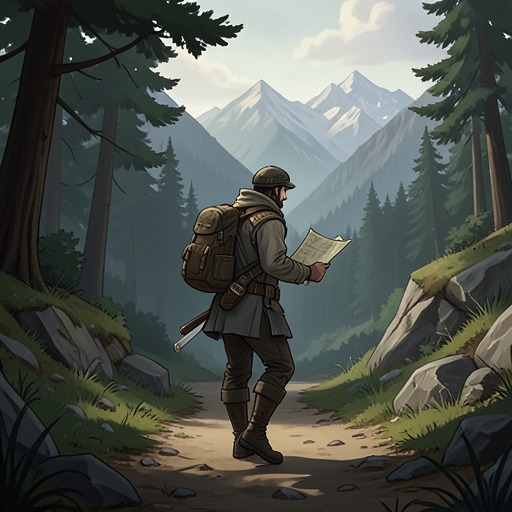
This design changes the logic of travel during leveling. Most advancement comes from questing and killing monsters, while travel itself provides little experience, so the guide recommends minimizing unnecessary movement. Because players can select zones and remain in them until their quests are complete, scaling supports a more concentrated route. The player can choose an area with less required legwork, complete its available quest line, and avoid being forced into constant relocation simply because the character has outgrown the region.
Player Choice and Progression
The practical promise of level scaling is flexibility. A character is not required to follow one universal zone sequence merely to find suitable enemies and rewards. The player can choose a preferred zone, stay there through its quest progression, and continue receiving meaningful opposition and compensation as the character develops. That flexibility is especially important in a world containing content from many earlier stages of the game.
The system does not make leveling faster by itself. The guide explicitly notes that leveling a new character will take more time, even though the process is now considered more exciting. Level scaling therefore changes the quality and range of available progression rather than simply reducing the time required. It makes the journey more varied and gives older spaces continued mechanical purpose, while other acceleration tools, such as Recruit-a-Friend Leveling, address speed directly.
Boundaries with Other Game Spaces
Level scaling belongs to the ordinary zone-leveling structure, but it operates alongside several different forms of content. Island Expeditions place three players against three Advanced AI opponents in randomized areas, with a fifteen- to twenty-minute objective focused on gathering resources faster than the opposing team. Warfronts are larger, strategy-inspired battles lasting about twenty to forty minutes, involving resource collection, building construction, the destruction of enemy troops, and an assault on an enemy base. These activities are not simply scaled versions of ordinary quest zones; they are separate cooperative formats with their own objectives and time frames.
The same distinction appears in War Mode. War Mode is a player-versus-player switch available on any server: it is off by default, can be activated in a faction capital, and places the player in a space where opposing players may attack. In return, it provides about a 10 percent increase in quest rewards, including experience. Level scaling governs the continuing usefulness of zones, whereas War Mode changes the danger and reward conditions under which a player enters the world.
Consequences and Significance
The rule makes the world feel less disposable. Older zones can continue to offer suitable challenges and rewards, and choosing among them becomes a meaningful part of route planning rather than a purely aesthetic decision. At the same time, the guide frames that freedom through efficiency: players are encouraged to select areas requiring less travel, set the Hearthstone at a large quest-hub inn, and use resting areas to accumulate a 200 percent rested-experience bonus while logged out.
Level scaling thus combines exploration with self-management. It opens more of the world to the leveling character, but it also encourages deliberate choices about location, movement, rest, and risk. Its importance lies in preserving the usefulness of earlier content while supporting a progression model in which the player’s route is flexible, the story remains comparatively directed, and advancement is organized through a continuous relationship between level, zone, challenge, and reward.