Pandaria
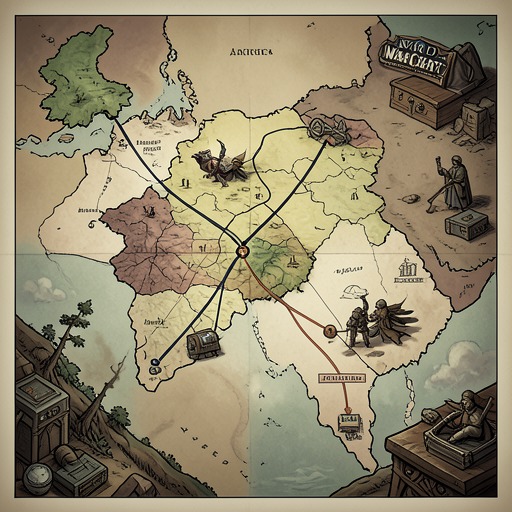
World of Warcraft Battle For Azeroth, Gameplay, Tips, Characters, Builds, Leveling, Raids, Weapons, Items, Game Guide UnofficialPandaria is presented as the preferred setting for the 80–90 leveling bracket in World of Warcraft. Its decisive importance is practical rather than merely geographic: after the game opens several Cataclysm zones across the original continents, moving to Pandaria offers a more efficient and self-contained route, allowing a player to spend the entire bracket exploring its quests and zones.
Setting Within the Leveling Route
Pandaria appears after the earlier leveling stages have been organized around increasingly suitable regions. The 60–70 bracket is described as one of the game’s more difficult portions because it requires navigating older content, with Northrend recommended over Outland. Once a character reaches levels 80–90, a different choice becomes available: Cataclysm content spreads across the original continents, but Pandaria provides a more coherent alternative.
The recommendation is therefore shaped by movement as much as by quest content. Rather than continually switching among scattered zones, the player can move to Pandaria and remain there through the level range. This makes the continent function as a stable leveling environment within a broader system that otherwise asks players to choose among many regions.
Questing and Zone Selection
The book states that a character can spend all of the 80–90 bracket exploring the quests and zones of Pandaria. The continent is not treated as a brief stop on the way to another expansion area; it is substantial enough to sustain the full progression period. Its value lies in the combination of available quests, navigable zones, and the efficiency of staying within one continent.
Two zones receive particular recommendation: Kun-Lai Summit and Valley of the Four Winds. They are identified as preferred choices, while the surrounding zones are still described as worth checking out. This creates a balance between directed advice and freedom of exploration. The leveling route has a suggested core, but it does not imply that every other Pandarian zone should be ignored.
Relation to Level Scaling and Player Choice
Pandaria belongs to a wider leveling system in which older content is adjusted to character level. The book gives Northern Barrens as an example of this rule, with the zone scaling from levels 10 to 60 and its challenges and rewards rising with the player. That system makes zone order more flexible, yet the Pandaria recommendation shows that flexibility does not eliminate the importance of route planning.
The player may have freedom to select content, but efficiency still depends on choosing a region that can support continued progression. Pandaria is valuable because it converts that freedom into a practical route: instead of treating every available zone as equally attractive, the guide identifies a continent where the player can remain for levels 80–90 and avoid unnecessary travel.
Spatial Efficiency and Significance
Pandaria’s significance is tied to the guide’s larger concern with minimizing travel time. Leveling consists largely of questing and killing monsters, while travel provides little experience, so unnecessary movement is treated as a cost. The continent’s ability to hold a character’s attention across the entire 80–90 range gives it infrastructural importance within the leveling process: it concentrates progression, exploration, and quest completion in one broad setting.
This recommendation also distinguishes Pandaria from the more linear route associated with Draenor at levels 90–100 and from the difficult transition through older content at levels 60–70. Pandaria is the middle-stage solution: a continent expansive enough for sustained exploration, but efficient enough to keep leveling from becoming a sequence of disconnected journeys.