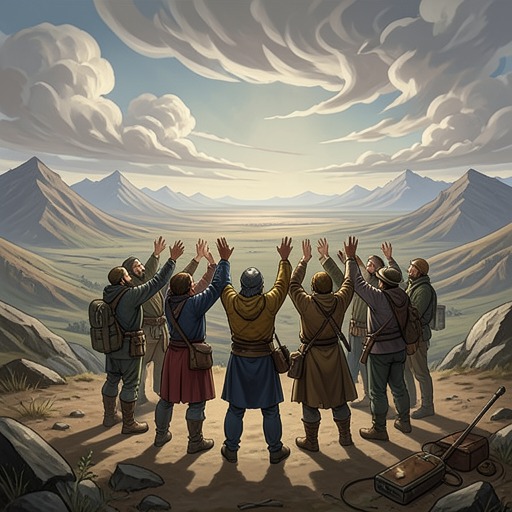
Recruiter–Recruit relationship
World of Warcraft Battle For Azeroth, Gameplay, Tips, Characters, Builds, Leveling, Raids, Weapons, Items, Game Guide UnofficialThe Recruiter–Recruit relationship is World of Warcraft’s formal arrangement for turning friendship into a leveling advantage. Its central exchange is practical and reciprocal: the recruit gains a substantial boost while playing alongside the recruiter, and the recruiter can later receive granted levels, an epic mount, or battle pets. The relationship therefore links immediate cooperation with delayed rewards, but only when the participants satisfy specific party, distance, level, and progression requirements.
Formation and Eligibility
Recruit-a-Friend is presented primarily as a solution for a completely new player. The feature becomes available when a player already has friends who play World of Warcraft, allowing the newcomer to enter the game through an existing social connection rather than progressing alone. The arrangement is consequently both a leveling tool and a way of extending the player network: the recruiter supplies access to an established partner, while the recruit becomes an active participant in that partner’s play.
The bonus is not automatic simply because two accounts are connected. Once the recruit has enrolled or registered, both players receive approximately 50 percent bonus experience from quests and kills when they are in the same party or within roughly 100 yards of one another. Their characters must also remain within about four levels of each other and below level 90. These conditions make proximity and coordinated progression part of the relationship itself. The benefit rewards sustained shared activity, not merely the existence of a referral.
Reciprocal Progression and Rewards
The relationship reverses the ordinary direction of assistance through its level-granting feature. The recruiter can gain one level for every two levels earned by the recruit, subject to the feature’s many restrictions and rules. This arrangement is especially useful for leveling alternate characters together: the recruit’s advancement can become a resource that accelerates the recruiter’s other progression rather than benefiting only the newer player.
The recruiter may also earn an epic mount and battle pets. These rewards are not framed as immediate payments for a single invitation. They require continued participation over a period that may extend for months, making the system a delayed-reward loop: shared quests and kills produce the immediate experience bonus, while sustained commitment produces more distinctive rewards. The structure encourages the pair to keep returning to the game after the initial recruitment has already served its practical purpose.
Place within the Leveling System
Recruit-a-Friend is one element in a larger economy of leveling aids. Heirlooms provide another form of accumulated advantage: these special armor pieces scale alongside a character, offer respectable level-appropriate statistics, and can provide experience bonuses in the legs, chest, shoulder, head, and back slots. Together, those slots can produce about a 45 percent bonus, while a ring can add roughly five percent if the player completes a fishing contest. Unlike the recruiter’s shared-play bonus, heirlooms are equipment-based and can be reused across characters.
The distinction matters because heirlooms are bind on account. Once purchased, they can generally be accessed by the player’s other characters, including alternate characters on a different server, in the opposite faction, or both. Recruit-a-Friend instead depends on an active relationship between two players and on their characters meeting the required conditions at the same time. One system carries an advantage through an account’s equipment; the other carries it through coordinated presence.
Social Boundaries and Efficiency
The relationship also contrasts with the game’s other forms of organized association. Guilds have long been integral to World of Warcraft, but traditional guild membership is limited to players on a similar server. Communities are paired with guilds in the newer expansion and can include roles and rosters without being tied to a particular server; a player may belong to several communities at once. Communities do not, however, provide guild leveling features or automatically unlock guild achievements when players group within them.
This broader social landscape clarifies what Recruit-a-Friend does differently. It is not merely a standing membership in a guild or community. It is a focused recruiter–recruit link organized around shared progression, proximity, and conditional rewards. The relationship can coexist with guild membership, but its defining unit is the pair whose characters advance together.
The guide’s wider leveling advice reinforces the same emphasis on efficient cooperation and reduced travel. Much of leveling consists of questing, killing monsters, and traveling, although travel provides little experience, so players are advised to minimize unnecessary movement and remain in zones until their quests are complete. Mounts become available at level 20 and can be upgraded at level 60, while the Hearthstone can return a player to a chosen inn and sharply reduce the time spent walking or riding back to a quest hub. Recruit-a-Friend belongs to this same efficiency-oriented design, but it makes another player the mechanism that accelerates progress.
Risks, Limits, and Significance
The arrangement is powerful precisely because it is conditional. The characters must be close in level, below level 90, and together or within about 100 yards for the principal experience bonus. The level-granting system carries additional restrictions, and the long-term rewards require persistence. These limits prevent the relationship from functioning as an unrestricted shortcut and instead define a rhythm of synchronized advancement.
Its significance lies in how it converts social presence into mechanical progression. Experience from quests and kills, granted levels, mounts, and battle pets all make cooperation materially valuable, while the delayed nature of the larger rewards encourages repeated play. Recruit-a-Friend thus joins friendship, account growth, and game efficiency in a single system: the recruit receives an accelerated entry into the game, the recruiter gains a reason to support that entry, and both are encouraged to remain within the same leveling route long enough for the relationship’s rewards to mature.