Frances Earnshaw
Wuthering HeightsFrances Earnshaw arrives at Wuthering Heights as Hindley's bride, brought home without warning for his father's funeral. She is a slight, nervous young woman with a fresh complexion and diamond-bright eyes, but her health is already fatally compromised: mounting the stairs leaves her breathless, sudden noises make her tremble, and she coughs troublingly. Nelly Dean, observing these symptoms, does not recognize them as signs of consumption and feels no impulse to sympathize, reflecting the household's general suspicion of outsiders. Frances's initial delight in the old farmhouse—its white floor, huge fireplace, pewter dishes, and wide space—persuades Hindley to abandon his plan to carpet and paper a parlour, so the family continues to live in the communal kitchen. She takes an immediate, effusive liking to Catherine Earnshaw, kissing her, running about with her, and showering her with presents, but this affection fades quickly into peevishness. A few words from Frances expressing dislike of Heathcliff are enough to reawaken Hindley's old hatred, and he drives the boy from their company to the servants, deprives him of the curate's instruction, and forces him into outdoor labour. Frances herself dies within a year of her marriage, shortly after giving birth to Hareton Earnshaw. Her death leaves Hindley desperate and reckless: he neither weeps nor prays but curses, defies God and man, and gives himself up to dissipation, creating the brutal environment in which Heathcliff and Catherine grow increasingly wild and in which Heathcliff's thirst for revenge takes root. Though she appears only briefly, Frances is the catalyst for Hindley's transformation from a resentful brother into a tyrannical drunkard, and her early death removes the last possibility of domestic stability at the Heights.
Identity and Arrival
Frances is introduced without any family name or background; Hindley never informs the household where she was born or who her people were, and Nelly surmises that she had neither money nor name to recommend her, or Hindley would scarcely have kept the union from his father. She crosses the threshold of Wuthering Heights on the day of old Mr. Earnshaw's funeral, and her first reaction is a kind of hysterical fear: she runs to her chamber, shivers, clasps her hands, and repeatedly asks whether the mourners have gone. The sight of black clothing produces in her an overwhelming dread of dying, though she appears to Nelly as unlikely to die as anyone. Her physical fragility is evident from the start—she breathes quickly after climbing stairs, starts at sudden noises, and coughs—but these warnings go unread.
Life at Wuthering Heights and Influence on Hindley
Frances's presence initially softens the house. She expresses such pleasure at the white floor, the huge glowing fire, the pewter dishes, and the wide space of the main room that Hindley abandons his plan to remodel a small parlour. She befriends Catherine eagerly, prattling to her, kissing her, and giving her presents. But this warmth does not last: her affection tires quickly, and when she grows peevish, Hindley becomes tyrannical. A single remark from Frances expressing dislike of Heathcliff is enough to reawaken Hindley's old hatred, and he immediately drives Heathcliff from their company to the servants, deprives him of the curate's lessons, and forces him into hard outdoor labour. Frances thus becomes the unwitting instrument through which Hindley's inherited resentment is given free rein, and the household's descent into cruelty accelerates.
Death and Aftermath
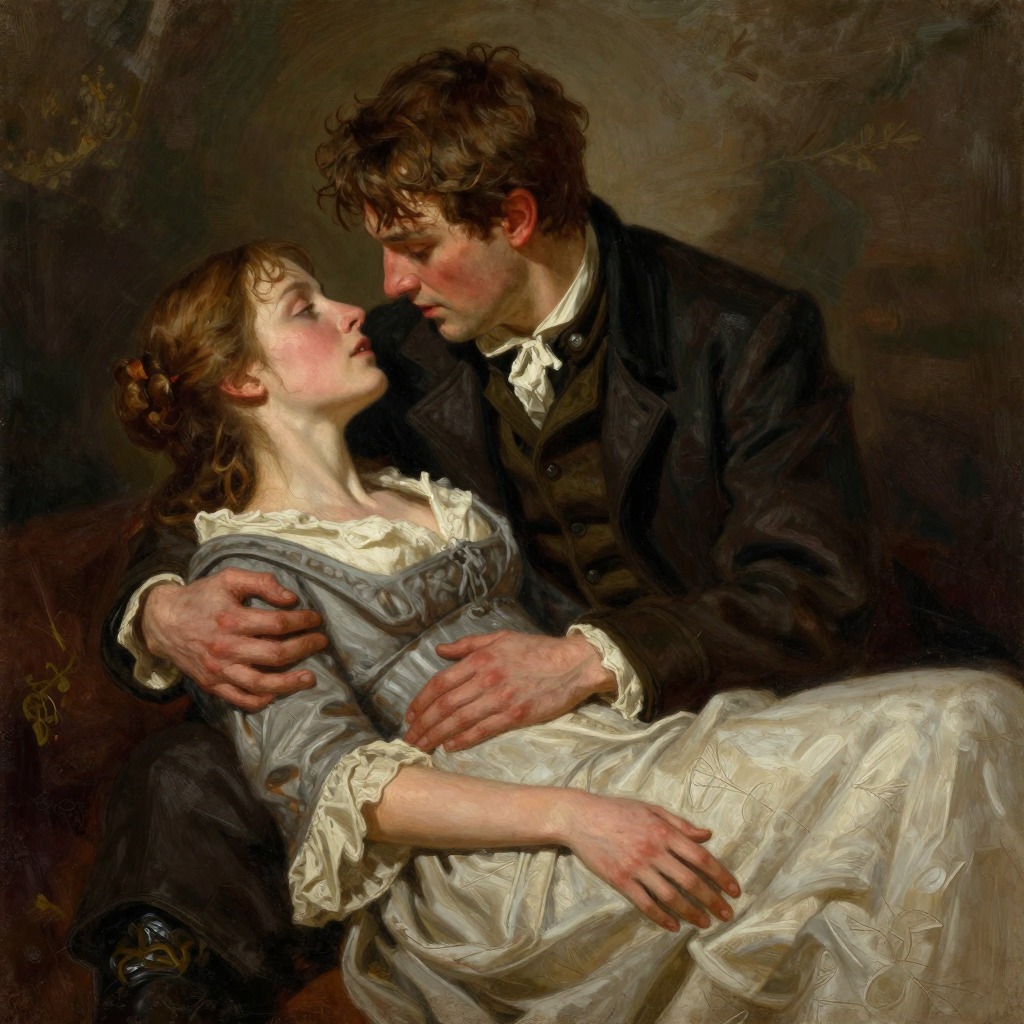
Frances dies shortly after giving birth to Hareton, her consumption having gone undiagnosed until the final weeks. On the night of her death, she leans on Hindley's shoulder, saying she thinks she will be able to get up tomorrow, when a slight fit of coughing takes her; she puts her hands about his neck, her face changes, and she is dead. Hindley, who had doggedly insisted she was improving, is shattered. He grows desperate, neither weeping nor praying but cursing and defying God and man, and gives himself up to reckless dissipation. The servants cannot bear his tyranny; only Joseph and Nelly remain. His bad ways and bad companions form a destructive example for Catherine and Heathcliff, and his treatment of Heathcliff becomes so brutal that Nelly says it would make a fiend of a saint. Frances's death thus removes the last check on Hindley's violence and self-destruction, creating the conditions in which Heathcliff's own thirst for revenge is forged.
Thematic Significance
Frances is a figure of frailty and dependency whose brief life and early death set in motion the novel's central cycle of cruelty and revenge. She is the first of several characters—Isabella Linton, Linton Heathcliff—who enter the world of Wuthering Heights unprepared for its brutality and are destroyed or deformed by it. Her inability to protect Heathcliff, her unwitting role in his degradation, and her death's effect on Hindley all illustrate how the novel's domestic spaces become arenas of psychological and physical violence. She is also a reminder of the precariousness of female health and autonomy in the novel's world: without money, name, or physical strength, she has no power to shape her own fate or that of those around her.