Hareton Earnshaw
Wuthering HeightsHareton Earnshaw is the last surviving heir of the Earnshaw family, the son of Hindley Earnshaw and Frances Earnshaw. His life is a study in degradation and redemption: deliberately kept illiterate and brutish by Heathcliff, he nevertheless possesses an innate intelligence and warmth that eventually allow him to transcend his upbringing and find love with Catherine Linton. His story forms the novel's hopeful counterpoint to the destructive passions of the previous generation.
Identity and Background
Hareton is introduced as an infant, born on a fine June morning in 1778, the "first bonny little nursling" and "the last of the ancient Earnshaw stock." His mother dies of consumption within a week of his birth, and his father, Hindley, descends into reckless dissipation, leaving the child to be raised by Nelly Dean. After Nelly is forced to leave Wuthering Heights to accompany Catherine Earnshaw to Thrushcross Grange, Hareton falls entirely under the influence of Heathcliff, who has become master of the Heights. His very name, carved above the door of Wuthering Heights with the date 1500, links him to the family's ancient lineage, a heritage Heathcliff is determined to destroy.
Degradation and Brutalization
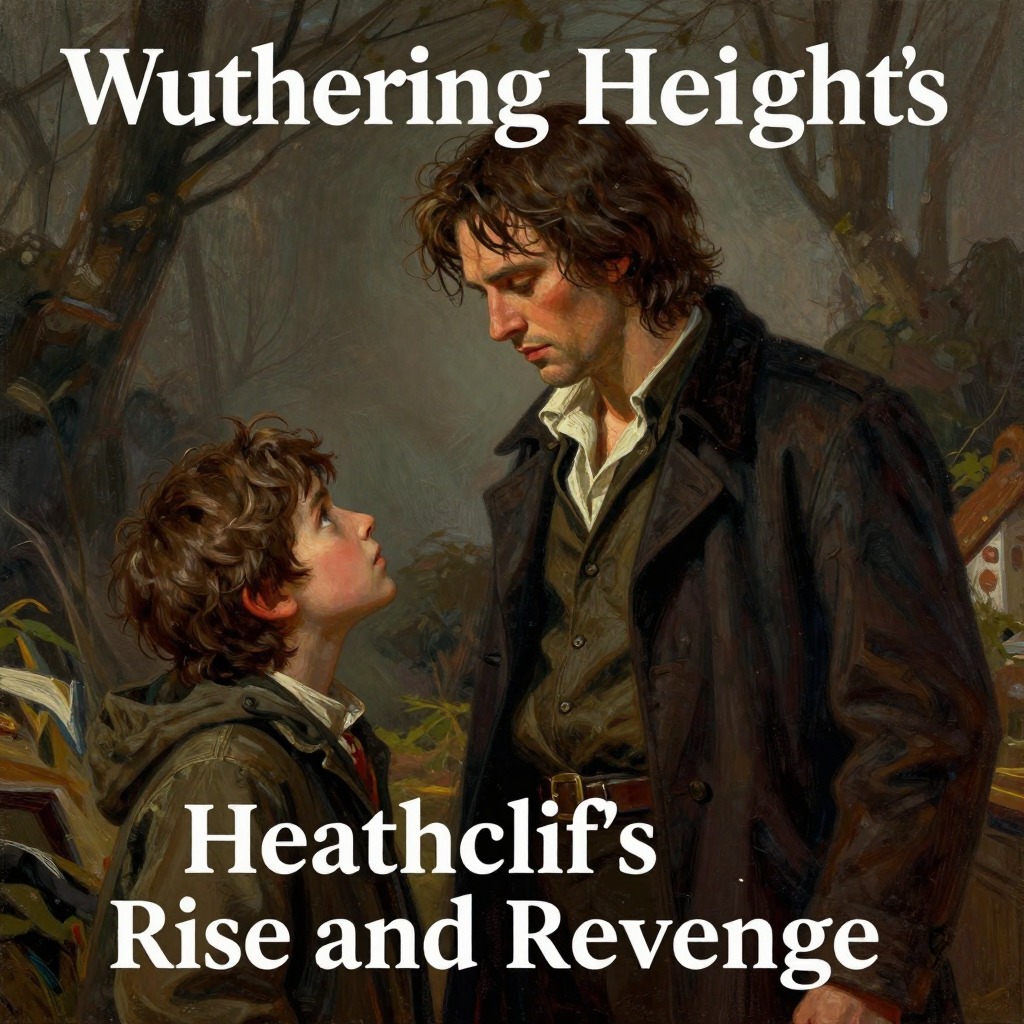
Heathcliff's revenge against Hindley is exacted through Hareton. He deliberately prevents the boy from receiving any education: Hareton is never taught to read or write, and the curate is threatened with violence if he steps over the threshold. Heathcliff boasts that he has "got him faster than his scoundrel of a father secured me, and lower; for he takes a pride in his brutishness." He encourages Hareton to swear and behave coarsely, and the boy grows up a "great, strong lad" but utterly ignorant, speaking in a rough Yorkshire dialect and unable to read the inscription over his own door. When Nelly encounters him as a child, he hurls a stone at her and curses, having learned his lessons from "Devil daddy" and Heathcliff. Despite this, Heathcliff notes with satisfaction that Hareton is "damnably fond of me," a perverse attachment that mirrors the loyalty of a beaten dog.
Encounter with Catherine Linton
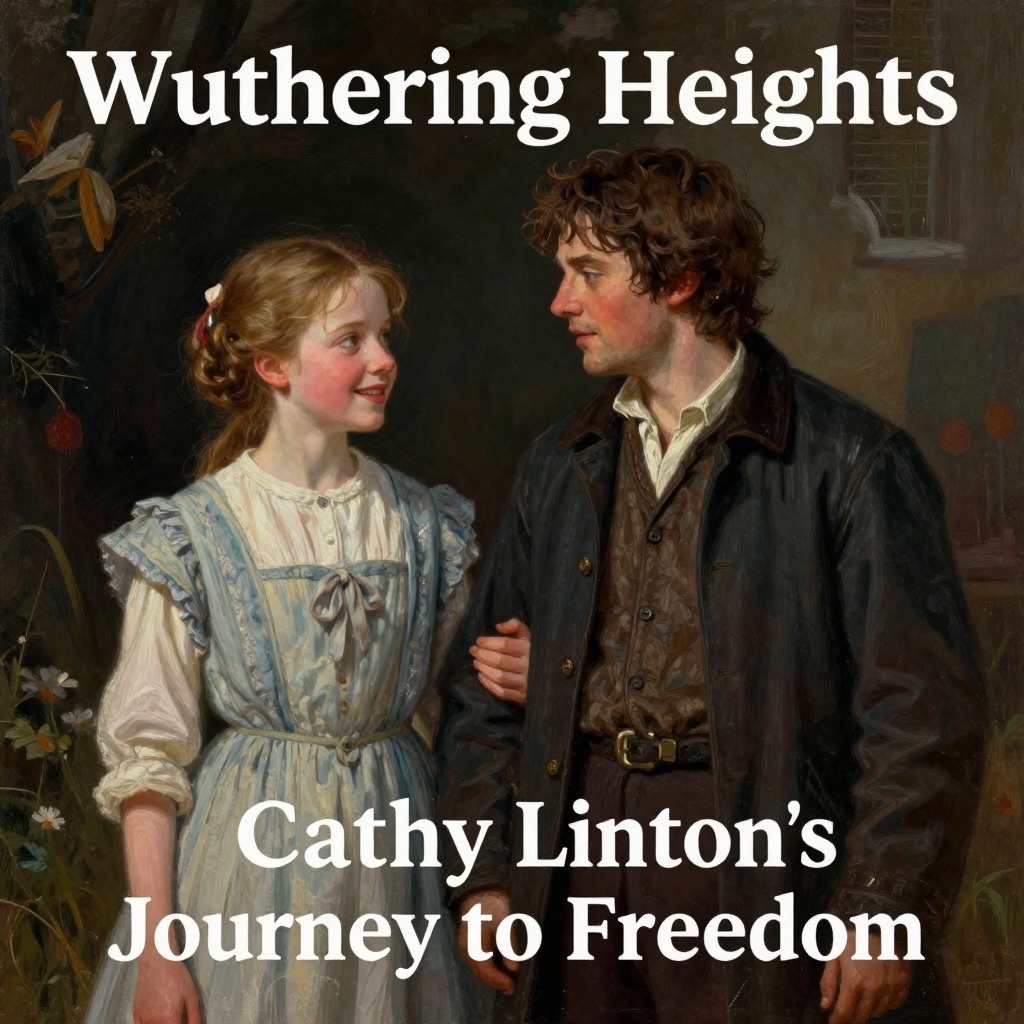
Hareton's life changes when he meets the young Catherine Linton. Their first encounter is marked by mutual hostility: she mistakes him for a servant, and he responds with an oath. When she later visits Wuthering Heights, she mocks his illiteracy, and Linton Heathcliff cruelly taunts him for his ignorance. Hareton, deeply sensitive to these slights, burns his books in a fit of wounded pride. Yet his desire to please Catherine is evident: he secretly teaches himself to read, laboriously spelling out the name "Hareton Earnshaw" over the door. When Catherine discovers this, she laughs at his efforts, and he retreats into sullen resentment.
Reconciliation and Growth
The turning point comes after Heathcliff's death. Catherine, now a widow and a virtual prisoner at the Heights, begins to soften toward Hareton. She apologizes for her past cruelty, and he, though initially resistant, accepts her overtures. Nelly Dean observes that "both their minds tending to the same point—one loving and desiring to esteem, and the other loving and desiring to be esteemed—they contrived in the end to reach it." Catherine begins to teach him to read properly, and they become inseparable companions. Nelly notes that Hareton's "honest, warm, and intelligent nature shook off rapidly the clouds of ignorance and degradation in which it had been bred." His features brighten, and he is transformed from a surly brute into a handsome, dignified young man.
Thematic Significance
Hareton's arc represents the novel's ultimate assertion of hope and renewal. He is the living proof that nurture, not nature, determines character: his degradation was imposed, not innate. His union with Catherine Linton, which Nelly Dean calls "the crown of all my wishes," promises to heal the divisions between the Earnshaws and the Lintons and to restore Wuthering Heights to its rightful heir. Their marriage, planned for New Year's Day, signals a new beginning, one in which the cycles of revenge and cruelty that consumed the previous generation are finally broken. Hareton, the "most wronged" character, becomes the one who suffers most at Heathcliff's death, weeping bitterly over the corpse of his tormentor—a testament to the complexity of his heart and the possibility of forgiveness.