
The Suicide Wave
You Only Live TwiceThis thread follows the Castle of Death’s growing attraction for people seeking death and the way its owner turns a social crisis into a perverse spectacle.
increasing Bearing strength in each event
 decreasing
Bearing strength in each eventdecreasingA Shrine to Death
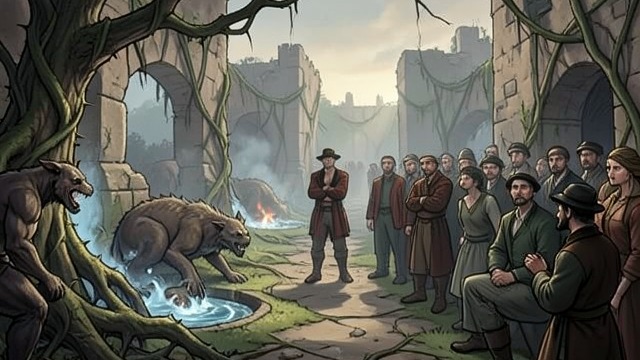
A Shrine to Death
A deadly attraction
Tiger Tanaka describes how the estate’s poisonous plants, predatory animals, and volcanic vents have drawn people intent on suicide. Warnings and barriers have failed because the danger itself has become an advertisement.
The public arrives through difficult routes, treating the garden as a destination and its hazards as a final gamble. The owner’s private property has become a site of national concern.
The limits of intervention
Authorities struggle to identify a charge that would justify destroying a costly botanical collection or arresting its owner. The repeated deaths increase pressure while leaving the legal problem unresolved.
The garden’s power comes from the collision between individual despair and an environment designed to make death seem accessible. The crisis is both intimate and institutional.
The Garden’s Demonstration
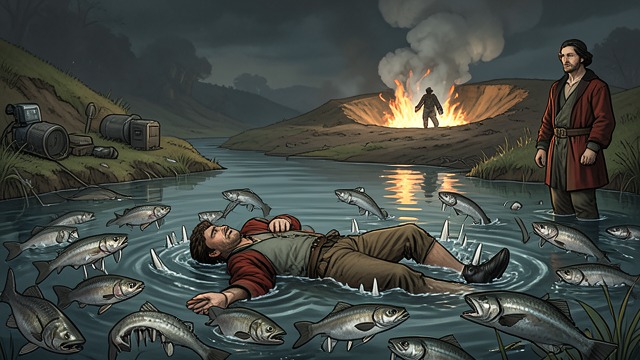
The Garden’s Demonstration
Death in the landscape
Bond sees a poisoned visitor stumble into a lake filled with Piranha. The fish overwhelm him, turning the garden’s carefully prepared hazards into a visible mechanism of death.
Later, a man walks into a volcanic vent and disappears beneath the boiling mud. Bond watches without being able to stop him, recognizing how the estate makes the final act both deliberate and grotesquely theatrical.
A human cost made visible
The deaths transform Tanaka’s account from an abstract tally into immediate horror. Bond understands that the garden is not simply dangerous; its design offers a succession of ways for despair to become fatal.
The experience hardens his resolve against the estate’s owner. It also forces him to confront the limits of intervention when the victims have come seeking the danger themselves.
The Guards’ Routine
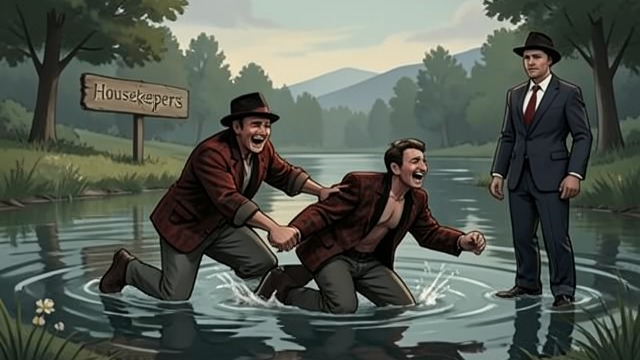
The Guards’ Routine
Violence disguised as order
From his hiding place, Bond sees guards pursue a frightened visitor and throw him into the lake. Their laughter makes clear that the estate’s staff do more than passively fail to prevent deaths.
Blofeld later speaks of Piranha and volcanic mud as useful “housekeepers.” His language turns murder into maintenance and presents cruelty as an efficient part of the property’s operation.
A public service perverted
Blofeld rationalizes the garden as a tidy alternative to deaths in public places. His argument converts carelessness and violence into the language of civic convenience.
The scene exposes the moral vacancy beneath his claimed humanitarian purpose. The Castle of Death does not merely accommodate despair; it organizes, exploits, and conceals it.
During Tanaka’s account in Yokohama
Bond’s first night inside the estate
The morning after Bond’s first entry
