
A Nation Judged by Its Customs
You Only Live TwiceThis thread traces the competing judgments of Japanese custom in the novel, from comic misunderstanding to the violence and human warmth Bond encounters.
increasing Bearing strength in each event
 decreasing
Bearing strength in each eventdecreasingCourtesy as Strategy
Courtesy as Strategy
Politeness and power
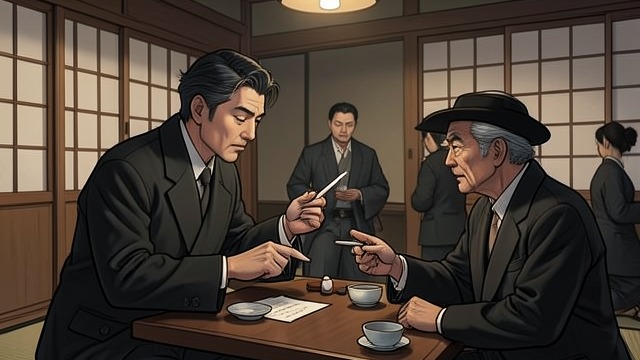
Bond arrives at Tanaka’s gathering expecting to perform charm and drink. He discovers that the party’s rituals and the game of scissors, paper, and stone carry implications about face and respect.
The social setting is not separate from diplomacy. Tanaka watches how Bond handles embarrassment, courtesy, and competition before deciding whether to trust him with private business.
Learning without mastery
Bond makes jokes about Japanese customs but also recognizes that a careless victory or insult could damage a developing relationship. His knowledge remains incomplete, and he must choose between instinct and observation.
The episode introduces cultural difference as a practical force. It shapes what characters can ask, refuse, or reveal without directly stating their intentions.
Honor and Suicide
Honor and Suicide
Two moral vocabularies
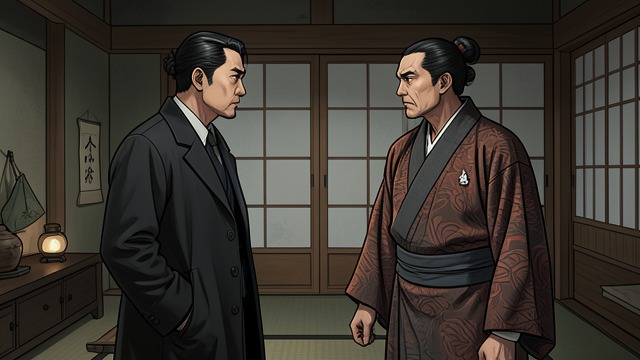
Tiger Tanaka explains that some Japanese interpret suicide as a way to expunge dishonor. Bond rejects that idea, arguing that survival after failure is more courageous than self-destruction.
Their disagreement is not merely theoretical. The Castle of Death draws on a society in which suicide has a complicated cultural and public history.
A dangerous inheritance
Tanaka describes traditions of self-sacrifice and public approval for spectacular deaths. Bond sees how inherited stories can shape present behavior, even when he considers the customs destructive.
The novel uses their disagreement to explore the difference between honor as social recognition and life as an individual responsibility. Neither man can wholly translate the other’s moral assumptions.
The Island’s Welcome
The Island’s Welcome
A different form of belonging
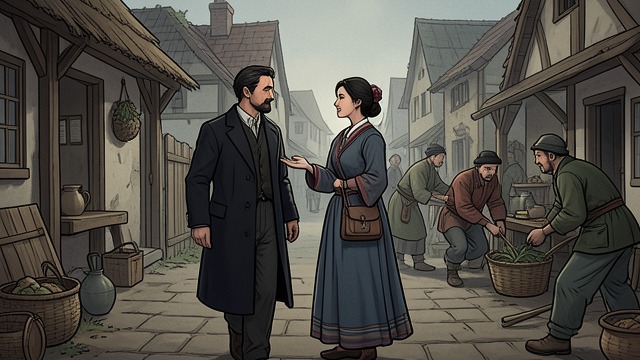
On Kuro Island, Bond finds a community governed by the priest’s authority and by close practical ties among families. The people welcome him after hearing a carefully limited account of his purpose.
Kissy treats him as a comrade rather than a superior. The villagers’ hospitality is expressed through work, shared shelter, and local knowledge.
Custom made human
The island’s customs are not presented only as tests for an outsider. They also protect a community and create a language of mutual care.
This encounter complicates Bond’s earlier tendency to treat unfamiliar behavior as absurd. His time with Kissy and the Ama reveals a form of life whose value lies in its everyday human intimacy.
At the geisha party in Yokohama
During Tanaka’s late-night explanation of the Castle of Death
Bond’s first evening among the Ama on Kuro Island
