James Bond’s amnesia
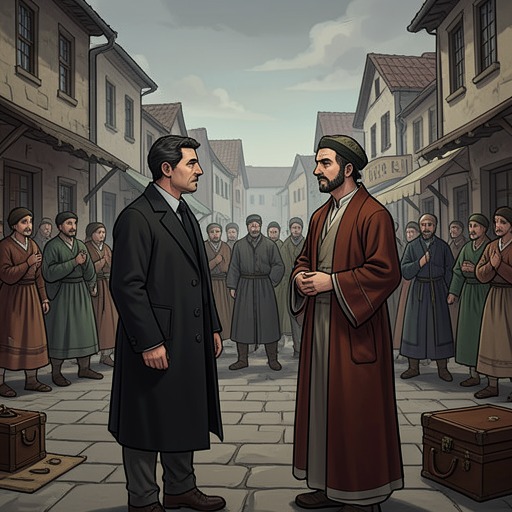
You Only Live TwiceJames Bond’s amnesia transforms survival into a second beginning: after escaping the Castle of Death, he is rescued by Kissy Suzuki but cannot remember his name, his past, or the world beyond Kuro Island. His injuries are physical as well as psychological, and Kissy’s decision to conceal his identity gives his blank memory a fabricated life to inhabit.
Onset and concealment
When Kissy sees a black-winged figure in a kimono crash into the sea, she recognizes James Bond and swims the two hundred yards from the wall to reach him. The impact has driven the air from his lungs, while the searing pain in his head has nearly extinguished his will to live. As he struggles to free himself from the kimono, he mistakes Kissy for Ernst Stavro Blofeld and tries to strike her. Even after she identifies herself, he does not follow her willingly: he swims in widening circles until she calms him, supports him, and carries him half a mile through the currents to her cove.
When Bond wakes, he is sick, dazed, and unable to say who he is or how he arrived. He recalls only a man’s face, which he thinks was dead and belonged to a bad man. Kissy sees an opportunity—and assumes the burden of inventing a past for him. She tells him that she is his lover, that his name is Taro Todoroki, and that they live on the island and fish together. She explains his head wound and cut ribs as the result of a fall while climbing the cliffs for seagull eggs. Rather than take him to the Suzuki house, she leads him behind the Shinto shrine to the dry-floored cave, where she says they live together and promises food and care. Bond accepts the account and falls asleep almost at once.
The island’s priest agrees to protect the stranger as a hero brought by the gods, but requires discretion: Bond must remain unseen for many weeks, and Kissy must keep his presence secret. A doctor examines him in the cave, using a map of the head as he checks for a fracture and treats both injuries. The bullet has cut across the severe swelling caused by Bond’s fall into the oubliette; the doctor cleans and dresses the head wound, applies surgical plaster to the cut across Bond’s ribs, and judges that he will live. He identifies damage to the temporal lobe, where memory is stored, and warns Kissy that Bond may need months or even years to recover it. An X-ray in Fukuoka would ordinarily be advisable, but the priest’s order that Bond remain hidden keeps him on Kuro Island.
Concealment and a life on Kuro
The doctor’s diagnosis made care on Kuro a long undertaking. Bond was not to be moved for at least a week, and the doctor instructed Kissy in feeding and nursing him; because the priest had ordered the stranger kept secret, even medical visits had to be made at night and by different routes. A trip to Fukuoka for an X-ray was judged advisable but set aside. The island’s concealment held despite repeated visits by police from Fukuoka, the arrival of Tiger Tanaka from Tokyo, and the later appearance of a huge man claiming to be from Australia, whom Kissy found especially difficult to evade. Shiran-kao remained unbroken, and Kuro kept its secret.
As his body mended, Kissy took Bond out for walks at night and, on occasion, swimming in the cove. They played there with David, while she told him the history of the Ama and Kuro and deftly turned aside his questions about the world beyond the island. These outings joined his recovery to the small geography she had given him: the cove, the island, and the life she had claimed they shared. Bond could participate in that life, but he could not test its account against a remembered past.
When winter came, the Ama stayed ashore to mend nets and boats and work the mountain-side smallholdings. Bond moved back into the stone-and-wood house, occupied himself with carpentry and other odd jobs, and learned Japanese from Kissy. The glazed look left his eyes, yet they remained remote. At night he dreamed of white people, large cities, and faces he only half remembered. Kissy reassured him that these were meaningless nightmares, and he gradually accepted the house and the unbroken sea horizon as the limits of his world.
Kissy carefully kept him away from Kuro’s south coast. She feared that when fishing resumed at the end of May, he would see the great black wall across the straits and his memory might return. The doctor, surprised by Bond’s lack of progress, came to believe that the amnesia was total; eventually, Bond’s physical recovery and apparent contentment meant there was no further reason for visits. His new life thus appeared stable not because the past had been resolved, but because Kissy had shielded him from the places and questions that might bring it back.
The clue that reopens the past
The island’s carefully maintained boundary began to fail through a scrap of newspaper. One day, on the way down to the cove, Bond seemed preoccupied and asked Kissy to wait because he had something serious to discuss. He showed her a crumpled square he had taken from the spike in the small lavatory. Kissy recognized it as one of the pieces she tore from newspaper and discarded whenever it contained English words—a precaution meant to keep stray clues from reaching him.
Bond had noticed a single word: “Vladivostok.” He asked what it meant, saying that it seemed to carry a message for him and that he associated it with a large country called Russia. Kissy remembered her promise to the priest and hid her face in her hands before confirming that he was right. The moment makes visible the cost of the life she has constructed: protecting Bond has required not only concealing his identity from the island’s searchers, but also withholding information from Bond himself.
The word does not restore Bond’s memories, but it gives his uncertainty a direction. He believes that he had much to do with Russia and that much of his former life concerned it; he longs to know where he came from before Kuro and asks Kissy to help him. His recovery therefore turns toward a conflict between the sheltered existence she has sustained and his own desire to recover a past that the paper has made newly imaginable.
Identity Without Memory
Bond’s amnesia separates bodily recovery from the recovery of a self. The wounds can be cleaned and bound; he can learn Japanese, work with his hands, and settle into a daily life. But the return of an alert expression does not return his history. His dreams preserve fragments—white people, cities, half-remembered faces—without giving him a way to place them. The apparent completeness of his recovery is therefore double-edged: he can live within the world Kissy has made for him, while remaining unable to verify who he was before it.
Kissy’s invented name and shared past provide Bond with a usable identity, but not knowledge of his own. The word on the newspaper scrap breaks that enclosure without repairing the missing memories: it connects him to Russia and makes his prior life imaginable as something he must seek. The state ends, in the evidence presented, not with recognition but with a request for help. Bond’s amnesia thus leaves his return to himself unfinished, suspended between the safety of an imposed present and the desire to recover an unknown past.