Seppuku
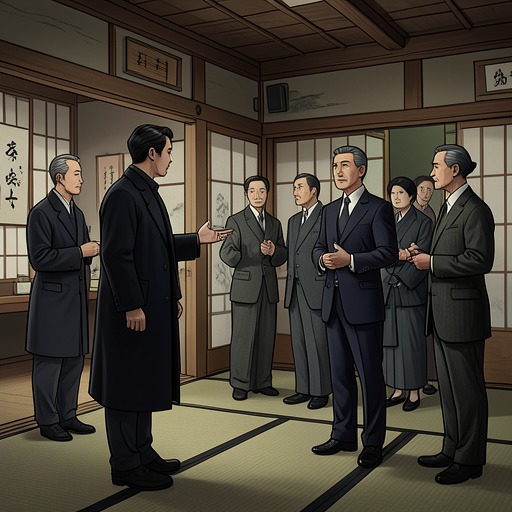
You Only Live TwiceSeppuku is treated in You Only Live Twice not simply as a method of suicide but as a formal act of atonement: a person gives up the life that is understood to be the last offering available. Tiger Tanaka explains its inherited prestige through stories of collective loyalty and wartime sacrifice, while James Bond challenges the moral logic that can make death appear honourable. The contrast reveals how the novel frames seppuku as both a personal gesture and a contested social meaning.
Definition and Moral Logic
Tiger describes seppuku as an act that expunges dishonour through the offering of one's own life. In his account, that offering can count as an apology precisely because it is total: there is nothing more a person can give. The practice therefore joins death to moral obligation rather than presenting it solely as escape from hardship. Tiger contrasts this understanding with what he regards as the more accommodating British response to failure, in which a person adjusts their ambitions and tries again.
The distinction emerges in a conversation about an eighteen-year-old student who had twice failed the university entrance examination. The student went to a construction site near his home and placed his head on the block beneath a pile-driver. Tiger interprets the death as expiation for bringing dishonour on the student's parents and ancestors, and says the family would gain face in the neighbourhood. The episode is not identified as seppuku, but it gives the discussion a contemporary example of suicide construed through shame and family obligation. James Bond instead sees a wasted life and rejects the assumption that such a death restores honour.
The Forty-Seven Ronin and Public Memory
Tiger grounds his explanation in the story of the forty-seven ronin, which he describes as a tale familiar to Japanese children. Their negligence, he says, led to the assassination of their lord, Asano. After swearing to avenge him, the ronin carried out that revenge and then gathered at Ako to commit seppuku in expiation for their failure. In Tiger's account, the act completes a chain of loyalty, revenge, and responsibility: vengeance does not erase the original negligence, so the surviving retainers answer for it with their lives.
The story's place in public memory is marked by the festival at the Ako shrine, for which special trains are laid on to carry respectful pilgrims. Seppuku is thus presented not only as an individual act but as a practice remembered and ceremonially revisited by a community. James Bond objects that teaching children such stories invites them to venerate suicide. Tiger agrees with the implication rather than denying it, making the exchange a direct dispute over what collective remembrance teaches about honourable conduct.
Admiral Ohnishi's Death
The wartime example sharpens the connection between seppuku and apology. When James Bond asks whether Admiral Ohnishi, credited in the conversation with inventing the kamikaze idea, killed himself after Japan's surrender, Tiger answers that he did so and calls the manner honourable. Tiger explains that a person committing seppuku invites two close friends to be present to finish the act if necessary. Ohnishi made the cross-cut across his belly from left to right and then the upward cut toward the breastbone, but these wounds did not kill him.
Ohnishi refused the coup de grace. Tiger says he sat contemplating his injuries for a whole day before dying, interpreting the prolonged death as a sincere apology to the Emperor. The detail complicates any simple idea of seppuku as a swift, controlled exit: in this account, the refusal of assistance prolongs suffering and becomes part of the gesture's moral force. Tiger then turns away from the subject as dinner arrives, acknowledging that the custom offends James Bond's sensibilities even as he continues to present it as honourable.
Suicide, Honour, and the Novel's Debate
The discussion places seppuku within a wider argument about how suicide is named and judged. Tiger distinguishes the Japanese word jisatsu, which he glosses as self-murder, from the stigma he associates with the British view. He cites a figure of 25,000 suicides a year and describes other spectacular deaths, including lovers jumping together at Kegon Falls and people entering the crater of Mihara volcano. These examples are not all seppuku; together, in Tiger's speech, they show how different deaths can be interpreted through public approval, shame, or spectacle.
That debate also informs his account of the Castle of Death, whose poison garden has attracted people seeking to die. Tiger describes the routes by which visitors reach the castle and the range of dangers in its grounds, then says the death toll has exceeded five hundred and publicity is drawing more people. The garden's warnings and barricades have not stopped the deaths. Set beside the commemorated self-sacrifice of the ronin and Ohnishi, this episode exposes a tension in the novel's discussion: a death described as an apology or an act of honour belongs to a different moral story from deaths enabled by an attraction marketed, in effect, as a destination. Through James Bond's objections and Tiger's explanations, seppuku becomes a point of conflict over whether honour can redeem the destruction of a life.