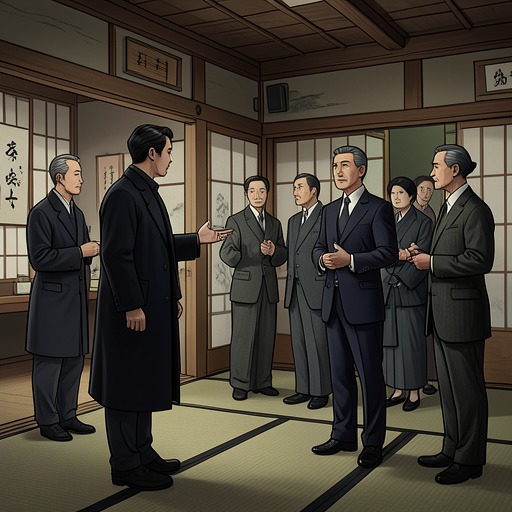
The Forty-Seven Ronin’s Revenge and Collective Seppuku
You Only Live TwiceThe Forty-Seven Ronin’s Revenge and Collective Seppuku is the story of forty-seven bodyguards who avenge the assassination of their lord, Asano, and then collectively commit seppuku to expiate their failure to protect him. In Tiger Tanaka’s account, the tale makes suicide not a disgrace but an act that can carry the weight of loyalty, atonement, and public remembrance.
The Failure and the Vow
Through their negligence, the forty-seven bodyguards’ lord, Asano, is assassinated. They swear to avenge him and carry out that vow. The account presents their revenge as a response to their own failure: fulfilling their duty to their dead lord does not erase the negligence that preceded it.
Atonement at Ako
After avenging Asano, the bodyguards gather at Ako and all commit seppuku to expiate their negligence. Tiger identifies this as the act Bond would know by the vulgar term hara-kiri, or “belly-cutting.” Their deaths complete the tale’s moral sequence: the men first answer their lord’s death with revenge, then turn judgment upon themselves for having failed him.
Remembrance and Cultural Meaning
Tiger describes the story as one of Japan’s most famous folk tales, familiar to children. Its place in childhood teaching helps explain his argument that suicide carries no stigma in his country as it would in Bond’s. The tale is also remembered through public observance: at the time of the festival at the Ako shrine, special trains must be laid on to accommodate the respectful pilgrims. The recurring journey to the shrine gives the story a continuing communal presence, linking the bodyguards’ deaths to a tradition of public reverence.