World War II
You Only Live TwiceWorld War II is a decisive but selectively presented background in You Only Live Twice: it explains the formation of Tiger Tanaka as an intelligence officer, the abrupt end of his wartime trajectory, and the historical break between imperial Japan and the postwar country in which James Bond encounters him. The novel gives the war no sustained battlefield narrative. Instead, it emerges through Tanaka’s biography, Richard Lovelace Henderson’s warning to Bond, and later references to the American occupation.
Tanaka’s Wartime Career
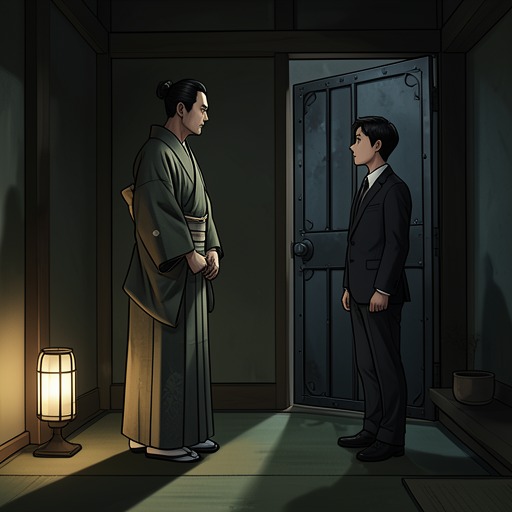
Before the war, Tanaka had studied at Oxford and served in London under the cover of an assistant naval attaché, while actually spying for Japan. His education and familiarity with Britain therefore belong to a double history: he had participated in its academic world while gathering intelligence against it. That combination helps explain why Bond can treat him as a sophisticated interlocutor without mistaking him for a merely Westernized Japanese official.
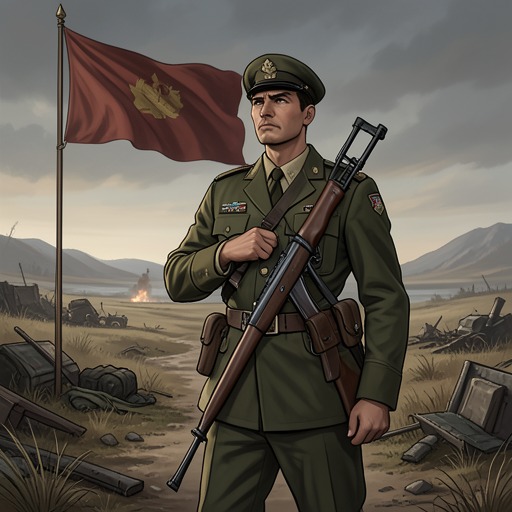
During the war, Tanaka joined the Kempeitai, Japan’s military police, and became a personal aide to Admiral Ohnishi. He was also training for Kamikaze Attacks. The account makes his survival contingent on the war ending before that training reached its fatal conclusion: the United States’ actions at Nagasaki and Hiroshima were followed by Japan’s Surrender, which prevented his expected death. The novel supplies neither a precise date for these events nor a detailed account of Tanaka’s duties; its emphasis falls on the stark reversal from preparing to die to surviving the collapse of the state he served.
A Warning Recalled by Bond
Tanaka’s wartime record is first conveyed through Bond’s recollection of advice from Richard Lovelace Henderson. During a tense social game with Tanaka, Bond’s teasing claims of British and Scottish superiority bring a sudden glitter to Tanaka’s eyes. Bond remembers Henderson cautioning him not to press his luck: Tanaka may be urbane, but his appearance and history also carry associations of military discipline, martial skill, and national service.
The remembered warning gathers several facts into a portrait that Bond might otherwise overlook. Tanaka was a black belt in judo before attending Oxford; he had spied in London before the war; he served in the Kempeitai; and he trained for a suicide mission during the final phase of the conflict. Henderson’s account is blunt and racially prejudiced in its language, but its practical point is clear: social ease and Western education do not cancel Tanaka’s experience or make him a harmless opponent. The scene’s shift from joking cultural rivalry to awareness of danger gives the war a living presence in the room, rather than confining it to distant history.
Surrender and the End of a Possible Future
The account of Tanaka’s wartime service turns on an unrealized ending. His training pointed toward death, while the surrender abruptly made survival possible. The novel presents the atomic bombings and the defeat of Japan in a compressed, retrospective phrase rather than dramatizing them as scenes. This brevity makes the change in Tanaka’s fate especially sharp: the war stops, and the man who had been preparing to die remains to enter a new political era.
That ending also complicates Bond’s image of his host. Tanaka is not simply an adversary formed by wartime Japan, nor merely a polished official familiar with British institutions. His career includes clandestine work against Britain, service in Japan’s wartime security apparatus, and preparation for a mission from which surrender saved him. Bond’s playful challenge at the party takes place against that history, giving their banter an edge that neither education nor good manners can remove.
Postwar Setting and Narrative Function
The novel connects the war’s end to the occupation that followed. In a later explanation of Western settlers in Japan, Tanaka describes the increased presence of foreigners, mostly Americans, since the occupation. This brief historical reference places the story’s contemporary Japan after defeat and foreign military presence, a setting distinct from the prewar world in which Tanaka had worked under diplomatic cover. The book does not develop this passage into a full account of occupation policy; it uses the changed postwar conditions to explain the presence of outsiders in Japan.
World War II thus functions less as a continuous historical chronicle than as a pressure behind present identities and relationships. Tanaka’s prewar intelligence work, wartime service, and survival at surrender explain why his genial manner coexists with formidable experience. Henderson’s warning and Bond’s sudden recognition translate that past into immediate tension, while the occupation reference marks the broader political transformation left behind by the war. The conflict’s significance lies in this continuity: its battles are largely outside the narrated present, but its consequences remain active in the people and institutions Bond encounters.