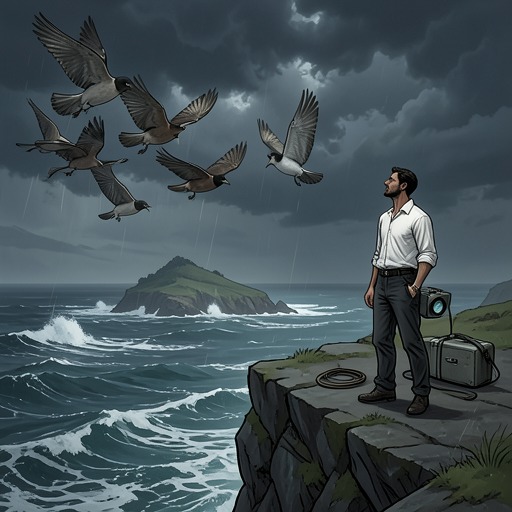
sparrows’ tears
You Only Live Twice“sparrows’ tears” is an expression for something of scarcely measurable worth or consequence. Its meaning shifts from the small earnings of the women on Kuro Island to the apparent insignificance of James Bond’s life and love there, placing a tender daily existence beside the force of a returning past.
Meaning and First Use
Tiger Tanaka uses the phrase while preparing Bond to adapt to the islanders’ routine. The women’s fishing day ends around five in the evening; they are expected to sleep by eight and go out again at dawn. Their earnings, Tiger explains, are small—no more than the price of “sparrows' tears.” The image gives their income an almost vanishing scale, fitting the frugal life Bond is being told to enter.
Return and Reversal
The expression returns at the close of the evidence. Bond rows out with the cormorant while Kissy Suzuki smiles at him, and the day seems beautiful and unchanged. But Bond does not know his own name. Against the “blazing significance” of a single Russian word on a scrap of paper, his life on Kuro Island and his love for Kissy are, in Tiger’s phrase, “of as little account as sparrows' tears.”
Narrative Significance
The repeated expression links economic smallness to emotional displacement: first it describes what the islanders earn, then what Bond’s seemingly settled life counts for in the pull of his lost identity. The ending does not deny the beauty of his days with Kissy; it makes that beauty precarious by setting it against knowledge Bond has not yet recovered. The phrase’s return turns a casual measure of poverty into a measure of how abruptly a life can be overshadowed.