
The Warning That Arrives Too Late
You Should Have LeftThis flow traces the recurring Get away warning and the narrator’s repeated failure to act upon it.
increasing Bearing strength in each event
 decreasing
Bearing strength in each eventdecreasingThe First Phrase
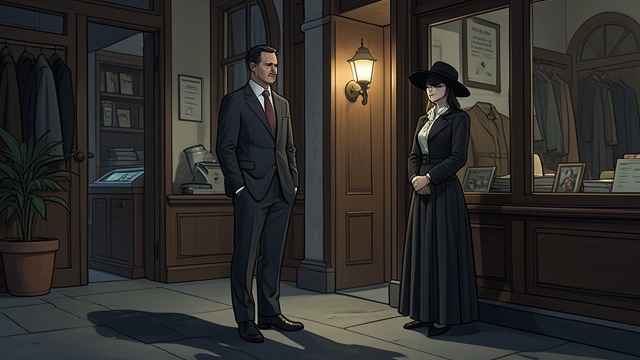
The First Phrase
A Stranger’s Command
The woman with the narrow eyes tells the unnamed narrator to get away quickly outside Gruntner's General Store. Her warning is direct but linguistically uncertain.
Rational Reinterpretation
He decides that he may have misunderstood her dialect. The first opportunity for escape is lost through politeness, doubt, and the desire to preserve a normal explanation.
The Written Warning

The Written Warning
Words in the Notebook
The phrase Get away appears in the narrator’s notes where it does not belong. He initially treats it as an intrusion or a possible forgery.
Voice Without Owner
Because the warning uses his own notebook, it cannot be assigned securely to the woman, Susanna, or himself. The message becomes a communication traveling through time and authorship.
The Repeated Command
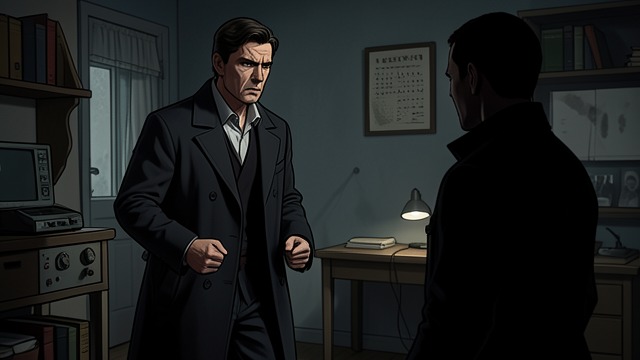
The Repeated Command
Escape in Dream
In the nightmare, the unnamed narrator repeats Get away while trying to flee the woman with the narrow eyes. The command becomes part of his own thought rather than an external instruction.
Compromised Agency
He wants to believe the phrase can guide him, but the dream already shows that desire and warning are indistinguishable. His mind recognizes danger while his body remains inside it.
The Failed Transmission

The Failed Transmission
A Message Across Time
The unnamed narrator later believes he can warn his earlier self through writing and undulating time. He tries to send Get away back through the notebook.
No Escape From Knowledge
The attempt fails, or has already failed, because he remains trapped. The warning may be real without being effective, turning foreknowledge into another form of despair.
The Final Silence

The Final Silence
No Further Command
After Susanna and Esther leave, no clear warning remains. The unnamed narrator sees the empty reflection and continues writing at the table.
Too Late
The absence of the phrase is itself significant. The warning has completed its cycle, and the narrator now occupies the position from which earlier warnings were sent.
December 3 noon
December 4 screenplay session
December 5 night
December 6 night
December 7 evening
