Alice Ruthven
Young Captain Jack · The Son of a SoldierAlice Ruthven is the widowed head of the Ruthven household and the decisive guardian of Jack Ruthven’s place within it. Having lost her husband, Colonel Martin Ruthven, at the Battle of Gettysburg, she raises Marion Ruthven and Jack together, treating the adopted boy as her own son. When Jack’s parentage is challenged by Dr. Mackey, Alice does not surrender him to an unsupported claim: she insists that legal adoption, lived affection, and actual proof must all be taken seriously. Her eventual marriage to Colonel Stanton does not erase her earlier motherhood; it restores the family structure around Jack and leaves Alice, once Mrs. Ruthven and later Mrs. Stanton, as his mother in both law and affection.
Identity and Family Background
Alice is introduced through loss. She is a widow because Colonel Martin Ruthven died at the bloody Battle of Gettysburg, and her household is consequently organized around absence as well as care. Her daughter Marion is seventeen, and Marion and Jack are described as nearly inseparable. The closeness of the two young people places Alice at the center of a family that is not defined solely by biological descent: Jack has been adopted, yet he belongs to the same intimate domestic world as Marion.
Her grief is still visible in her physical weakness and pallor. The children are her principal consolation, and she clings to them more closely than before. This detail gives her later resistance to separation a concrete emotional foundation. Jack is not merely a dependent entrusted to her household; he is one of the children through whom Alice continues to live after her husband’s death.
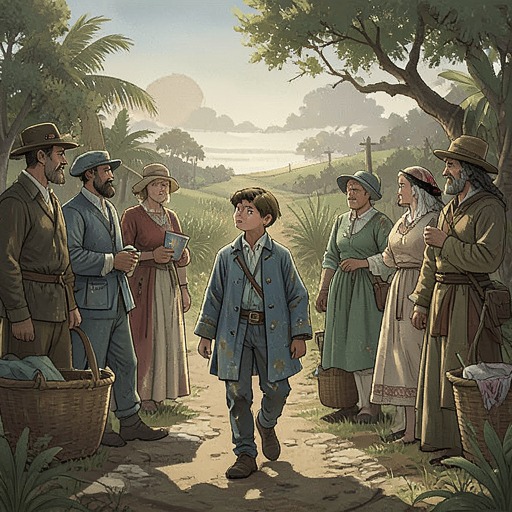
The household’s understanding of Jack is initially threatened by St. John Ruthven, who tells him that he is a nobody, does not truly belong to the Ruthven family, and will eventually have to leave. The accusation fills Jack with consternation because it attacks the social and emotional identity Alice has given him. Marion counters it by explaining that Alice and Colonel Martin Ruthven adopted Jack when he was about three or four years old and that he is now John Ruthven, her own brother. Alice’s family therefore rests on an adoption that has become an ordinary, deeply felt kinship rather than a temporary arrangement.
Motherhood and the Paternity Crisis
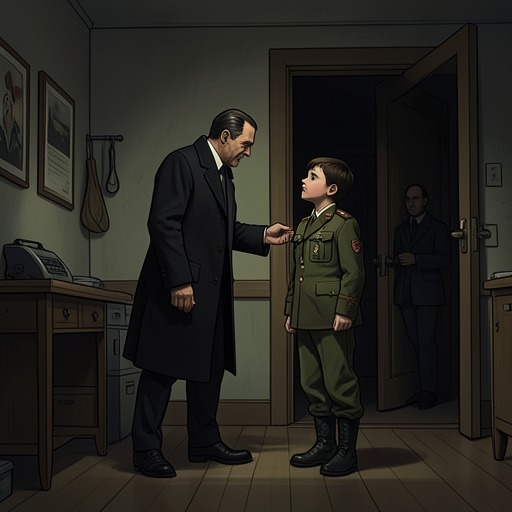
Alice’s motherhood is tested when Dr. Mackey suddenly claims Jack as his son. Jack returns from the confrontation distressed, and Alice welcomes him with relief, declaring her happiness that he and Marion are safe. When Jack tells her that Marion has revealed the truth and asks whether he is not her son, his words expose the emotional cost of the disputed identity: biological uncertainty threatens to make years of care seem legally or morally provisional.
Alice responds by refusing to treat Dr. Mackey’s assertion as self-proving. She states that he must establish his claim before she gives Jack up, emphasizing that she adopted Jack legally and that he has been as dear to her as if he were her own flesh and blood. Her position joins two kinds of authority. The adoption gives her a formal claim, while the language of flesh and blood asserts that sustained care has created a relationship equal in value to biological motherhood.
Her caution is not simple possessiveness. Alice asks Dr. Mackey what actual proofs he possesses, turning the dispute from emotional pressure into a demand for evidence. The question matters because the story repeatedly contrasts competing versions of Jack’s identity: the Ruthven foster son, the nameless child associated with a shipwreck, Dr. Mackey’s alleged son, and eventually Colonel Stanton’s son. Alice’s role is to keep the family from being rearranged by the loudest claimant before the material and testimonial evidence has been examined.
She also carries the practical burden of preserving clues. The clothing found with the shipwrecked child was unmarked, as was the lace handkerchief in the child’s pocket, but Alice kept both, along with a ring worn on one of the woman’s fingers. When Jack asks to see the ring, Alice leaves the room and returns with a small jewel casket containing the ring and the delicate handkerchief. These objects embody the past that the household has safeguarded even before it understood their importance.
Protection, Responsibility, and Action
Alice’s care extends beyond the domestic interior. When a wounded colonel is reported to be in serious condition, she becomes deeply interested in his case. After Dr. Harry Powell leaves, she has one of the plantation’s enslaved workers hitch a horse to the carriage and drives to the place where the wounded officer lies. She identifies herself as Alice Ruthven, owner of the plantation half a mile away, and explains that Dr. Harry Powell is her nephew. The scene presents her as a plantation mistress exercising mobility, property, and family connections in the service of wartime care.
The wounded Colonel Stanton’s fevered speech connects his past to Alice’s family. He cries out about a shipwreck and asks that his wife Laura and his son Jack be saved. Alice thus encounters evidence that may resolve the very identity crisis threatening her household. Yet the revelation does not make her abandon Jack. Instead, it gives her a new responsibility: to discover whether Colonel Stanton’s memories and the objects associated with the wreck can establish the truth without denying the legitimacy of her own relationship with Jack.
Her vigilance remains active during the family’s danger. After Jack disappears, Alice calls for Marion and asks where he is. Later, when a voice comes from an upper window, she recognizes Jack and cries out with joy. The reaction is immediate and personal: before questions of blood, inheritance, or proof can be settled, her first concern is that the child she has raised has returned alive.
Reconciliation and Final Position
When Alice learns that Colonel Stanton is at the plantation wounded and that his past concerns Jack, the information is presented as a possible threat and a possible restoration. The decisive truth is that Jack is not Dr. Mackey’s son but Colonel Stanton’s son. This resolves Dr. Mackey’s imposture, but it does not invalidate Alice’s adoption. The biological discovery changes Jack’s ancestry; it does not undo the years in which Alice acted as his mother.
Colonel Stanton initially considers returning to the North and settling there. Alice cannot bear to part with Jack, and the household decides that all of them will remain at the plantation. A year later, Colonel Stanton marries the widow. Alice therefore becomes Mrs. Stanton, while becoming once more Jack’s mother within the renewed family structure. The marriage is not merely romantic or social: it consolidates the biological father’s reunion with Jack while preserving Alice’s maternal place.
Narrative Significance
Alice represents the novel’s strongest distinction between blood relationship and family relationship. She is neither an obstacle to Jack’s biological recognition nor a passive witness to it. Her legal adoption, emotional attachment, preservation of material clues, demand for proof, and refusal to surrender Jack under pressure make her the guardian of a broader definition of kinship.
Her story also gives the identity plot its ethical center. Dr. Mackey treats paternity as a claim that can be asserted; Alice treats parenthood as a responsibility that must be proved and lived. The ring, handkerchief, shipwreck testimony, and tin box eventually help recover Jack’s history, but Alice’s care explains why the recovery matters without reducing him to evidence. The ending accordingly reconciles rather than replaces the two forms of belonging: Jack is Colonel Stanton’s biological son and remains Alice’s son because adoption, protection, and enduring affection have already made that relationship real.