Colonel Martin Ruthven
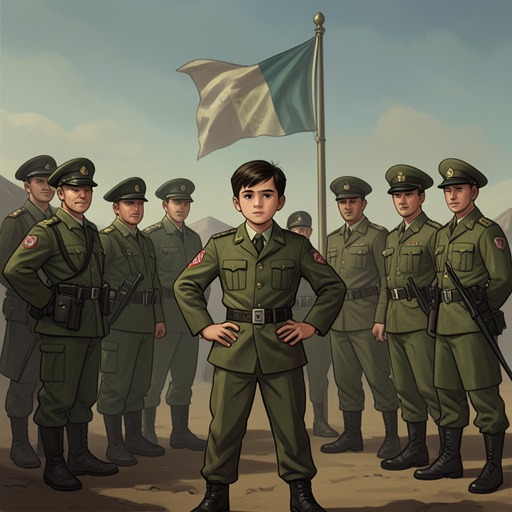
Young Captain Jack · The Son of a SoldierColonel Martin Ruthven is the late patriarch of the Ruthven household, a Confederate officer killed while leading a charge at the Battle of Gettysburg. His death leaves a widow, Alice Ruthven, and two children, Marion Ruthven and St. John Ruthven, but his most consequential legacy is the legal and emotional place he gave to Jack Ruthven, whom he and Alice adopted. Long after his death, that adoption protects Jack’s claim to the Ruthven family even as competing stories about Jack’s biological parentage threaten to displace it.
Identity and Family Background
Colonel Martin Ruthven was the husband of Alice Ruthven and the father of Marion Ruthven and St. John Ruthven. The family lived in a large mansion on one of the richest plantations in South Carolina, a setting whose security and social rank are repeatedly challenged by the American Civil War. His household included not only his biological children but also Jack Ruthven, whom the colonel and Alice had adopted when Jack was approximately three or four years old.
The colonel’s position within the family is therefore both patriarchal and constructed through care. Jack is not connected to him by blood, but Alice states that the late colonel adopted Jack legally and that Jack is his son by law. Marion likewise tells Jack that the adoption made him her brother. These statements establish a form of kinship that remains valid even when Jack’s unknown birth and later biological identification become subjects of dispute.
Military Death and Its Effects
Colonel Martin Ruthven died at Gettysburg while leading a charge, a bullet striking him in the head. The account of his death presents him as a combat officer who remains active at the decisive point of battle rather than as a distant household figure. Old Ben emphasizes the circumstances of the death when questioned about the family, identifying the colonel as the man who was killed while leading his men.
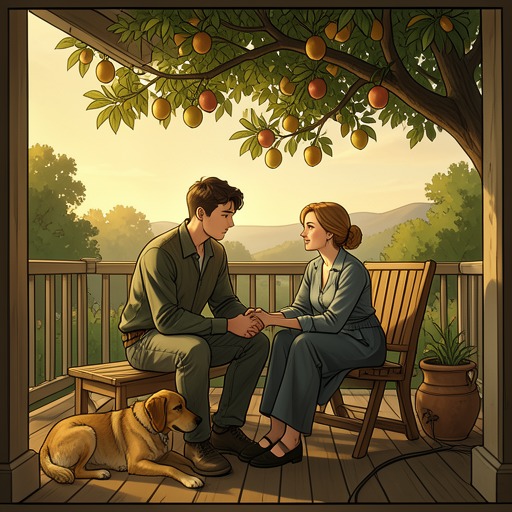
The loss produces a prolonged crisis at the plantation. Alice Ruthven is so shocked that she becomes ill and lies in bed for a long time; when she recovers enough to move about, she remains weak and pale. Her children become her chief consolation, and the bereavement draws her more closely toward them. Marion later remembers that she had been happy at home until the war began and her father was killed, while Harry Powell acknowledges that the colonel had been a noble man. His absence thus governs the emotional atmosphere of the mansion even when the plot has moved to questions of war, inheritance, and Jack’s origins.
Adoption of Jack Ruthven
The colonel’s most important action in the novel’s identity plot is his adoption of Jack Ruthven. Jack first hears a hostile version of his status: St. John Ruthven calls him a nobody who does not belong to the Ruthven family and may eventually have to leave. Marion rejects that humiliation by explaining that her parents adopted Jack and that he is her brother. She insists that, in the eyes of the law, the adoption makes him a real member of the family.
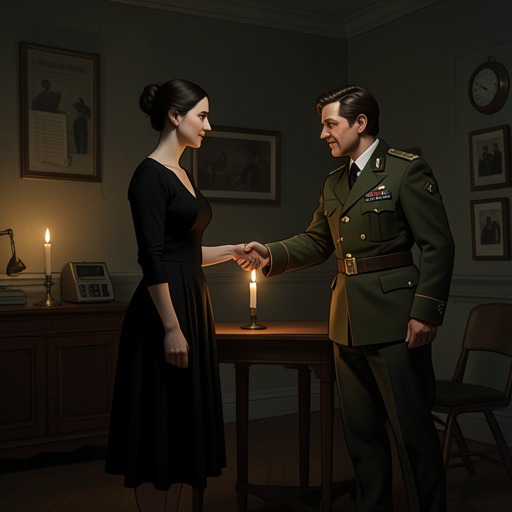
Jack’s position is reinforced when he later defends his right to remain at the plantation. He identifies himself as the late colonel’s son by law and refuses to surrender that status merely because another man claims biological authority over him. Alice Ruthven takes the same position when Dr. Mackey declares that he is Jack’s father: she will not give Jack up until Mackey establishes his claim, because she has adopted the boy legally and loved him as if he were her own flesh and blood. She also refuses Mackey’s offer to repay the money spent raising Jack, making clear that her relationship with him is not a financial arrangement. Through these exchanges, the colonel’s adoption becomes a durable counterweight to blood-based claims.
The Wreck and the Uncertain Birth Story
Colonel Martin Ruthven became involved in Jack’s rescue after the wreck on Hemlock Bluff rocks, although Jack’s biological identity could not be established at the time. Old Ben found a wounded woman on the beach with the three- or four-year-old Jack in her arms. The child had been exposed to the storm and was close to death. Old Ben carried Jack and his mother to the boathouse, then went to the plantation for help; the colonel returned with him and about half a dozen men, and they brought both survivors to the Ruthven home.
Jack’s mother died two days later without recovering consciousness. The colonel attempted to discover who she and Jack were, but the effort failed because she and Jack’s supposed father had taken passage at the last moment, their names were absent from the shipping-office list, and the ship’s own records were never recovered. The only name that survived was the one the dying woman had used for her child: Jack. The wreck therefore creates the absence that makes Jack’s later identity contest possible, while the colonel’s response to that absence is to rescue, shelter, and legally adopt the boy.
Material clues survive, but they initially yield no answer. Alice preserves the dead woman’s unmarked clothing and lace handkerchief, as well as a ring from one of her fingers. The ring once bore a marking, yet it was so worn that neither the Ruthvens nor two jewelers could decipher it. When Jack asks to see it, Alice brings out a small jewel casket containing the ring and handkerchief. The objects confirm that Jack’s past has not been entirely erased, but they do not immediately identify his parents; the colonel’s adoption consequently supplies the only secure family identity available to him for much of the story.
Legacy and Narrative Significance
The colonel’s reputation is defended against the social contempt directed at Jack. St. John Ruthven dismisses Jack as an ocean waif of probably low birth, but Old Ben answers that Jack is a young gentleman and that his father was one as well. Although the remark cannot prove Jack’s biological ancestry, it preserves the moral and social dignity associated with the colonel’s household. The contrast exposes the difference between St. John’s inherited rank and the colonel’s remembered character: the colonel’s standing is linked to military courage, family responsibility, and protection of the vulnerable, while St. John uses rank to demean an adopted brother.
The colonel’s legal fatherhood also helps Jack withstand later reversals. Dr. Mackey first claims to be Jack’s father, creating the possibility that the Ruthven adoption might be overridden by a biological claim. That claim is ultimately false: Jack is revealed to be the son of Colonel Stanton. The revelation changes Jack’s blood identity but does not erase the colonel’s role. Martin Ruthven remains the man who took an unidentified, shipwrecked child into his home, made him a son by law, and gave him a place within a family that had suffered its own wartime loss.
Jack’s adult career gives the colonel’s military legacy a final form. Years later, Jack enters West Point Military Academy, graduates with high honors, goes West as an officer at a well-known fort, and rises to the rank of colonel through a career marked by daring, honor, bravery, and loyalty. The ending confirms that Jack is indeed the son of a soldier, but it also preserves the formative importance of Martin Ruthven’s adoption. Jack’s identity is not reduced to the bloodline eventually proved by Colonel Stanton; it is the product of rescue, legal belonging, family affection, and the inherited example of a fallen officer.