Confederate States Army
Young Captain Jack · The Son of a SoldierThe Confederate States Army is the organized Southern military power that brings the American Civil War directly into the lives of Jack Ruthven and the Ruthven household. Its presence is first associated with armed authority and danger, but the narrative gradually differentiates the army’s surgeons, ordinary troops, officers, wounded men, and guerrilla followers. That distinction makes the Confederate States Army a changing social institution rather than a single undifferentiated force: it retreats under pressure, depends on local civilians, fills private houses with the wounded, and is judged by whether its representatives respect or violate the boundaries of civilian life.
Military Setting and Retreat
The Confederate States Army operates within a rapidly deteriorating military situation. Around Oldville, the Northern army has steadily driven the Southern army backward until Confederate camps lie less than four miles from Jack Ruthven’s home. For two days, cannon fire can be heard from the plantation district, and the local women fear that the approaching Northern forces will invade their homes and seize their possessions. The army’s retreat therefore becomes a domestic crisis: military movement is measured by the sound of artillery, the distance of camps, and the possibility that private property will be exposed to pillage.
The same pressure appears when Mrs. Ruthven and Jack Ruthven enter Oldville and find the town in alarm. The stores are closed, the tavern is the only establishment still open, and men who have recently joined the Confederate ranks gather there while another battle is underway. The town’s commercial and civic life has been suspended by military emergency. Even the general store kept by Lemuel Blackwood, once crowded with goods, has been reduced by the war to a scanty, shop-worn stock. The Confederate States Army thus shapes the civilian economy as well as the battlefield, turning travel, shopping, supplies, and rumors of troop movements into parts of wartime survival.
Soldiers, Surgeons, and Wounded Men
The army is represented early by Dr. Mackey, a surgeon attached to the Fifth Virginia regiment. His first appearance combines military rank with menace: he rides a coal-black horse, wears a Confederate Army surgeon’s uniform, and threatens the fourteen-year-old Jack when the boy’s fishing interferes with his passage across a narrow bridge. The uniform establishes Dr. Mackey as an officer of the Confederate States Army, while his dark and crafty appearance and aggressive conduct introduce a contrast between official military status and personal character.
Dr. Mackey later presents himself at the Ruthven boathouse as a surgeon of the same regiment. Old Ben provides him with drinking water, and the encounter also places military service beside the altered social conditions of the Ruthven plantation. Old Ben explains that his former master freed him and allowed him to use the boathouse, where he lives in a cabin on the bluff. The conversation connects the Confederate military structure with a Southern society in which slavery, emancipation, continued personal dependence, and wartime service coexist uneasily.
When Dr. Mackey visits the Ruthven home, he again identifies himself as a Fifth Virginia surgeon and is received as an officer of the Confederate cause. The visit is important because the army’s medical identity becomes entangled with Jack’s family mystery: after noticing Jack’s resemblance to Walter, Dr. Mackey claims, “Jack, I am your father!” The assertion gives military authority a private and potentially coercive use. A surgeon who should represent care and professional service instead uses his position and his alleged biological relationship to challenge Jack’s place within the Ruthven family.
The army also appears through its wounded. During the Confederate movement past the plantation, exhausted, ragged, dust-covered, and injured soldiers pass along the road. Stretcher-bearers ask Mrs. Ruthven to shelter three men whom they can carry no farther. She accepts immediately, and the lower floor of the house is prepared for them. More wounded men follow until six Confederate soldiers lie on cots in the sitting room, attended by a young surgeon while Mrs. Ruthven and Marion Ruthven assist with their care. The Ruthven mansion temporarily becomes a field hospital, showing how the army’s medical needs are transferred to civilian women, servants, rooms, furniture, and domestic labor.
Local Defense and Military Authority
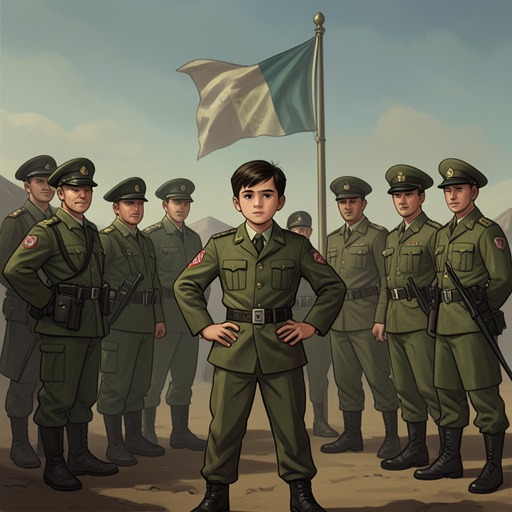
The Confederate States Army’s movement produces a parallel mobilization among the inhabitants of Oldville. In response to the approaching threat, Jack assembles nineteen boys of his company. Each carries a loaded gun or pistol, and the boys form an imposing line. Old Ben secretly displays a long, old-fashioned horse pistol and promises to defend Jack. The scene shows that the army’s retreat does not leave the community politically or militarily passive; it stimulates a local Home Guard organized around the protection of the Ruthven plantation.
Jack explicitly defines the limits of that defense. When guerrillas approach the homestead, he places his boys across the lawn and declares that the property is private and that the house is a hospital containing six wounded Confederates under a surgeon’s care. The appeal invokes two principles at once: civilian property should not be looted, and wounded soldiers should receive protection. The Confederate States Army is therefore associated with a moral and legal boundary that Jack expects armed men to recognize, even while the regular military situation has broken down around him.
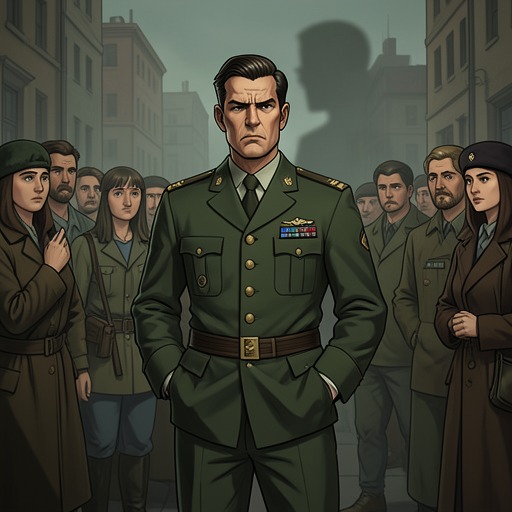
A Confederate colonel responds differently from the guerrillas. After the cavalry passes the Ruthven homestead, Jack warns the officer that six wounded men are sheltered inside and anxiously asks whether the place will be harmed. The colonel answers that an officer who is a gentleman respects private property and assures Jack that the household has nothing to fear so long as it acts without treachery. Jack recognizes the difference between this disciplined officer and the man who had threatened him on the bridge. The episode separates military authority from mere violence: Confederate affiliation alone does not determine conduct, and the narrative measures officers by their treatment of civilians and the wounded.
Regular Troops and Guerrilla Disorder
The Confederate retreat is followed by a company of guerrillas described as followers of every army who fight chiefly in order to loot afterward. Their proximity to Confederate troops creates a central institutional contrast. The guerrillas use the confusion of military passage as cover for plunder, while Jack, the Home Guard boys, and the household insist that the homestead remains protected private property. The guerrillas’ captain, Sandy Barnes, orders his company toward the house despite Jack’s warning that it functions as a hospital.
The conflict continues at the stable, where Old Ben and two Home Guard boys fight three guerrillas attempting to steal several horses. Old Ben protests that the animals are private property, but the guerrilla leader dismisses him with a racial insult and insists that the horses will be taken. This confrontation places the army’s claimed authority beside the practical violence of irregular warfare. The Home Guard’s defense is not abstract patriotism; it concerns the immediate protection of buildings, wounded men, animals, and the labor and property on which the household depends.
The distinction is sharpened by the later treatment of Jack and his companions. Dr. Mackey, enraged when Jack calls him a fraud, summons Confederate soldiers and orders them to conduct the boy to camp, ensuring that he does not escape. The episode shows how military personnel can be made instruments of a private feud. Jack’s confinement is presented not as a clearly established military necessity but as the consequence of Dr. Mackey’s personal claim and anger. The same wartime apparatus that shelters wounded men and protects property can also enforce an officer’s coercive demand.
Captivity and the Army’s Human Cost
Jack and his companions eventually spend two days in a guerrilla cave. The captors treat them brutally and provide barely enough food to prevent starvation; Pete Gendron is especially bitter toward Jack and even speaks of killing him to obtain money. This captivity belongs to the wider violence surrounding the Confederate military world, but the narrative again distinguishes irregular predation from the formal purposes associated with an army. The cave strips away uniforms, rank, and claims of honor, revealing how wartime disorder enables confinement, deprivation, and greed.
Across these episodes, the Confederate States Army is both a fighting organization and a pressure that reorganizes civilian existence. Its retreat brings artillery within earshot, closes Oldville’s stores, fills the Ruthven sitting room with six wounded men, and prompts nineteen boys to form a local defense. Its surgeons carry medical care into family life, while its officers can either honor private property or lend soldiers to coercion. Its nearby guerrillas expose the consequences when military power loses ethical discipline and becomes a vehicle for theft.
The organization’s narrative significance lies in this unstable boundary between public war and private obligation. The Confederate States Army represents the Southern cause, but the book tests that cause through concrete conduct: whether troops protect the wounded, whether officers act as gentlemen, whether property is respected, and whether military authority serves duty or personal appetite. Against the army’s retreat and fragmentation, Jack Ruthven’s defense of the household, Mrs. Ruthven’s conversion of her home into a hospital, and Old Ben’s resistance to horse theft create a local ethic of care and protection. The result is not a simple glorification of military service, but a layered portrait of wartime authority judged by the people who must live beneath it.