Courage versus Cowardice
Young Captain Jack · The Son of a SoldierCourage versus Cowardice is one of the central moral structures of Young Captain Jack. The contrast is dramatized through conduct under pressure rather than through rank or social standing: Jack is an adopted boy of uncertain origin, while St. John Ruthven belongs to the plantation world that claims inherited superiority. Yet the supposed social advantages of St. John Ruthven do not produce courage, and Jack’s uncertain status does not prevent him from becoming the story’s most dependable defender. The novel finally joins courage to loyalty, protection, self-command, and honorable service, while treating cowardice as a habit of evasion that damages both the individual and the community.
The Moral Contrast in the Household
Jack’s first desire for military life is still immature. He speaks on several occasions of enlisting as a drummer boy because he imagines the glory of being a soldier without considering its hardships and suffering. Mrs. Ruthven refuses to let him go, insisting that she cannot spare him after one member of the family has already gone away; Marion Ruthven also clings to him, making his departure nearly impossible. This early impulse establishes an important distinction: courage is not simply eagerness to approach danger, and youthful excitement is not yet disciplined service.
St. John Ruthven provides the sharper negative comparison. When Jack’s ability and parentage are questioned, St. John Ruthven dismisses him as an ocean waif of probably low birth. Old Ben rejects that judgment and insists that Jack is a young gentleman and that his father was one too. The exchange exposes the novel’s reversal of social expectations. St. John Ruthven relies on inherited rank as a claim to superiority, but the narrative steadily tests character through action rather than ancestry. Jack’s unknown origins do not make him morally lesser; St. John Ruthven’s privileged position does not make him brave.
Jack’s Courage as Responsible Action
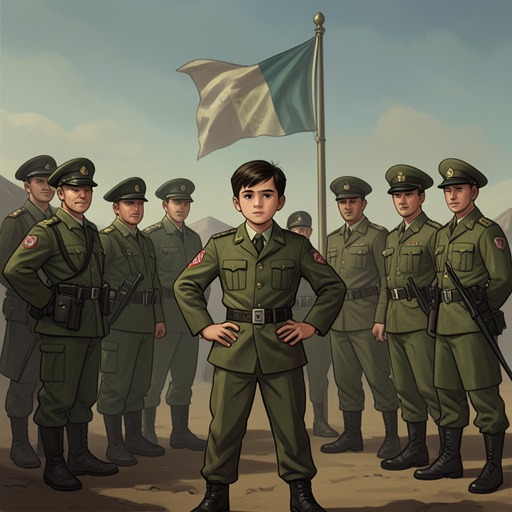
Jack’s development becomes concrete when he and Darcy Gilbert organize a Home Guard company of boys. The company has twenty-three members, and Jack serves as captain. He possesses an old sword and a pistol, while the other boys have pistols or guns, but the force’s significance lies less in its equipment than in its willingness to assume responsibility for the threatened community. Jack’s pride in the command is joined to practical readiness: he believes the boys could do the enemy some damage, whereas St. John Ruthven refuses even the ordinary obligations expected of him.
The contrast becomes personal when Marion Ruthven suggests that St. John Ruthven should join the command. Jack answers that St. John Ruthven is a coward at heart, despite being a man. The judgment is supported by reports from the plantation: cannon fire nearby has made St. John Ruthven so uneasy that he can neither eat nor sleep. Jack responds to the same sound in the opposite way. The firing makes him eager to be at the front, to see what is happening, and to take part. The scenes therefore set anxiety against purposeful engagement, but they also imply that courage requires direction. Jack does not merely admire battle; he turns his excitement into organized defense.
His rescue of St. John Ruthven gives the contrast its most revealing form. When the young man sinks in the bay, Jack orders attention to the boat, leaps to the bow, and dives after him. Jack had initially feared bringing the boat closer lest he strike St. John Ruthven, but he then acts boldly, makes a second dive, and surfaces near the sinking man. Courage here is not bravado. It is the decision to accept physical danger for the life of someone whose cowardice and contempt have already placed him in moral opposition to Jack. The rescue makes Jack’s courage protective rather than merely martial.
Defending Home, Hospital, and Property
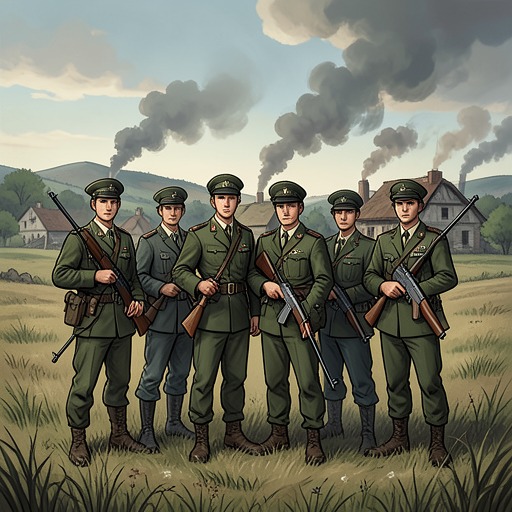
When Federal forces appear in overwhelming numbers, Marion Ruthven turns pale and asks what will happen if they advance. Jack answers that the defenders must do their best and decides to call out the Home Guard, even though Marion warns that he may be shot. His decision places the safety of the household above his own security. The Home Guard then takes position across the lawn in front of the Ruthven homestead as a company of looting guerrillas follows the cavalry.
Jack’s confrontation with the guerrillas defines the ethical limits of his courage. He draws up the boys and identifies them as the guard of the house. When asked whether they intend to fight, the boys answer that they will and command the intruders to keep back. Jack explains that the property is private and must be respected, and adds that the house is functioning as a hospital for six wounded Confederates under a surgeon’s care. His defense is therefore not an invitation to violence for its own sake. It invokes the protection of civilians, private property, and wounded men, placing armed resistance within a moral and humanitarian framework.
The narrative reinforces this principle through the conduct of a regular officer. After the fighting has driven the opposing force back, Jack again anxiously asks that the place not be harmed, repeating that it is private property and that six wounded men are inside. The colonel replies that an officer who is a gentleman respects private property and that Jack and his men have nothing to fear so long as they act without treachery. Jack recognizes the difference between this disciplined authority and the guerrilla who had threatened him with a sword. Courage is thus distinguished from predatory force: honorable strength protects limits, while cowardice and lawlessness alike abandon them.
Cowardice as Evasion and Exploitation
St. John Ruthven’s response to danger is repeatedly shown as a failure of duty. When Federalists approach the plantation owned by Mary Ruthven, the firing fills him with supreme terror. He dresses only because the danger is immediate, and when his mother tells him to arm himself and defend their home, he answers with chattering teeth and asks how near the Yankees are. His fear is not presented as a momentary weakness followed by responsible action; it becomes the governing fact of his conduct.
The same moral pattern appears in his refusal to join either the army or the Home Guard. Darcy Gilbert complains that St. John Ruthven will not defend the place himself and asks what he expects. Jack, by contrast, volunteers to go over with eight or ten companions while the others remain around town. The difference is not simply between a brave person and a frightened person. It is between someone who accepts communal obligations and someone who expects others to bear the danger created by war, family vulnerability, and property ownership.
The novel also places cowardice beside greed and coercion in the conduct of other antagonists. Dr. Mackey responds to Jack’s accusation that he is a fraud by threatening him, seizing him by both arms, and ordering soldiers to conduct him to camp so that he cannot escape. In the guerrilla cave, Jack and his companions spend two days under brutal treatment and receive barely enough food to avoid starvation; Pete Gendron is especially bitter and insults Jack repeatedly, even imagining that the doctor should kill him to obtain the money. These scenes broaden the contrast beyond battlefield fear. Moral cowardice can mean using authority, imprisonment, or cruelty instead of facing truth openly, while Jack’s defiance persists even when resistance brings immediate punishment.
From Boyish Valor to Honorable Career
Jack’s courage changes in scale as the novel proceeds. It begins with an untested desire for soldierly glory, becomes the captaincy of a twenty-three-member Home Guard, and is then proved through rescue and defense. The decisive feature of this arc is that danger repeatedly gives Jack an opportunity to choose between personal safety and responsibility. He chooses the boat’s endangered passenger, the threatened household, the wounded men in the hospital, and the principle that private property must not be looted.
The ending confirms that these episodes are training rather than isolated adventures. Jack proves to be the son of a soldier, enters West Point Military Academy, and graduates with high honors. He then goes West as an officer at a well-known fort, gains a reputation for daring and honor, and rises rapidly to the rank of colonel, a position he fills with his former bravery and loyalty. His military future therefore validates courage as a durable character rather than a temporary childhood performance.
St. John Ruthven receives the inverse trajectory. He becomes an even worse spendthrift, loses the plantation, and leaves Mary Ruthven dependent on her sister-in-law’s charity. He drifts to New Orleans and eventually to the West, after which the narrative records no further account of him. His disappearance contrasts with Jack’s public advancement. One man converts danger into service and earns institutional recognition; the other converts privilege into irresponsibility and ends in social and narrative abandonment.
Significance in the Novel’s Moral Education
For a book addressed to young readers, the courage-versus-cowardice opposition functions as a training in judgment. Jack is not praised merely for wanting adventure. His exemplary status is earned when enthusiasm is disciplined into command, when fear is mastered for another person’s sake, and when force is restrained by obligations toward property, hospitals, and the wounded. The story makes bravery imitable by attaching it to specific acts of preparation, rescue, defense, and loyalty.
The contrast also challenges social hierarchy. Old Ben’s insistence that Jack is a gentleman because of his qualities, despite Jack’s status as an ocean waif, anticipates the novel’s larger verdict: moral worth cannot be guaranteed by birth. The figure treated as socially uncertain becomes the true soldier, while the established young man fails the tests that his position should have prepared him to meet. Courage versus Cowardice thus links personal character to a wider argument about family, wartime duty, humane conduct, and the possibility that honor is made through action rather than inherited with a name.