Dr. Mackey's conspiracy with St. John Ruthven
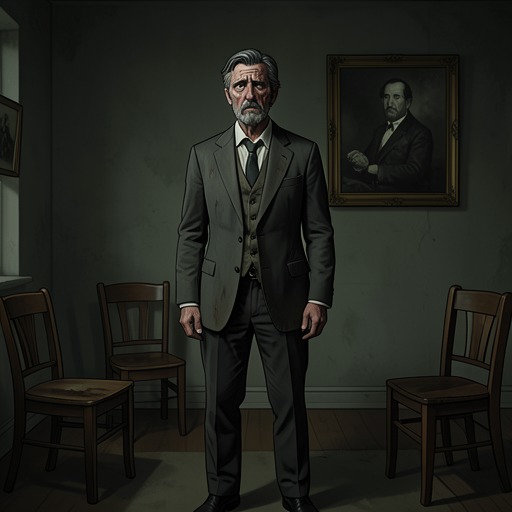
Young Captain Jack · The Son of a SoldierDr. Mackey's conspiracy with St. John Ruthven is the book's clearest instance of identity being turned into a weapon. Dr. Mackey does not approach St. John through affection or family loyalty; he offers him a bargain in which Jack Ruthven's uncertain parentage becomes a means of controlling property. St. John, already resentful of Jack's place in the Ruthven family, becomes the conspirator's useful intermediary, while Dr. Mackey supplies the claims, targets, and threats that give the scheme its direction.
The Conspiracy's Foundation
Dr. Mackey's immediate objective is to establish his claim that Jack is his son. He tells St. John that he is anxious to prove the claim and presents cooperation as being in St. John's own interest. The proposed result is Jack's removal from the plantation. St. John's aunt values Jack highly, and Dr. Mackey warns that she might leave him half of her property; with Jack out of the way, St. John and Marion Ruthven would be more certain of receiving their shares. The appeal is therefore double-edged: Dr. Mackey disguises a personal attempt to control Jack as a defense of St. John's inheritance.
The plan exploits a conflict already present within the Ruthven household. St. John has heard that Jack was rescued from a shipwreck nearly eleven years earlier and that Jack's mother was taken to the Ruthven home before she died. He also knows that the household has preserved the clothing Jack wore and the belongings removed from his mother's person. Dr. Mackey identifies those preserved materials as possible evidence of his claim and urges St. John to obtain them, or at least a detailed description of them.
Secret Retrieval and Concealed Evidence
The requested evidence includes the clothing and personal effects kept by Mrs. Ruthven. Among those effects are an unmarked lace handkerchief and a ring worn by Jack's mother; the ring once bore a marking, but it had become too worn to read, even after two jewelers inspected it. Dr. Mackey wants possession of such objects because they may connect the shipwrecked woman, Jack, and the alleged family history that he is trying to assert.
Dr. Mackey is explicit that the retrieval must be hidden from St. John's aunt. When St. John suggests that he might ask to see the materials and observe where they were kept, Dr. Mackey rejects any open approach. He says that he does not want Mrs. Ruthven to know anything about the matter, and St. John recognizes that the proposed task is to be done “on the sly.” Dr. Mackey answers affirmatively and insists that the objects belong to him. The language of ownership gives the theft a legal appearance, but the secrecy reveals the actual method: concealment, opportunism, and pressure rather than proof.
St. John hesitates because his aunt is careful with the objects, yet Dr. Mackey reminds him that helping to establish the claim to Jack serves his own interests. After considering the risk, St. John agrees to do what he can and wants the materials obtained quickly. His participation thus moves from prejudice to deliberate assistance. He is not merely repeating Dr. Mackey's story; he accepts a covert assignment intended to alter Jack's position within the family and potentially its distribution of property.
Redirecting St. John's Hostility
When Dr. Mackey learns that Colonel Stanton may be encountered, he asks St. John not to mention him or repeat what he has said. He then supplies a second instrument of the conspiracy: the accusation that Colonel Stanton is a spy. Dr. Mackey claims that Stanton once entered Confederate lines and reported their movements to his superiors, and he tells St. John that arresting him would be an achievement. St. John's existing contempt for Yankees makes the accusation immediately attractive. He says that he had regarded Stanton as a suspicious person from the first encounter and declares that he will report the case without delay.
The charge is especially useful because it can remove or discredit a man whose history threatens Dr. Mackey's claim. Dr. Mackey is unwilling to appear personally against Stanton, but he says that he can produce two other men as witnesses. St. John nevertheless accepts responsibility for the arrest. The episode shows how the conspiracy expands from a secret search for family evidence into an effort to manipulate Confederate authority. Dr. Mackey uses St. John's ambition, regional prejudice, and desire for advantage as interchangeable tools.
Exposure and Collapse
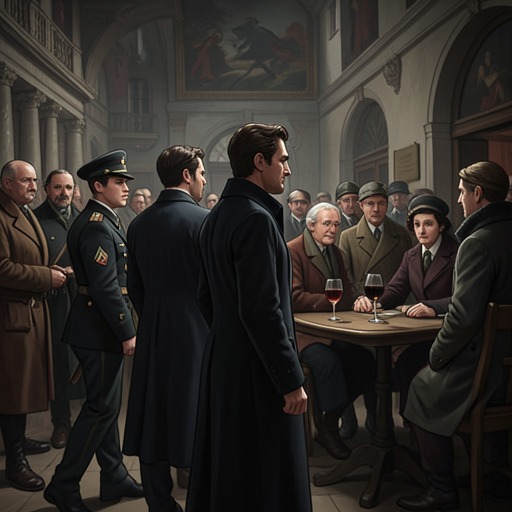
The conspiracy reaches its crisis when St. John arrives with men intending to arrest Colonel Stanton. He denounces Stanton as a spy and condemns the Ruthven household for harboring him. Jack confronts St. John and identifies the visitors' purpose as doing Dr. Mackey's dirty work. The confrontation turns the hidden alliance into a visible accusation, forcing St. John to defend an operation whose real sponsor can no longer remain concealed.
The decisive reversal is the revelation that Colonel Stanton, not Dr. Mackey, is Jack's father. This fact destroys the foundation of Dr. Mackey's claim and transforms the threatened arrest into an attack on Jack's newly recognized family. Mrs. Ruthven defends Stanton as a brave officer deserving proper treatment, while St. John learns that Dr. Mackey has been proved a thorough villain. Frightened by the exposure, St. John withdraws his request for the arrest, using Stanton's illness as a temporary excuse, and leaves with the men he brought. He never appears at his aunt's door again.
Moral and Narrative Significance
The partnership binds two different forms of wrongdoing. Dr. Mackey supplies calculated deception: he claims Jack as a son, seeks the preserved shipwreck evidence in secret, and attempts to turn a disputed family history into property. St. John supplies susceptibility and access: he knows the household, covets the inheritance, accepts covert instructions, and is ready to invoke wartime authority against Colonel Stanton. Their interests overlap, but their alliance is unstable because it depends on concealment and on St. John's willingness to trust a man whose story is never supported by the family evidence.
The conspiracy also sharpens the novel's contrast between legal or social possession and moral legitimacy. Dr. Mackey repeatedly speaks as though biological connection gives him ownership of Jack and Jack's mother's belongings. Yet the narrative places the preserved ring, handkerchief, clothing, testimony about the rescue, and Colonel Stanton's recovered account against his assertion. The black tin box found in the wreck further establishes the importance of material evidence in the larger identity mystery. In this structure, Dr. Mackey's claim is not defeated by indignation alone; it is undone when a fuller chain of testimony and objects exposes the falsity of the story he has made St. John serve.
St. John's retreat completes the relation's moral trajectory. Earlier, Jack had been told that he was a nobody who did not belong to the Ruthven family, and Marion Ruthven had affirmed that adoption made him John Ruthven and her brother in the eyes of the law. Dr. Mackey then offers a competing version by calling himself Jack's father. The final disclosure that Jack is Colonel Stanton's son does not simply replace one name with another: it reveals how the conspiracy tried to exploit every uncertainty surrounding the boy. Once that uncertainty is resolved, Dr. Mackey loses his instrument, St. John loses the courage to continue, and the household is “well rid of him,” as Marion Ruthven observes, because his conduct has exposed both cowardice and lack of principle.