Imposture
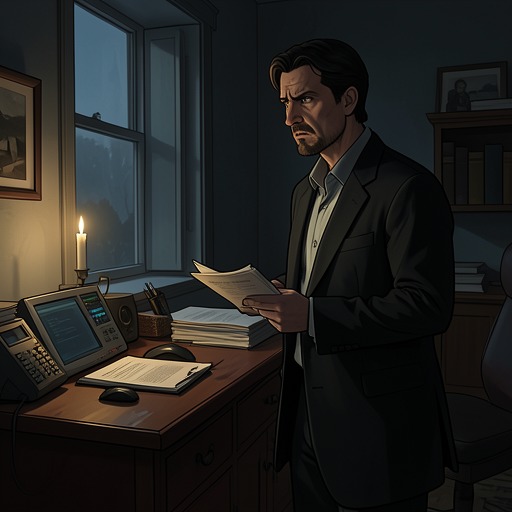
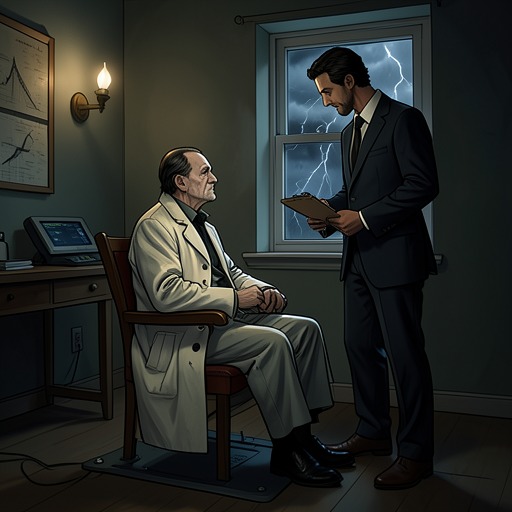
Young Captain Jack · The Son of a SoldierImposture in the novel is not merely a false name or isolated lie; it is Dr. Mackey’s sustained fraudulent claim to be Jack Ruthven’s father. By attempting to replace the uncertain history of a shipwrecked child with a convenient biological story, Dr. Mackey seeks control of Jack, access to a fortune, and the authority to dictate which family Jack belongs to. The deception is finally exposed through testimony, physical evidence, and the recovery of the black tin box from the Nautilus wreck, leaving Dr. Mackey imprisoned and Jack reunited with his true father, Colonel Stanton.
The Identity Crisis That Makes the Fraud Possible
Jack’s vulnerability begins with the absence of a verifiable history. Darcy Gilbert tells him that he is a nobody who does not belong to the Ruthven family, while Marion Ruthven explains that the Ruthvens adopted him when he was three or four years old and made him John Ruthven, her brother. The adoption gives Jack a real home and family, but it does not answer the question of his birth. His mother had been shipwrecked on the Ruthven shore and died at the house shortly afterward; neither her clothing nor the child’s clothing carried a name, and the only object found in her pocket was an unmarked lace handkerchief.
The surviving ring becomes an especially important piece of evidence because it preserves a material trace of Jack’s mother even though its inscription has been worn away. Mrs. Ruthven has kept the ring and handkerchief with the clothing, and Jack studies the small gold circlet as a possible wedding ring. The objects cannot immediately identify him, but they establish that his past is not empty. It is concealed in damaged, incomplete signs that others may interpret, exploit, or eventually connect with testimony.
The same pattern appears in the black tin box recovered from the wreck. Jack discovers it in a closet buried beneath dirt and water, opens its small padlock with a key from his pocket, and finds papers whose importance is not yet clear to him. The box later proves to contain Colonel Stanton’s precious papers. Thus, the novel sets up a contrast between Dr. Mackey’s spoken claim and the more durable evidence preserved in objects: the impostor possesses a story, while Jack’s true identity survives in material records awaiting recovery.
Dr. Mackey’s Claim and Its Coercive Form
Dr. Mackey first presents the deception as a revelation. Meeting Jack after their earlier encounter on the bridge, he says, "Jack, I am your father!" and insists that the assertion is true. The claim directly challenges the Ruthvens’ account of Jack as an adopted child and attempts to transform an uncertain past into a supposedly settled biological relationship. It also places Dr. Mackey in the position of a parent before he has supplied convincing proof.
The Ruthvens refuse to treat the assertion as self-authenticating. Mrs. Ruthven states that Dr. Mackey must prove his claim before she will give up Jack, and Dr. Mackey responds by demanding that the boy not be taken away from the plantation, so that he can be brought before a court if necessary. His demand reveals that the dispute is not simply emotional. It concerns physical custody and the ability to control Jack’s presence while legal authority is being established.
Jack himself rejects the imposed identity. When Dr. Mackey tells him that he is hard on his father, Jack answers that he does not acknowledge him as a father and warns that he may be able to prove him an impostor. He then states the central contradiction in the claim: Dr. Mackey is a bachelor and was never married to Jack’s mother or to any other woman. The accusation is not based on instinct alone; Jack has learned a fact that directly undermines the asserted marriage on which Dr. Mackey’s paternity story depends.
The false claim becomes openly coercive when Dr. Mackey cannot persuade Jack. He asks why the doctor is so anxious to claim him, and Jack suspects that the motive is money. Dr. Mackey answers that Jack is his flesh and blood, but his insistence does not restore trust. Instead, rage replaces persuasion. He orders Confederate soldiers to conduct Jack to camp and prevent his escape. Later, after arranging to free him, Dr. Mackey again says that he treats Jack harshly because he wants him to understand that he is his father, even offering food as part of a forced relationship in which obedience is treated as filial duty.
Inheritance Behind the Paternity Story
The financial motive becomes explicit during Jack’s captivity. Dr. Mackey tells him that a large fortune is coming to both of them and promises Jack his full share if he publicly declares himself satisfied that Dr. Mackey is his father. Once that acknowledgment is made, Dr. Mackey says he will resign his commission as a surgeon in the Confederate army and take the necessary steps to claim the fortune.
This proposal exposes the structure of the imposture. Jack’s public acceptance is demanded before the legal and financial consequences can follow, so the declaration would function as both emotional submission and evidence for Dr. Mackey’s claim. The supposed father offers a share of wealth, but only on the condition that Jack validate the identity Dr. Mackey is trying to impose. Jack therefore understands the claim as an attempt to obtain money belonging to him rather than as an act of parental recovery.
Marion Ruthven reaches the same suspicion from another angle. She reports that a soldier believed property was coming to Jack and that Dr. Mackey wanted to get hold of it. Jack says that he never liked the doctor from their first meeting on the bridge and concludes that they must investigate Dr. Mackey’s record. The imposture is consequently read by the characters as a calculated inheritance scheme, not merely a mistaken recollection or a private family dispute.
Exposure Through Colonel Stanton
The decisive reversal comes when Colonel Stanton’s past connects Dr. Mackey with the destruction of the truth. Stanton recalls being taken on a voyage, placed in a strange hospital, and later transferred to an insane asylum, where a physician treated him brutally and tried to pry into his family affairs. The physician used the name Mackenzie, but Stanton later learned that his real name was Mackwell or Mackey. When Mrs. Ruthven tells him that Dr. Mackey has claimed Jack as his son, Stanton identifies the man as the villain responsible for his long confinement and calls him an impostor.
Stanton’s testimony changes the meaning of Dr. Mackey’s earlier behavior. The man who presented himself as a father is revealed as someone with a prior connection to Stanton’s family history and a reason to conceal or manipulate the truth. Stanton declares that Dr. Mackey is responsible for his imprisonment and threatens either to shoot him or put him behind bars. Mrs. Ruthven’s refusal to surrender Jack is thereby confirmed as prudent: Jack had resisted the claim, and the supposed father had never established a credible legal basis for taking him.
Mrs. Ruthven then tells Jack that Dr. Mackey is not his father but Colonel Stanton’s son. Jack is astonished to learn that his biological father is a Yankee officer, yet the revelation also resonates with his earlier impression of Stanton as a gentleman. Once he hears the full account, he understands the depth of Dr. Mackey’s villainy and recognizes why the doctor had avoided meeting Colonel Stanton face to face. The imposture fails because the competing narrative is supported by a living witness whose history links Dr. Mackey to the concealed family past.
Consequences and Narrative Significance
The fraud is defeated through a chain of corroboration rather than through Jack’s forced acknowledgment. The outlaws’ camp is searched after a mountain battle, and the stolen goods include the black tin box taken from the Nautilus wreck. The box and its contents are transferred to Colonel Stanton, who recognizes the papers as his own and tells Jack that nothing now stands between them and their fortune. The recovered documents provide material reinforcement for Stanton’s testimony and complete the movement from suspicion to proof.
Dr. Mackey’s imposed identity is therefore reversed by the legal consequences of the evidence. After the Civil War ends, Colonel Stanton resigns from the army, prosecutes Dr. Mackey, and works to recover the fortune due to himself and Jack. Dr. Mackey receives a ten-year prison term, while the Stantons gain possession of a fortune worth one hundred and fifteen thousand dollars within a year. The outcome demonstrates that the fraudulent father’s objective was indeed bound to property and that the truth can be restored through a combination of testimony and documents.
The resolution also repairs, rather than erases, Jack’s family life. Colonel Stanton initially considers returning North, but Mrs. Ruthven does not want to part with Jack, so the family remains at the plantation. A year later Stanton marries the widow, making Mrs. Ruthven, now Mrs. Stanton, Jack’s mother once more in the household as well as his adoptive parent. Jack’s identity thus emerges from competing versions—Ruthven foster son, nameless shipwreck survivor, Dr. Mackey’s alleged son, and finally Colonel Stanton’s son—without requiring him to abandon the family that raised him.
Imposture is consequently a struggle over who has the power to narrate another person’s origin. Dr. Mackey tries to make authority precede proof, using the language of parenthood, military force, and promised inheritance. Jack counters by withholding acknowledgment and demanding evidence. The novel ultimately privileges relationships confirmed by care, records, and trustworthy testimony over biological language asserted for personal gain. The false father’s claim collapses, while Jack’s belonging survives through both recovered bloodline and enduring adoption.