Jack's rescue
Young Captain Jack · The Son of a SoldierJack's rescue is the decisive beginning of his life as a Ruthven: a child recovered from the Nautilus wreck becomes the adopted son of the Ruthven household, receives the name Jack, and grows into a self-reliant young man whose belonging is initially founded on care rather than blood. The rescue also creates the identity mystery that drives the plot, because the child survives while his mother dies unidentified and the evidence of his original family remains hidden in the wreck and in a few preserved objects.
The Wreck and the Survivors
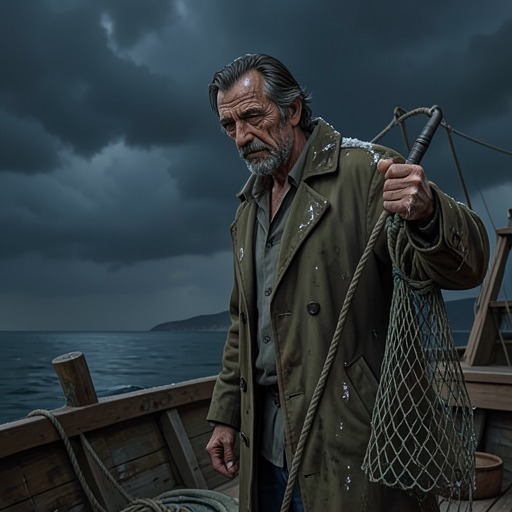
The event begins with the wreck on Hemlock Bluff rocks, which had come ashore between ten and eleven years before Jack learns the truth about his past. Marion Ruthven explains that Jack had been one of the passengers on the boat. The rescue therefore reaches back to a disaster that the boy cannot fully remember and that the household has preserved chiefly through testimony and material remnants rather than through a complete personal history.
The rescued passengers were a lady and her child. Contrary to the wounded Colonel Stanton's first belief that no one had survived the wreck, Mrs. Ruthven states that the lady and her child were saved. The woman was badly injured, died two days later, and could not provide her name; the boy, however, lived. This difference between the mother's death and the child's survival makes Jack's rescue both a literal deliverance and the source of his incomplete identity.
Adoption and Belonging
After the woman's death, the Ruthvens adopted the child. Marion later tells Jack that when he was only three or four years old, her father and mother took him into the family and that he is now John Ruthven, her brother. The adoption gives him a legal and domestic place in the household even though it cannot supply a biological genealogy. In the eyes of the law, he is Marion's real brother because her parents adopted him.
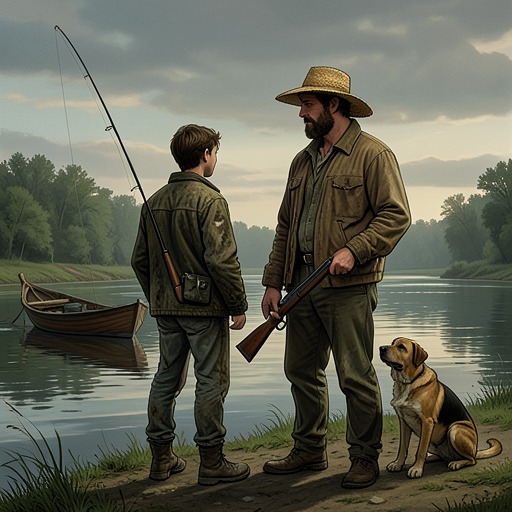
The adoption is enacted through ordinary family life rather than presented as a temporary charitable arrangement. Jack lives with Mrs. Ruthven in a large mansion on one of the richest plantations in South Carolina, alongside Marion, who is seventeen and regards him as her brother. The siblings think the world of each other and are almost inseparable. That intimacy demonstrates what the rescue accomplishes: the child is not merely kept alive but incorporated into a household whose affection becomes the first stable definition of who he is.
Evidence Preserved from the Past
The Ruthvens retain the few objects recovered or associated with Jack's mother. Her clothing was unmarked, and the only item in her pocket was an unmarked lace handkerchief. Mrs. Ruthven keeps the handkerchief together with the clothing, along with a ring that the woman wore on one finger. The ring once bore a marking, but it was so worn that neither the Ruthvens nor two jewelers could decipher it. When Jack asks to see it, Mrs. Ruthven brings out a small jewel casket containing the ring and the delicate handkerchief; Jack observes that the gold circlet resembles a wedding ring.
These objects preserve the rescue's unresolved questions. They confirm that the child came from a specific but unidentified family, yet they do not immediately disclose the mother's name or the father's identity. The wreck itself supplies another concealed link: a dark, padlocked tin box is later found in a secret closet aboard the ruined vessel. Jack uncovers it beneath dirt and water, uses a key from his pocket to open it, and eventually the box and its papers are recovered from an outlaw camp and turned over to Colonel Stanton. The material evidence first held in the wreck thus eventually connects the rescued child with the family from which he was separated.
Identity Conflict and Later Recognition
Because Jack's rescue is remembered without a complete account of his origins, his adopted status becomes vulnerable to insult and manipulation. Darcy Gilbert reports that St. John Ruthven has called Jack a nobody, claimed that he does not belong to the Ruthven family, and predicted that he will one day have to leave. Jack is deeply shaken, but Marion counters the insult by insisting that adoption makes him her brother and gives him standing in law and in the family.
The uncertainty then produces competing versions of Jack's parentage. Dr. Mackey tells him, "Jack, I am your father!" and repeats that claim as the truth, but the later evidence proves that Jack is not Dr. Mackey's son. Colonel Stanton, recovering from a wound and fever, speaks of a shipwreck, his wife Laura, and a son named Jack; when he learns that a boy of that name survived and was adopted by the Ruthvens, he recognizes the lost child. Marion finally tells Jack that he is Colonel Stanton's son and that the colonel has proved it beyond doubt. The rescue is therefore retrospectively transformed from the saving of an unknown orphan into the separation and recovery of a commander's child.
The recovered tin box completes the material side of that recognition. After the outlaws who held Jack prisoner are killed, their camp is searched and the box from the Nautilus wreck is found among stolen goods. Its contents are returned to Colonel Stanton, who tells Jack that the papers leave nothing between them and their fortune. The act of rescue thus ends in a second recovery: Jack's biological father, family history, and inheritance are restored without erasing the Ruthven adoption that shaped his life.
Narrative and Moral Significance
Jack's rescue establishes the novel's central distinction between biological origin and earned family membership. Before Colonel Stanton is identified as his father, Jack already belongs to the Ruthvens through the decision of Mrs. Ruthven and her husband to protect a surviving child whose mother could not be named. His later blood relationship explains his origins, but it does not invalidate the years of care that made him a Ruthven in practice and under the law.
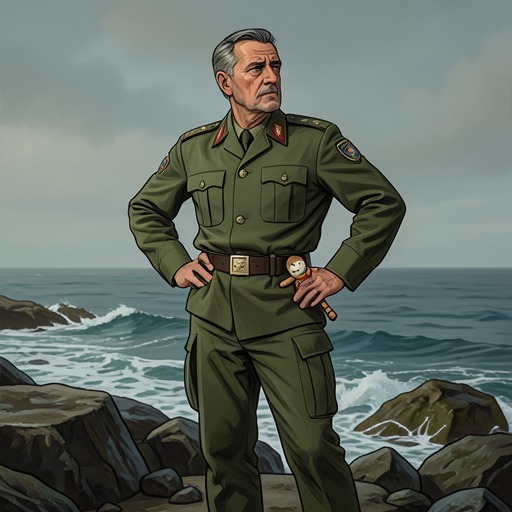
The rescue also prepares the contrast between Jack's conduct and the behavior of those who try to exploit his uncertainty. Jack grows into a manly, self-reliant boy who is not easily intimidated, organizes a Home Guard company of twenty-three boys, and serves as its captain. Those later actions give visible form to the character that the adoption nurtured: his identity is not merely something discovered in papers or proven by resemblance, but something expressed through courage, responsibility, loyalty, and action. The rescue saves Jack's life; the Ruthvens' adoption gives that saved life a home; and the later revelations place his adopted belonging and biological heritage within the same completed history.