Marion Ruthven
Young Captain Jack · The Son of a SoldierMarion Ruthven is the seventeen-year-old daughter of Mrs. Ruthven and one of the principal emotional anchors of the Ruthven household. Raised alongside Jack Ruthven, she regards him as her brother despite the absence of a biological tie, and her conduct repeatedly makes that chosen relationship more powerful than the doubts surrounding his birth. She also assists the wounded during the American Civil War and develops a love that culminates in her marriage to Dr. Harry Powell. Through Marion, the story presents family as something enacted through loyalty, care, and recognition rather than secured by blood alone.
Identity and Family Background
Marion Ruthven grows up in a household marked by both bereavement and adoption. Mrs. Ruthven is a widow whose husband, Colonel Martin Ruthven, died at the Battle of Gettysburg, leaving Marion as her only daughter. At seventeen, Marion is described as beautiful, but her importance is not limited to appearance: she and Jack Ruthven are so closely attached that they are nearly inseparable and think the world of each other.
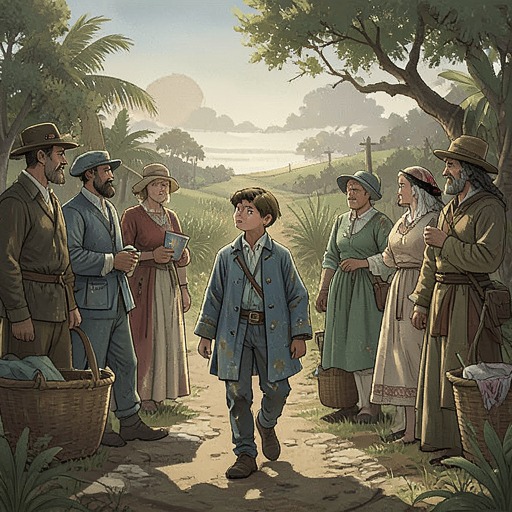
The household’s apparent stability is threatened when Jack hears that he is considered a nobody who does not truly belong to the Ruthven family and may eventually have to leave. Marion becomes the person who answers that wound. She tells him that they are not real sister and brother, yet insists that he will always be her real brother. She further explains that her parents adopted him when he was only three or four years old and that he is now John Ruthven, her own brother. Her explanation does not erase the mystery of his past, but it gives him a secure place in the present.
Marion’s language distinguishes legal or biological kinship from emotional kinship without treating the latter as inferior. She states that she thinks the world and all of Jack, calling him her brother in heart if not in blood, and demands that this bond be remembered. Her position is therefore not passive affection but an active defense of Jack’s identity within the family.
Loyalty During Jack Ruthven’s Identity Crisis
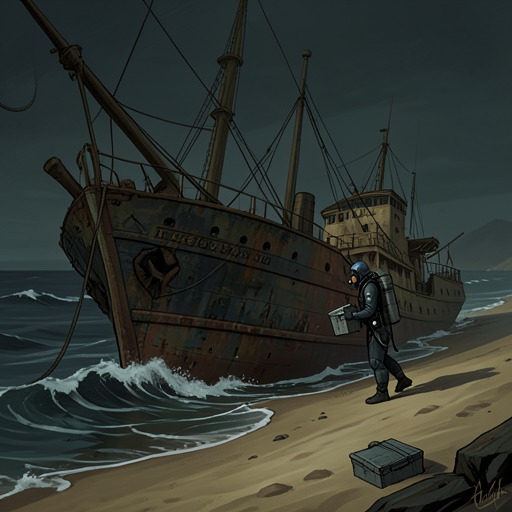
Marion’s role becomes most urgent when competing accounts of Jack’s parentage begin to unsettle the household. Jack asks her where he came from and how he arrived there, linking his uncertainty to the wreck on Hemlock Bluff rocks. He retains only a hazy recollection of a storm and enormous waves, so the shipwreck functions both as a physical setting and as the broken beginning of his personal history.
Later, Dr. Mackey declares that he is Jack’s father, a claim that sharply threatens the identity Marion has helped establish for him. Marion listens to the confrontation with horror and rushes toward Jack, revealing how immediately she experiences the claim as a danger to her brother rather than as a merely private dispute. When the evidence is finally clarified, Jack is told that he is not Dr. Mackey’s son but the son of the colonel. The revelation changes the understanding of Jack’s bloodline, but it does not revise Marion’s attachment: she had already treated him as her brother when his origins were unknown and continues to do so when they are disclosed.
The objects associated with the wreck reinforce the mystery Marion helps preserve and interpret. Mrs. Ruthven has kept the clothing of the shipwrecked woman, an unmarked lace handkerchief, and a ring found with her. A heavy black tin box is later uncovered from the wreck, and the box and its contents are eventually recovered from the outlaws’ camp and delivered to Colonel Stanton. Marion is connected to this chain of recognition not as an investigator who solves every clue, but as the family member whose testimony and loyalty prevent material evidence from becoming the sole measure of belonging.
Wartime Care and Moral Action
Marion’s affection is expressed through practical work as well as speech. When six wounded Confederates are brought into the Ruthven sitting room on cots, a young surgeon begins treating them, while Mrs. Ruthven and Marion assist. The mansion becomes a place of emergency care, and Marion’s domestic role expands into wartime humanitarian labor.
Her care continues when she works over George Walden, a wounded soldier, attempting to restore him to consciousness. Jack visits her upstairs and learns from her that the soldier knows Dr. Mackey. The information gives the household a possible path toward understanding Dr. Mackey’s activities, but the scene also shows Marion operating within the immediate demands of suffering: before the mystery can be solved, the injured must be tended.
Marion is equally ready to defend Jack in public. When someone suggests that he might have been responsible for failing to put out a fire, she sharply rebukes the accusation because she will not tolerate talk against her brother. Her protectiveness is not confined to moments of tenderness; it becomes a moral reflex whenever Jack’s courage or character is questioned.
Love and Marriage with Harry Powell
Alongside her devotion to Jack, Marion develops a romantic relationship with Dr. Harry Powell. Harry asks whether the girl he has always loved will abandon him, catching both of her hands in his own. Her response is not supplied as a formal declaration, but her later behavior makes her feeling clear: after he leaves the plantation, she watches him hurry down the road, feels genuine regret, and blushes when he turns and waves to her.
War complicates this relationship by making every departure uncertain. After a battle, Marion says that victory has been swallowed up in defeat, yet a soft look comes into her eyes because another Yankee advance might bring Harry Powell back into her presence. She does not wish to acknowledge how much she thinks of him, but the narration makes her divided feeling visible: she mourns military reversal while hoping that its consequences will restore personal contact.
The story ultimately joins Marion and Harry in marriage. The ceremony is part of a double wedding: when Mrs. Ruthven marries Colonel Stanton, Marion gives her heart to Dr. Harry Powell, who has established a lucrative practice in Philadelphia. The marriage turns private affection into a durable social bond and places Marion’s future within a renewed family network after the disruptions of war.
Change, Ending, and Narrative Significance
Marion begins as a young woman defined chiefly by her closeness to Jack and her place in a bereaved household, but the plot gives her increasingly substantial responsibilities. She becomes the interpreter of Jack’s adopted status, the defender of his emotional legitimacy, a helper in the treatment of Confederate wounded, a witness to the threats posed by Dr. Mackey and St. John Ruthven, and a woman whose romantic hopes endure through military upheaval.
Her relationship with Jack remains the emotional constant beneath the story’s revisions of identity. Whether he is treated as an outsider, an adopted Ruthven, Dr. Mackey’s alleged son, or Colonel Stanton’s son, Marion continues to recognize him as her brother. That constancy exposes the difference between a claim made for possession or authority and a bond demonstrated through years of care.
The final movement of Marion’s story is marked by restoration rather than isolation. She is present when news arrives concerning the colonel’s fevered recollection of a shipwreck and his plea that his wife Laura and son Jack be saved; she is also involved in the household’s continuing response to wartime danger. At the plantation’s double wedding, her marriage to Harry Powell parallels her mother’s marriage to Colonel Stanton. With St. John Ruthven notably absent, the ceremony establishes an ending in which Marion’s chosen loyalties, family attachments, and personal love are publicly confirmed.
Thematic Role
Marion Ruthven embodies the story’s distinction between blood relation and lived kinship. Her repeated insistence that Jack is her brother in heart gives emotional priority to adoption and mutual devotion, while the later discovery of his biological connection to Colonel Stanton supplies a second, different form of recognition. The narrative does not make the blood revelation necessary for Marion’s love; instead, it shows that her love preceded and survived the revelation.
She also links the private sphere to the moral pressures of the American Civil War. The same woman who protects Jack’s reputation helps nurse wounded Confederates and faces the possibility of losing Harry Powell to military service. Her compassion is therefore not decorative characterization but part of the household’s response to violence. Through Marion, domestic space becomes a site of nursing, testimony, defense, and reconciliation.
Her marriage to Harry Powell completes this pattern. It rewards neither social rank nor mere inheritance by itself; it joins affection, professional stability, and the rebuilding of family life after conflict. Marion’s decisive contribution to the story is her refusal to let uncertainty about origin determine the value of a human bond.