Nautilus
Young Captain Jack · The Son of a SoldierThe Nautilus is the shipwreck that turns a local coastal disaster into the governing mystery of Jack Ruthven’s life. Wrecked near the Ruthven Plantation on the rocks of Hemlock Bluff, it separated Colonel Stanton from his wife Laura and their young son, while leaving behind a surviving child, a wedding ring, and a black tin box containing valuable papers. The vessel’s physical remains therefore function as both a site of trauma and an archive: what seems at first to be only a wreck gradually becomes the evidence that restores a family, exposes a fraud, and returns a fortune.
The Wreck and the Child’s Rescue
The Nautilus enters the story through Marion Ruthven’s account of the wreck, which occurred between ten and eleven years before Jack’s identity is clarified. Jack had been a passenger and was found on the beach in the arms of his injured mother. Old Ben heard a cry of pain, discovered the woman amid the wreckage, and carried her and the child to his boathouse before seeking help from the plantation. Jack was only three or four years old, and exposure nearly cost him his life; his fragmentary memory retained the storm and enormous waves only in a dreamy, uncertain form.
The wreck did not yield an ordinary family record. Jack’s mother died two days after she was rescued, and no one could establish her name or the child’s parentage. The clothing was unmarked, as was the lace handkerchief kept with it, while the ring she wore had once carried an identifying mark that had become too worn to read, even after two jewelers examined it. The Nautilus thus leaves Jack with traces of origin that are tangible but initially indecipherable: a remembered name, a damaged ring, and a disaster whose survivors cannot explain who he was before the sea brought him ashore.
A Scene of Repeated Trauma
The Nautilus remains physically present on the coast, still lying on the rocks in the bay and less than half a mile from the plantation. Its continued visibility gives the past a fixed location. Jack can see the wreck while hearing the story of his rescue, and the ship becomes a standing reminder that his history has not vanished even though its explanation has been lost.
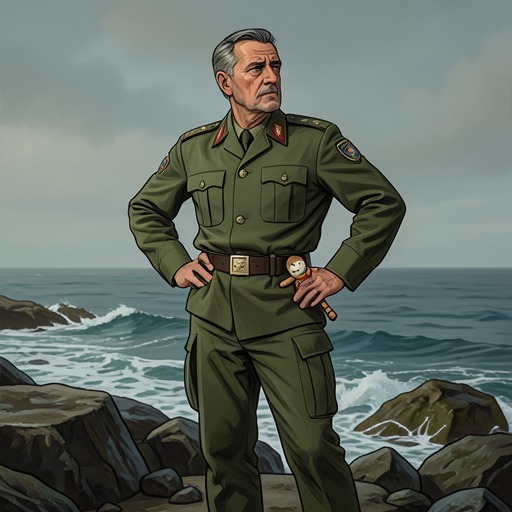
The vessel’s meaning returns through Colonel Stanton’s fever. While being treated for his wound, he mutters about a doomed ship, rocks, rising waves, retreating rebels, and the need to save his wife Laura and his child Jack. His disordered speech initially appears to be the product of illness, but the details correspond to the wreck and to the child found by Old Ben. The repeated images make the Nautilus a trauma that has not been consciously narrated for years: Colonel Stanton later explains that the ship went down with his wife and child, although he survived after more than twenty-four hours in the water and was rescued by a passing ship.
The disaster also fractured Colonel Stanton’s memory. After the rescue, exposure affected both his body and his mind. He dimly remembered a voyage lasting several weeks, hospitalization for two months, and subsequent confinement in an insane asylum, where a physician treated him brutally and tried to pry into his family affairs. His incomplete recollection delays recognition, but the Nautilus supplies the external fact against which his recovered fragments can be tested.
The Hidden Papers and the Tin Box
The Nautilus is not merely the place where a family was lost; it is also a concealed repository. Colonel Stanton tells Mrs. Ruthven that he left valuable papers in a secret closet aboard the vessel and hopes that they may still be intact. This disclosure gives the wreck a second narrative function. It preserves not only the memory of the disaster but also documents capable of proving ownership and recovering the family fortune.
Dr. Mackey later visits the wreck with Old Ben rowing him there. Mrs. Ruthven learns that he may have brought away a tin box, a detail that links his claim to be Jack’s father with the physical evidence hidden aboard the Nautilus. The discovery of the box confirms the danger of letting the wreck’s contents fall into the wrong hands: the ship’s secret can be used either to establish the truth or to support imposture and exploitation.
The box is ultimately found in the outlaws’ camp after a battle with Federal troops. It contains the goods stolen from a trader as well as other valuables, including the black tin box taken from the Nautilus. The box is returned to Colonel Stanton, who recognizes the papers as his own and tells Jack that nothing now stands between them and their fortune. The recovery converts the wreck from a source of suspicion into documentary proof, completing the material side of the recognition.
Identity, Recognition, and Narrative Significance
Before the Nautilus evidence is assembled, Jack’s identity passes through competing explanations. St. John Ruthven says that Jack is a nobody who does not belong to the Ruthven family, while Marion explains that the Ruthven parents adopted him when he was three or four and that he is legally her brother. Dr. Mackey then claims that Jack is his son. The wreck supplies the older and more credible history behind these contradictory assertions: Jack was the child rescued from the Nautilus disaster, and Colonel Stanton is ultimately shown to be his father.
The clues are deliberately distributed across time and form. The wreck first appears as a visible landmark and as the setting of a childhood memory; the unmarked clothing and lace handkerchief preserve uncertainty; the ring suggests a marriage and therefore a family; the name Laura emerges from Colonel Stanton’s fever; his sober account identifies the ship as the Nautilus; and the recovered tin box provides the papers that secure the conclusion. Each return to the vessel narrows the gap between the orphan’s unknown past and the family history concealed by the disaster.
The Nautilus therefore joins emotional recognition to legal and financial consequence. It explains why Jack was separated from his parents, why Colonel Stanton believed his family dead, why the child entered the Ruthven household as an adopted son, and why Dr. Mackey could attempt to manipulate the uncertainty. Its wreckage preserves the decisive counterweight to false testimony. By the time the tin box reaches Colonel Stanton, the ship has ceased to signify only death and dismemberment; it has become the surviving witness through which Jack’s parentage and the Stanton fortune are restored.