Old Ben's Boathouse
Young Captain Jack · The Son of a SoldierOld Ben's Boathouse is an old structure on the shore of a wide bay overlooking the Atlantic Ocean. Once merely the workplace of Old Ben, a formerly enslaved man connected with the Ruthven plantation, it becomes one of the novel's most important local meeting places: a point of access to the water, a shelter for confidential exchanges, and a threshold between the settled world of the Ruthven household and the dangerous secrets preserved by the wreck on Hemlock Bluff rocks.
Setting and Physical Character
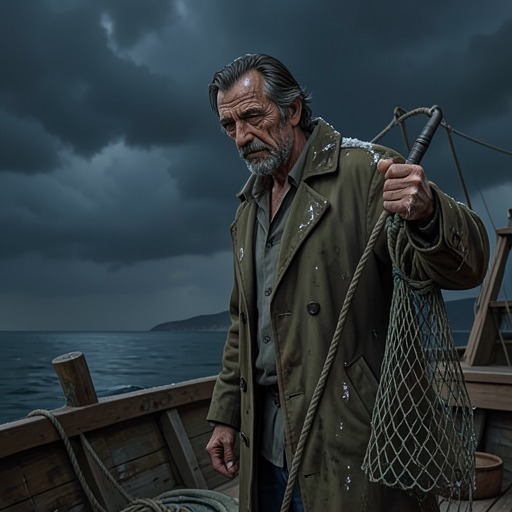
Old Ben's Boathouse stands beside the bay, facing the Atlantic, and belongs to Old Ben, who earns his living through boats and fishing. Its position gives it a practical function as a launching point and workroom, while its openness toward the sea makes it a natural place for watching the wreck and for encounters involving people moving along the shore. When Jack Ruthven approaches, Old Ben is mending one of his fishing nets; on another occasion, he is preparing to leave in his boat and gathers his fishing tackle and bait from the craft. The boathouse is therefore not an ornamental seaside location but a functioning maritime workplace whose ordinary labor supports the novel's larger plot.
The building also carries the history of the plantation world around it. Old Ben is identified as a colored man who had once been a slave on the Ruthven plantation. That background places the boathouse within the unresolved social order of the American Civil War: it is attached to the Ruthven property, yet it is controlled in practice by a Black boatman whose knowledge of the shore, boats, and local movements makes him indispensable. The setting thus combines dependence, memory, and practical authority without becoming a formal household interior.
Conversations and Social Tensions
Jack uses Old Ben's Boathouse as the place where he seeks Marion Ruthven after hearing that she has gone there. He finds her seated on a bench in the shade with a book in her lap, though she is gazing meditatively toward the sea rather than reading. Their meeting turns the boathouse into a space of emotional confidence. Marion tells Jack that, although his place in the Ruthven family has been challenged, her parents adopted him when he was three or four years old and he is legally her brother, John Ruthven. At the same waterfront location, she begins to answer his more difficult question about his past by directing his attention toward the wreck on Hemlock Bluff rocks.
The boathouse also exposes the contrast between Jack's dignity and St. John Ruthven's conduct. Earlier, St. John encounters Jack on a bridge and orders him out of the way as though Jack were a slave, despite Jack's insistence that the bridge is public. Later, St. John comes to the boathouse hoping to find Marion alone. Old Ben understands St. John's character and despises him, while still answering his question about Marion's whereabouts. The same location therefore brings together the young man defending his right to occupy public space, the socially privileged relative attempting to control access to Marion, and Old Ben, whose local knowledge allows him to observe and quietly judge them both.
The Wreck Investigation
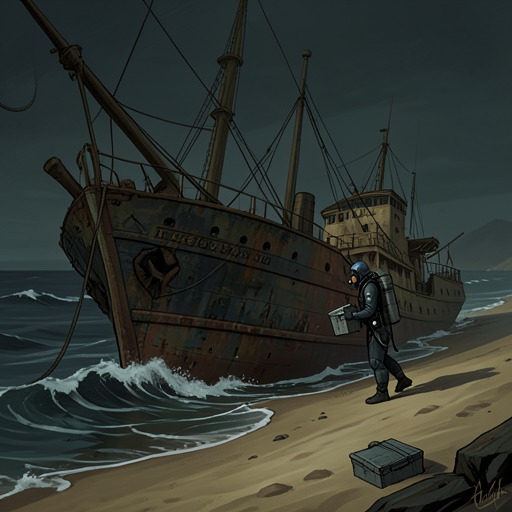
The boathouse is closely associated with the wreck on Hemlock Bluff rocks, the central physical repository of Jack's obscured childhood. Marion identifies the wreck from the boathouse and explains that Jack was one of the passengers on the vessel when it came ashore between ten and eleven years earlier. The conversation converts the visible wreck from distant scenery into evidence. From this point onward, the shore around the boathouse is not only a place of recreation or work; it is the starting point for an inquiry into the identity of the child found after the disaster.
That connection attracts Dr. Mackey. A few days after the conversations between Jack and Marion, Dr. Mackey arrives at Old Ben's Boathouse wearing the faded uniform of a Confederate surgeon. He asks Old Ben for drinking water, then offers him money to assist with a trip to the wreck. Old Ben's preparations for the boat are interrupted by St. John's arrival, but the encounter makes clear that Dr. Mackey is using the boathouse as an access point to the stranded vessel. He subsequently climbs onto the wreck, finds it charred by fire, and searches the main cabin by candlelight, looking specifically for a stateroom identified as number 15.
The boathouse therefore links two kinds of movement: the ordinary movement of boats and fishing gear, and the covert movement of people seeking material proof. Its proximity to the wreck makes it the practical gateway through which the buried past can be reached. The building's humble working purpose gives the investigation a concrete mechanism: someone who wants to examine the wreck must obtain a boat, enlist local knowledge, and pass through Old Ben's sphere of activity.
Narrative Significance
As a location, Old Ben's Boathouse mediates between visibility and concealment. It is open to the bay and inhabited by routine labor, yet it shelters conversations about adoption, social belonging, and unknown parentage. Jack arrives there believing himself threatened with exclusion from the Ruthven family and leaves with a legal and emotional reassurance from Marion, but also with a new mystery connected to the wreck. The boathouse thus changes the value of the surrounding landscape: the sea becomes a witness, and the wreck becomes a possible archive.
Its recurring visitors also make it a compact map of the novel's competing forces. Jack and Marion use it for truth-seeking and familial solidarity; St. John approaches it in pursuit of private advantage; Dr. Mackey treats it as a logistical base for a secret investigation; and Old Ben supplies labor, transportation, and observation. Later revelations that Dr. Mackey falsely claims Jack as his son and that Jack is actually Colonel Stanton's son give the earlier boathouse scenes retrospective weight. The conversations held there do not settle Jack's identity, but they establish the chain of questions, witnesses, and physical places through which that identity will eventually be revised.
The boathouse's significance also depends on its contrast with the spaces that follow. The wreck is burned and desolate, the Ruthven mansion becomes a place of wartime medical refuge, and Jack is later confined in a mountain cabin and a guerrilla cave. Old Ben's Boathouse is neither battlefield nor prison. It is a precarious intermediate space where people can meet, depart, observe, and choose whether to disclose what they know. That threshold function makes it one of the novel's clearest settings for the passage from an apparently settled social identity toward a dangerous, recoverable past.