St. John Feigns Illness to Avoid Enlistment
Young Captain Jack · The Son of a SoldierSt. John Ruthven Feigns Illness to Avoid Enlistment marks the moment when the war's demand for public duty penetrates the sheltered life of St. John Ruthven and reveals that his privileged position has not produced courage. Summoned to join the Confederate ranks immediately, he does not openly refuse on principle or accept the danger expected of a man of his community; instead, he constructs a false illness and uses his household's protection to preserve him from service. His performance becomes an unusually concentrated portrait of cowardice as evasion, social anxiety, and self-preservation disguised as bodily weakness.
The Call to Service
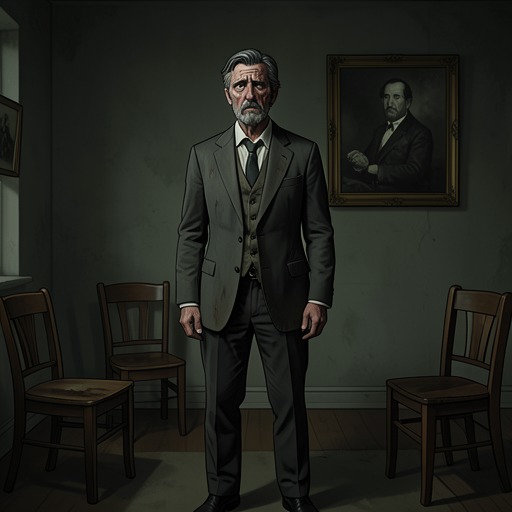
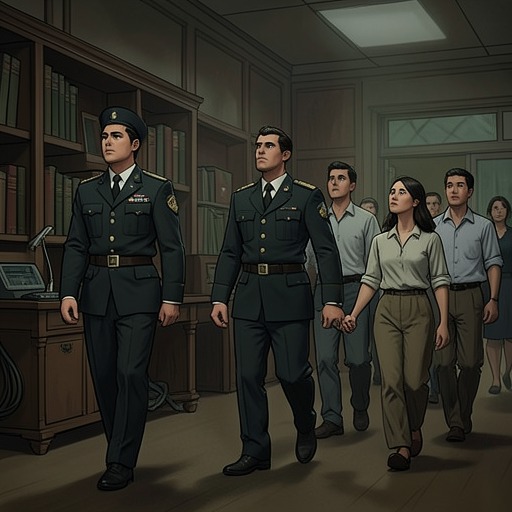
This episode follows a period in which St. John Ruthven has been preoccupied with Jack Ruthven and Marion Ruthven, and in which he has even wished that Jack would be removed from his path. On returning home, however, St. John finds a communication from a prominent Southern leader of the neighborhood. The message declares that many local men believe it is time for him to take up arms, insists that every loyal Southerner is needed at the front, and directs him to sign the muster roll at Wingate's Hotel at once. The summons transforms enlistment from an abstract patriotic expectation into an immediate personal obligation.
St. John's first response is not resolve but panic. His face grows ashen as he realizes that the community has finally noticed his absence from the ranks. He worries about what excuse can be offered for having held back and acknowledges that neighbors will judge him a coward if he does not enlist. The pressure therefore operates through reputation as much as through military necessity: St. John fears the name attached to refusal, yet he fears actual service more. His predicament exposes the difference between appearing loyal and accepting the physical risks that loyalty, in wartime, is said to require.
The Feigned Illness
When his mother, Mary Ruthven, asks what he will do, St. John claims that he is too sick to join the army. His legs begin to tremble, and he sinks heavily into a chair while pleading that illness makes enlistment impossible. Mary Ruthven observes that he had not seemed sick earlier that morning, but St. John answers that the sun has affected his head and that he feels faint. His bodily symptoms are thus presented as a convenient improvisation, produced at the exact moment when military duty becomes unavoidable.
Mary Ruthven intensifies the pressure by warning that the neighbors will call him a coward and accuse him of shamming. St. John answers that a sick man cannot be wanted in the ranks, then retreats further into the role he has chosen. He says that he would go for Marion Ruthven's sake if he felt well, but immediately insists that he is entering a regular spell of sickness. The reference to Marion gives his evasion a sentimental covering, allowing him to represent himself as willing in spirit while refusing in fact.
St. John instructs his mother to write Colonel Raymond that he is in bed and would join the ranks if he possibly could. He then goes upstairs, summons a servant, and sends for a doctor. Mary Ruthven, disgusted but unwilling to expose her only child, writes the note and sends it to town, shielding his true character as far as possible. The deception is consequently not an isolated lie told under pressure; it becomes a household operation in which St. John supplies the false symptoms and his mother supplies the social document needed to make them credible.
Performance and Exposure
For the rest of the day St. John remains in bed and groans whenever a servant enters his room. His illness exists as a performance for witnesses, and the repeated groaning is the physical labor by which he attempts to convert cowardice into apparent incapacity. The episode's irony lies in the gap between the display and the private calculation behind it. He is not merely hiding from the army; he is directing the household's attention toward an invented body that can supposedly excuse him.
The family physician is alarmed when he first arrives, but examination reveals the truth to him: St. John is shamming. Because the Ruthvens are among the doctor's best customers, he does not openly challenge the young man's deception. Instead, he leaves soothing medicine and a tonic and promises to return the following day. The doctor's silence protects St. John from immediate public disgrace, but it also makes the social world around him complicit. Respectability and patronage allow the fraud to continue even after professional scrutiny has recognized it.
St. John confirms the fraud by throwing the medicine out of the window rather than taking it. He privately congratulates himself that he is not foolish enough to swallow it, revealing that he understands perfectly well that there is no illness to cure. Several days pass while he remains in bed, continuing to groan and avoiding enlistment. The extended duration turns a momentary excuse into sustained imposture, while the discarded medicine provides the clearest material proof that the supposed sickness is voluntary.
Contrast with Wartime Conduct
The episode gains force from the broader wartime setting. Oldville is a district surrounding the Ruthven plantations, and the conflict has already disrupted ordinary life: the armies have moved close to the community, cannon fire can be heard, local stores have suffered, and residents fear invasion. The war is not distant enough to permit comfortable neutrality. Men are being gathered into Confederate ranks, while homes and private property face direct danger.
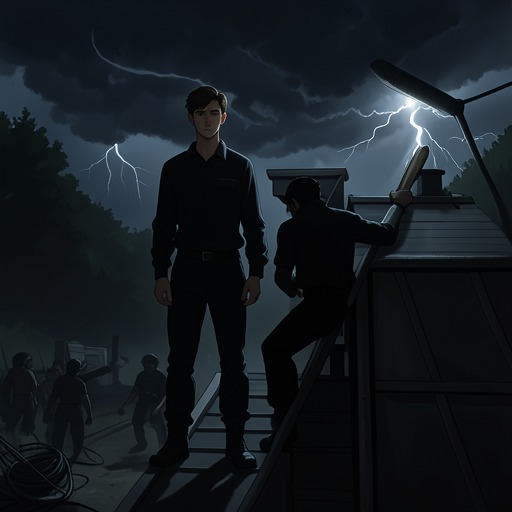
Against this background, Jack Ruthven responds to threats to the Ruthven household by calling together his company. Within half an hour, nineteen boys assemble, each carrying a loaded gun or pistol, and form an imposing defensive line. Old Ben also produces a long, old-fashioned pistol and promises to protect Jack. Jack's response is practical and immediate: he recognizes the vulnerability of the women and the property, puts on his uniform and sword, and acts. St. John's response is the opposite. Where Jack turns danger into responsibility, St. John turns responsibility into a medical fiction.
The surrounding scenes also show that wartime duty includes more than formal enlistment. The Ruthven mansion receives wounded Confederates when stretcher-bearers can carry them no farther; six wounded soldiers are placed on cots in the sitting room, and Mary Ruthven and Marion assist with their care. At the stable, Old Ben and Home Guard boys fight guerrillas attempting to steal horses, defending what they identify as private property. These forms of service—military, domestic, and protective—make St. John's refusal appear still more conspicuous. He avoids not only the front but the moral atmosphere of a community in which nearly everyone is being compelled to answer the war in some way.
Narrative and Moral Significance
St. John's feigned illness is a decisive test of character because it removes the excuses supplied by rank, family, and circumstance. He has access to a mother willing to protect him, a physician reluctant to expose him, and the language of sickness with which to transform fear into helplessness. Yet the episode also shows that his privilege is unstable: once the community demands action, social standing cannot entirely shield him from judgment. His trembling, groaning, and discarded medicine expose a man attempting to preserve the appearance of gentility while refusing the obligations associated with it.
The scene also sharpens the rivalry between St. John and Jack Ruthven. Earlier, St. John has attacked Jack's place within the Ruthven family, while Jack's identity is unsettled by competing claims that he is an outsider, an adopted brother, Dr. Mackey's son, or ultimately Colonel Stanton's son. St. John's conduct makes the contrast especially bitter: the supposedly uncertain and socially vulnerable Jack proves dependable in danger, while the established Ruthven heir proves unwilling to serve. The episode therefore shifts moral authority away from inherited position and toward conduct.
As an event, the deception belongs to the ordinary chronological narration of the wartime plot rather than to a retrospective or embedded narrative. Its immediate consequence is that St. John remains at home while others enlist, fight, defend property, and care for the wounded. Its larger consequence is reputational and thematic: the fear of being called a coward does not reform him, because he chooses to imitate illness rather than confront the judgment he dreads. The false sickbed becomes a compact symbol of his character—a protected place from which he can preserve himself while the war demands that he step into danger.