St. John Ruthven
Young Captain Jack · The Son of a SoldierSt. John Ruthven is the spendthrift cousin whose conduct turns family privilege into a source of intimidation, intrigue, and ruin. Tall, thin, vain about his appearance, passionately attached to horseback riding, and marked by a face that combines craftiness with cowardice, he stands in sharp contrast to Jack Ruthven’s self-reliance. St. John’s efforts to displace Jack from the Ruthven family and secure his own advantage propel several of the novel’s conflicts, while his refusal to accept military danger ultimately leaves him isolated, dispossessed, and forgotten.
Identity and Social Position
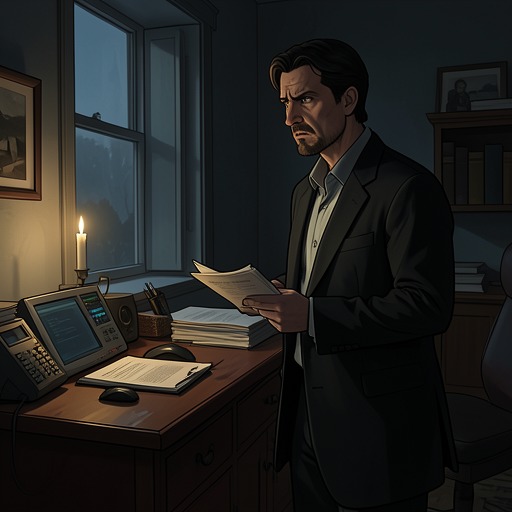
St. John Ruthven is twenty-five years old and the son of a half-brother of the late Colonel Ruthven. His connection to the Ruthven family gives him a recognized social position, but the narrative stresses that he possesses few of the good traits associated with Marion Ruthven’s branch of the family. He lives on a plantation half a mile from the bay, spends much of his time attending to his personal appearance, and takes pleasure in horseback riding. These details establish a character formed by leisure, display, and inherited standing rather than by useful work or tested responsibility.
His social confidence depends on treating family membership as a possession that can be granted or withdrawn. St. John tells others that Jack Ruthven is a nobody who does not truly belong to the Ruthven family and will eventually have to leave. The claim devastates Jack because it attacks not merely his social status but the family identity on which his life has rested. Marion Ruthven later reveals that Jack was adopted when he was three or four years old and is regarded as her brother, exposing St. John’s accusation as a weapon in a contest over belonging rather than a neutral statement of fact.
Jealousy and the Conflict with Jack
St. John’s hostility toward Jack is intensified by his desire for Marion Ruthven. He approaches Marion with a declaration of love, but she does not return his feelings. Afterward he recognizes that his disparaging remarks about Jack have damaged his position with her and admits that he wishes he could remove Jack altogether. His jealousy therefore has both romantic and material dimensions: Jack is an obstacle to St. John’s courtship, and Jack’s place in the household threatens the future inheritance St. John hopes to control.
The antagonism becomes physical when St. John’s conduct provokes Jack into striking him with a riding whip across the shoulders and neck, leaving a vivid red mark. The blow does not make St. John brave or reflective; it confirms the unstable pattern of their rivalry, in which his social aggression is answered by Jack’s direct action. St. John relies on insult, insinuation, and family influence, whereas Jack answers danger more openly. The contrast makes St. John’s apparent superiority increasingly hollow.
St. John’s schemes also reflect his concern over property. Old Ben reports that Mrs. Ruthven intends to leave Jack half of the property, a prospect that gives St. John another reason to resent Jack’s protected position. The dispute over inheritance connects St. John’s personal jealousy to the wider question of whether wealth will follow legal and emotional bonds or merely the claims of a socially established relative. His attempt to make Jack seem illegitimate within the family is thus also an attempt to make Jack seem less entitled to its material future.
Cowardice During the War
When military obligations reach him, St. John reveals the weakness concealed beneath his cultivated appearance. On receiving notice that he is finally required to join the army, he turns immediately to the problem of finding an excuse for delay. His reaction is not framed as a conflict between competing duties but as a search for a pretext that will allow him to continue hanging back while others face danger.
His evasiveness becomes unmistakable when soldiers approach the Ruthven mansion. St. John begs them to spare him and insists that he has harmed nobody. Once he learns that the enemy has gone, however, he abruptly claims that he is not afraid and explains his conduct as a sudden attack of pain around his heart. The sequence exposes the difference between courage as a public performance and courage as conduct under pressure. St. John can declare fearlessness after the danger has passed, but his body and pleading have already disclosed his panic.
Later, Marion Ruthven asks whether he has joined the army at last. St. John’s military status remains a source of suspicion rather than honor, and his absence from the plantation during danger reinforces the judgment that he avoids the responsibilities attached to his position. His cowardice is not an isolated weakness: it is the practical counterpart of his vanity and selfishness. He wants the privileges of a gentleman without accepting the risks, duties, or sacrifices by which such a position might be morally justified.
Conspiracy and the Attempt to Control the Family
St. John becomes involved with Dr. Mackey, who claims Jack as his son. The two men enter the cabin together, and Dr. Mackey explains that he has several reasons for acting against Colonel Stanton, beginning with his assertion that Jack is his child. St. John’s presence in this alliance places him inside a broader conspiracy surrounding Jack’s parentage and the Stanton family’s position. The disputed identity of Jack offers St. John a means of weakening the household bonds that protect his cousin and of aligning himself with men who promise to turn uncertainty into advantage.
The conspiracy also turns wartime authority against Colonel Stanton. St. John supports the accusation that Colonel Stanton should be arrested as a spy, claiming that the colonel once entered Confederate lines and reported movements to his superiors. He presents the proposed arrest as an opportunity that would enhance another man’s reputation, revealing how readily he treats military justice as a tool for personal advancement. The charge is not simply patriotic suspicion; in context, it is part of St. John’s effort to manipulate Confederate power against an enemy connected to Jack’s true identity and future.
The identity struggle eventually reverses the purpose of St. John’s intrigue. Jack learns that he is not Dr. Mackey’s son but the son of Colonel Stanton. The revelation removes the foundation on which Dr. Mackey’s claim rests and places St. John’s schemes in a different light: he has attempted to profit from a false version of Jack’s origin while the evidence surrounding the shipwreck, the preserved ring and handkerchief, and the recovered black tin box gradually leads toward the truth. St. John is not the author of the identity mystery, but he is one of the characters who tries to exploit it before it is resolved.
Exposure, Dispossession, and Ending
Near the end of the narrative, St. John returns to the Ruthven household accompanied by several Confederate soldiers. His appearance suggests an attempt to use formal authority against those who have resisted him, but Mrs. Ruthven immediately declares that he has been found out and orders him to stay away. She identifies his scheme as an effort to steal some of her possessions, making explicit the connection between his family quarrels, his financial appetite, and his willingness to use soldiers as leverage.
St. John briefly claims that he will not request an arrest because the sick man cannot be moved. The decision is less a gesture of mercy than a retreat from a failed maneuver: he cannot safely carry out the arrest, and he soon hurries away with the soldiers. He never appears at his aunt’s door again. His departure marks the collapse of his authority within the family. The man who had tried to define Jack as an outsider becomes the one excluded from the household.
His economic end completes the moral trajectory. St. John becomes an even worse spendthrift, and before long the plantation is sold at auction. Mary Ruthven is forced to live on the charity of her sister-in-law, while St. John drifts first to New Orleans and finally to the West. That movement away from the family’s land and community is the final consequence of his irresponsibility. The narrator leaves open the hope that he recognized his errors and changed, but the last report of him is disappearance rather than repentance or restoration.
Narrative Role and Significance
St. John Ruthven functions as a foil to Jack Ruthven. Jack begins under the stigma of uncertain birth yet proves manly, self-reliant, and difficult to intimidate; St. John possesses recognized family standing yet repeatedly proves dependent on intimidation, excuses, and other men’s power. Jack’s leadership of a company of twenty-three boys indicates a willingness to assume responsibility, while St. John’s conduct during military danger reduces rank to costume. Their opposition makes the novel’s distinction between moral worth and social rank concrete.
He also embodies the destructive intersection of jealousy, greed, and cowardice. His attack on Jack’s belonging, his resentment of Jack’s prospective inheritance, his failed pursuit of Marion Ruthven, his alliance with Dr. Mackey, and his attempt to involve soldiers in a property dispute all arise from the same refusal to accept limits. St. John wants affection without deserving it, property without earning trust, authority without courage, and family status without the obligations of family life.
The character’s fate gives those conflicts a material conclusion. Once Jack’s true parentage is recognized and the conspirators’ claims lose force, St. John cannot preserve his position through appearance or accusation. His plantation is lost, Mary Ruthven becomes dependent on relatives, and St. John becomes a wanderer whose whereabouts are no longer known. In the novel’s moral architecture, his downfall is not merely punishment for individual misconduct; it demonstrates that inherited privilege cannot substitute indefinitely for loyalty, courage, or responsibility.