Sunken ship documents
Young Captain Jack · The Son of a SoldierThe shipwreck documents are the papers recovered from the Nautilus wreck that transform Jack Ruthven’s uncertain past into a legally and materially verifiable history. Their importance extends beyond personal identification: they connect a lost marriage, a dead or presumed-dead mother, Colonel Stanton’s family, and a threatened fortune. As the documents pass from the wreck to Dr. Mackey, then to the outlaws, and finally to Colonel Stanton, they become the central objects through which disputed parentage and inheritance are resolved.
Discovery in the Wreck
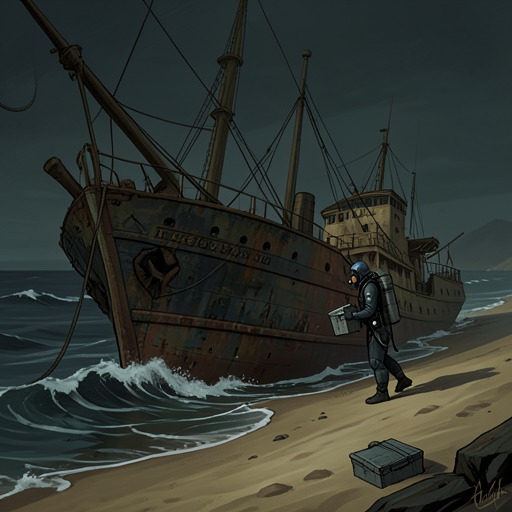
The documents are found inside a heavy black tin box concealed in a tiny closet aboard the wreck on Hemlock Bluff. The closet is about a foot square and equally deep; dirt and water have entered through a crack above it, covering the recess until the box is uncovered. Dr. Mackey opens the little padlock with one of his keys and discovers the papers inside. Their concealment protects them from immediate destruction, but it also places them under the control of whoever can search the wreck and claim its contents.
The papers consist of a marriage certificate, letters from the husband’s father concerning property, and additional letters from the wife’s family. Dr. Mackey recognizes their value at once and treats them as the documentary foundation of a fortune claim. He returns the papers to the box, hides the box beneath his coat, and leaves the wreck with it. The discovery therefore begins not as a public act of historical recovery but as a secret appropriation, joining evidence to greed and making the documents vulnerable to theft, concealment, and manipulation.
Evidence in the Paternity Dispute
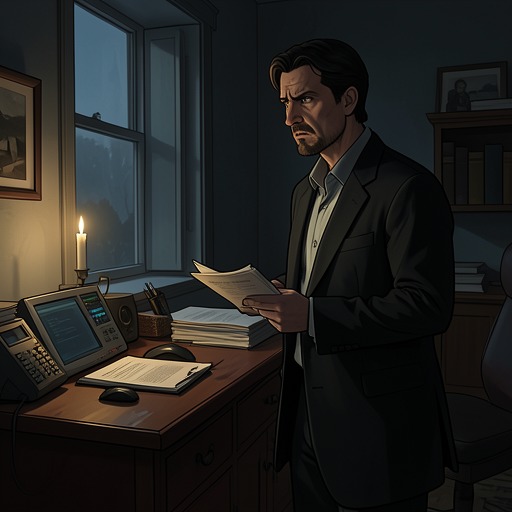
When Dr. Mackey later claims that he is Jack’s father, he identifies the marriage certificate and private papers as his principal proof. He says that the certificate establishes his marriage to Jack’s mother and that the letters will support the associated property claim. He also invokes an expected college acquaintance who, he says, knows the past and can testify for him. The papers thus give his assertion a form that sounds legal and verifiable, even though the claim itself remains unproved when he first makes it.
The documents acquire force because Jack’s earlier history is almost entirely undocumented. After the shipwreck, the woman who was believed to be his mother had no marked clothing or identification papers. The only possessions preserved by the Ruthven household were her unmarked lace handkerchief, her clothing, and a ring whose worn inscription could not be read even by two jewelers. The documents therefore answer a deficiency that had allowed several competing identities to arise: they supply written evidence where memory, resemblance, and fragmentary objects had left uncertainty.
Dr. Mackey’s possession of the papers initially creates the danger that documentary authority will be used to separate Jack from the family that adopted him. Marion Ruthven had learned that Jack was not born a Ruthven but had been adopted when he was three or four years old; later, Dr. Mackey’s claim turns that private family knowledge into a public conflict over who has the right to call Jack a son. The papers make the conflict more serious without settling it, because the certificate appears to support Dr. Mackey’s account while the full circumstances of the shipwreck remain unknown.
Theft, Recovery, and Transfer
The documents do not remain safely with Dr. Mackey. After he conceals the tin box, it comes into the possession of the guerrillas who hold Jack prisoner. When their camp is searched after a battle between Federal troops and the guerrillas, the stolen goods of an attacked trader are found there along with other valuables, including the tin box taken from the Nautilus wreck. The recovery places the documents within a broader wartime economy of plunder, in which objects of immense personal and legal importance are handled as loot.
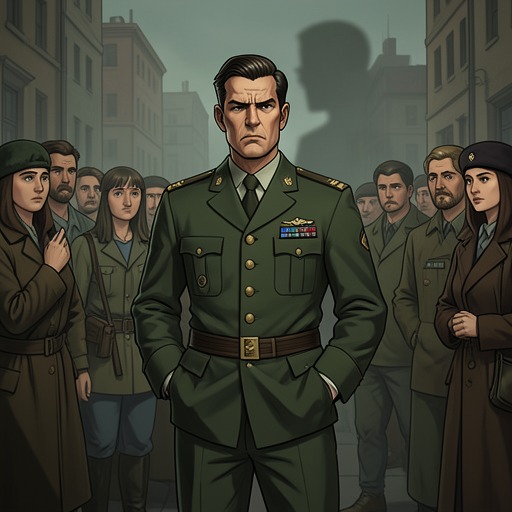
The box is eventually turned over to Colonel Stanton. This transfer is decisive because the papers are no longer controlled by the man who used them to claim Jack, nor by the outlaws who had stolen them. They return to the family and property history to which they belong. The documents’ movement from wreck, to secret possessor, to guerrilla camp, and finally to Colonel Stanton forms a chain of custody that mirrors the novel’s larger effort to recover truth from violence and concealment.
Final Proof of Jack’s Identity and Fortune
The documents become conclusive when read alongside Colonel Stanton’s feverish recollections and the physical evidence preserved by the Ruthvens. Colonel Stanton cries out about a shipwreck and asks that his wife Laura and his son Jack be saved. He also recognizes the connection between himself and Jack and asks to see the woman’s clothing, the child’s clothing, and the jewelry retained after the wreck. These recollections provide the personal testimony that Dr. Mackey’s papers alone could not supply.
The resulting evidence overturns the competing versions of Jack’s identity. Jack had first been told that he was a nobody who did not belong to the Ruthven family; Marion then explained that the Ruthvens had adopted him and that, in law and affection, he was her brother. Dr. Mackey next declared,