The Recovery of the Tin Box from the Wreck
Young Captain Jack · The Son of a SoldierThe Recovery of the Tin Box from the Wreck is the turning point at which the Nautilus ceases to be merely the site of an old catastrophe and becomes an evidentiary archive. Dr. Mackey’s clandestine search finds a locked black tin box containing the marriage certificate and family letters needed to establish Colonel Stanton’s marriage, property claims, and connection to Jack Ruthven. Although Mackey first steals the box for himself, its later recovery from the outlaws’ camp places the papers in Colonel Stanton’s hands and completes the material proof behind Jack’s disputed identity.
Causes and Background
The box matters because Jack Ruthven’s origin has remained unresolved since the wreck on Hemlock Bluff rocks. Marion Ruthven explains that Jack was one of the passengers when the vessel came ashore ten or eleven years earlier. Old Ben found the injured mother on the beach with the three- or four-year-old child in her arms, and the Ruthven family rescued them; the woman died soon afterward without leaving a name beyond the child’s name, Jack. Jack’s own memory is only a fragmentary recollection of a storm and enormous waves, making the wreck both a personal trauma and the first missing chapter in his history.
The surviving objects initially seem insufficient. The woman’s clothing was unmarked, as was the lace handkerchief kept by Mrs. Ruthven. She also wore a ring, but the marking had become so worn that neither the family nor two jewelers could decipher it. The ring therefore preserves the possibility of identification without yet proving anything. Its status changes when Colonel Stanton, feverish and disoriented after his own ordeal, cries about a shipwreck and asks that his wife Laura and his son Jack be saved. The remembered name Laura, together with the colonel’s resemblance to Jack, makes the old wreck evidence newly urgent.
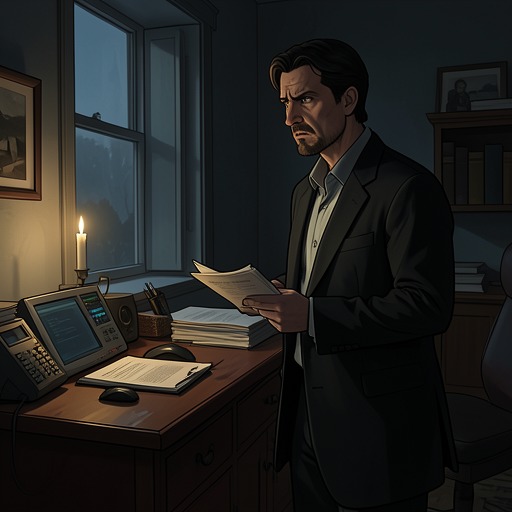
The need for the box is sharpened by Dr. Mackey’s competing claim. He appears and asserts that Jack is his son, saying that he was married to Jack’s mother, but the claim is treated with suspicion because he is known as a bachelor and because he has sought to take Jack away. Colonel Stanton later explains that Mackey learned his family history while Stanton was confined in an asylum, drugged him, and extracted details about property in England and an estate in Virginia belonging to Stanton’s wife. The documents on the wreck therefore carry both familial and financial stakes: they can confirm Jack’s parentage while exposing the motive behind Mackey’s imposture.
Mackey’s Search and Discovery
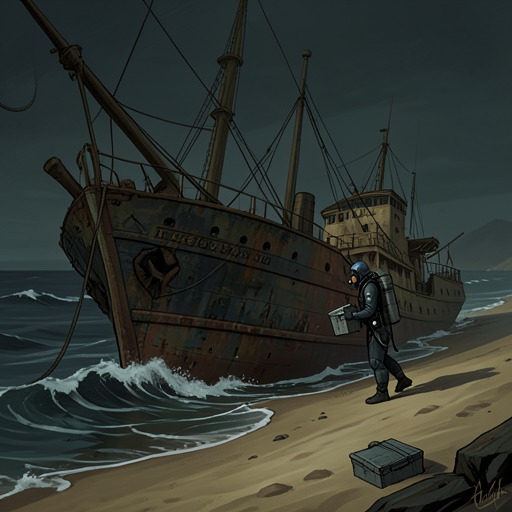
Dr. Mackey reaches the stranded wreck after the fire has charred everything aboard. He approaches the search as a calculated investigation rather than an act of rescue, trying to reconstruct the vessel’s stateroom numbering. In the burned main cabin he finds a room marked 7, reasons that the rooms on that side carry odd numbers, and concludes that the next rooms must be 13 and 15. The missing number plate does not stop him; he pushes open the partly open door and enters a chamber stripped of movable contents and thick with dust and cobwebs.
Inside the room, Mackey notices the closet he has been seeking. Its knob is gone, so he uses a bent nail as an improvised tool, opens the small door, and digs through a solid cake of dirt formed by water and grime. Beneath it he uncovers a heavy black-painted tin box. The discovery converts his uncertain search into apparent success. He brushes off the box, tests a bunch of keys against its small padlock, finds one that fits, and opens it.
The contents confirm why Mackey has taken the risk. He finds a marriage certificate, letters from the father concerning the property, and letters from the woman’s family. The papers provide documentary links among the marriage, the family lines, and the inheritances. Mackey places them back in the box, but his reaction reveals that he does not regard the discovery as evidence to be fairly presented. He treats the fortune as his own, cleans out the closet to make sure nothing else valuable remains, hides the box beneath his coat, extinguishes the candle, and returns to the deck, where Old Ben is waiting in the boat.
Evidence, Memory, and Competing Claims
The recovery gives material form to clues that had previously circulated as uncertain recollections and suggestive objects. Jack remembers only the storm in a dreamlike way; Colonel Stanton’s memories are even more damaged. After surviving the shipwreck, Stanton recalls rescue by a passing ship, a long voyage, a strange hospital, two months there, and years in an asylum after Dr. Mackey had him recorded as incurable and violent. His account explains why the father could not earlier identify or reclaim his family, while also showing how Mackey’s access to his memory enabled the deception.
The chain of evidence is consequently cumulative. The wreck supplies the common origin; the clothing and lace handkerchief preserve the mother’s abandoned belongings; the worn ring suggests a marriage but cannot be read; the name Laura emerges from Stanton’s feverish speech; and the resemblance between Stanton and Jack supplies an embodied parallel. The tin box adds what the other clues lack: written records capable of converting resemblance, memory, and suspicion into a documented relationship. Its importance lies not in replacing the earlier clues but in making them legible as parts of one coherent history.
The box also changes the balance between the two adult claimants to Jack. Mackey’s assertion depends on his own testimony and on information obtained from Stanton under coercion. Stanton’s claim, by contrast, can be joined to the marriage certificate and the letters preserved in the wreck. The narrative thus resolves the paternity dispute through an evidence chain rather than through rank, force, or the confidence of the claimant who speaks first.
Recovery and Consequences
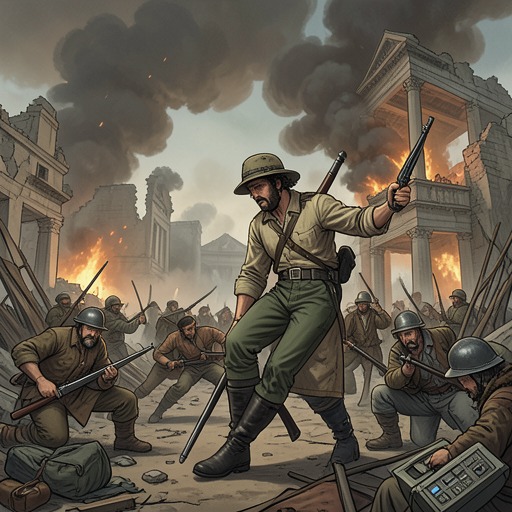
The box does not remain in Mackey’s possession. After Jack returns home, a battle in the mountains between Federal troops and the guerrillas kills several of the outlaws who had held him prisoner. Pete Gendron is also killed without revealing what he knew about Dr. Mackey’s past. When the outlaws’ camp is thoroughly searched, the stolen goods from an earlier attack are found along with other valuables, including the tin box taken from the wreck of the Nautilus.
The box is later turned over to Colonel Stanton, reversing Mackey’s attempted appropriation. Stanton examines the papers and recognizes their decisive force: the documents remove the remaining barrier between him and Jack and between the Stanton family and its fortune. The recovery therefore operates on two levels. It restores property that Mackey tried to seize, and it restores a family relationship that war, shipwreck, trauma, institutional confinement, and deliberate fraud had kept apart.
Narrative Significance
As a plot event, the recovery is the final return of a long-circulating clue. The wreck first appears as the origin of Jack’s unknown past; the ring and handkerchief preserve the mystery; the name Laura and Stanton’s recollections reactivate it; Mackey’s search reveals that documentary proof has survived; and the later discovery in the guerrillas’ camp returns that proof to its rightful recipient. Each recurrence changes the meaning of the same material world, turning a wreck from scenery into testimony and a stolen object into the instrument of justice.
The event also exposes the contrast between possession and legitimacy. Mackey can find the box, unlock it, and hide it, but physical control does not make the fortune his. His declaration of ownership is defeated when the papers are recovered and read in the context of Stanton’s history and Jack’s rescue. The narrative’s resolution depends on the difference between taking evidence and proving a claim: Mackey performs the first act, while Colonel Stanton finally receives the second.
Finally, the tin box joins the story’s themes of fractured memory and recovered identity. Jack’s childhood recollection is incomplete, Stanton’s recollection is distorted by illness and captivity, and Mackey attempts to turn another man’s damaged memory into a weapon. Against these unstable forms of knowledge, the box preserves written testimony through fire, water, abandonment, and theft. Its recovery does not erase the suffering surrounding the wreck, but it allows the surviving characters to give that suffering a verifiable history and a consequence: Jack is recognized as Colonel Stanton’s son, and the family inheritance can be reclaimed.