The Wreck Lightning Fire
Young Captain Jack · The Son of a SoldierThe Wreck Lightning Fire is the central emergency of the episode in which Jack Ruthven and Marion Ruthven, stranded aboard the wreck on Hemlock Bluff during a violent storm, are rescued by Old Ben. The lightning strike transforms the wreck from a shelter and repository of memory into a burning danger, while Old Ben’s return with food, his knowledge of the shore, and his improvised boat shelter carry the young people through the night. The incident also deepens the wreck’s larger narrative importance: it is the site connected with Jack’s childhood rescue and later the hiding place of the black tin box whose recovery restores Colonel Stanton’s fortune.
Storm-Bound Refuge
The episode begins with Jack Ruthven and Marion Ruthven taking shelter in the cabin of the wreck as rain increases and thunder rolls in the distance. They sit on a bench along the wall, initially believing the vessel offers protection from the weather. Their position is already precarious: they cannot row ashore because the wind is howling, and the wreck isolates them from the mainland. What appears to be a temporary refuge therefore carries the double character of shelter and entrapment.
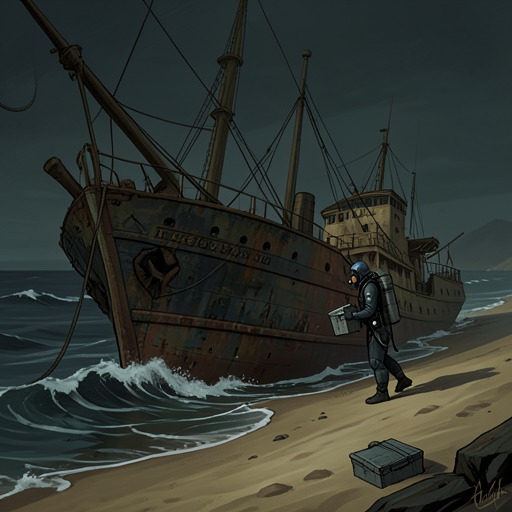
The wreck is not merely an abandoned structure. It is the wreck on Hemlock Bluff rocks, the same wreck that Marion identifies when Jack asks about his past. She tells him that he had been a passenger aboard the boat when it came ashore between ten and eleven years earlier. The place consequently holds both personal and investigative significance. Jack’s earliest surviving memory is of a storm and awful waves, though he recalls it only in a dreamy, uncertain way; the later danger aboard the wreck reactivates the physical and emotional atmosphere of that lost beginning.
Old Ben’s Return
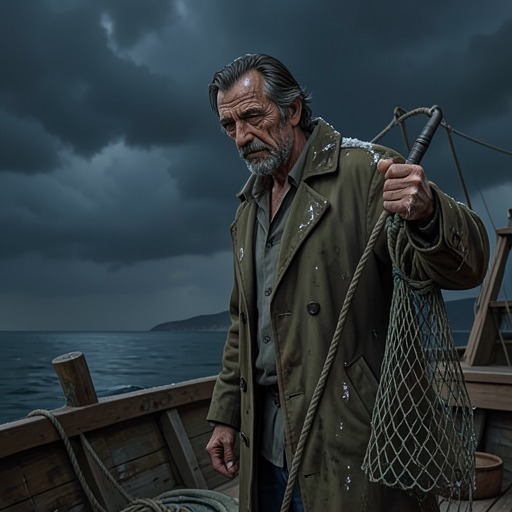
The first decisive change comes when footsteps sound on the deck. Jack looks up the companionway and recognizes Old Ben, the fisherman who had noticed Jack and Marion rowing away and had not seen them return. Old Ben has crossed the storm with a market basket full of provisions from the plantation because he reasoned that the pair must be stuck on the wreck and would have nothing to eat. He arrives soaked, with water streaming from his clothing, but his practical concern immediately supplies what the isolated shelter lacks: food, companionship, and a possible route back to land.
Old Ben’s action expresses the durable bond between him and the Ruthven family. He had once been enslaved on the Ruthven plantation, and emancipation had not ended his affection for his former mistress and her children. The narrative presents him as a privileged and trusted figure on the plantation, but the rescue makes that relationship active rather than merely social. His knowledge of the bay, willingness to brave the weather, and instinctive care for Jack and Marion turn loyalty into material protection.
The Lightning Strike and Escape
During the meal, the storm becomes more violent. Old Ben has brought a candle because he knows how dark the wreck is, yet natural forces soon overwhelm this small human provision. An exceptionally heavy flash of lightning is followed by a tearing clap of thunder. The shock leaves Jack and Marion trembling and produces a strange smell and an unfamiliar tingling in their blood before Jack understands what has happened.
The bolt has struck near the stern. It rips away a large section of the woodwork, travels along one side of the wreck, and starts a fire just below the deck line. The danger is therefore both sudden and mechanically clear: the vessel is damaged, the fire is spreading, and the storm has made escape by water difficult. Old Ben immediately urges Jack to leave, while Jack calls Marion after him and frames their survival as something for which they must be thankful.
Marion comes on deck trembling, and the three hurry toward the bow. The route downward is easier than the climb upward, allowing them to get off the wreck and onto the rocks below while the rain drives against them. The scene reverses the value of the wreck in a single movement. The structure that had protected them from the rain becomes the source of mortal danger, and the exposed rocks, though miserable, become the safer ground.
Improvised Shelter and Rescue
Old Ben does not attempt a difficult return to the boathouse in the height of the storm. Instead, he leads Jack and Marion to the shore, where he has left his boat. With Jack’s assistance, they haul the craft out of the water and turn it upside down between two large rocks. The three crawl beneath this temporary shelter and spend the night there. The solution is humble but effective: the boat, normally a means of travel, becomes a roof, while the rocks provide a measure of protection against the driving rain.
By morning, the storm has cleared. The wreck has not been wholly consumed; the rain extinguishes the fire before it gains full force, leaving only a small portion of the upper deck burned away. This limited destruction preserves the physical site for its later role in the story. The fire is an escape crisis, not the final erasure of the wreck’s secrets.
Old Ben and Jack soon relaunch the boat. All three enter it, and Old Ben rows them toward the mainland while Jack’s boat is taken in tow. Their return converts the night’s ordeal into a completed rescue, but the experience leaves a lasting impression on Marion, who says that she does not believe she will ever go back to the old wreck. The event thus changes the emotional meaning of the place even though it does not remove its importance.
Narrative Function and Later Consequences
The fire intensifies the wreck’s recurring pattern as both a site of danger and a source of revelation. It is tied to Jack’s rescue as a small child: Old Ben once found Jack on the beach in his injured mother’s arms after the wreck came ashore, then carried them to the boathouse and summoned help from the plantation. The storm aboard the wreck echoes that earlier catastrophe while placing Jack in a new position, no longer a helpless child but an active participant in his own escape and in Marion’s protection.
The wreck also contains material evidence whose significance extends beyond the lightning episode. In a concealed closet, beneath accumulated dirt and water, a heavy black-painted tin box is later uncovered. The box is locked, and its eventual recovery from the outlaw camp returns it to Colonel Stanton with the papers inside. Those papers establish that nothing now stands between Colonel Stanton and his fortune. The lightning fire therefore occurs within a larger chain of clue, concealment, destruction, and recovery: the wreck nearly burns, but the evidence associated with it survives to resolve the inheritance conflict.
The incident’s importance is consequently larger than its immediate physical peril. The storm tests the characters through exposure, darkness, fire, and isolation, but the outcome depends on mutual care rather than force. Old Ben’s foresight provides food; Jack helps convert the boat into shelter and then helps relaunch it; Marion endures the danger and follows the escape. The episode joins adventure with memory and makes the wreck a material crossroads where Jack’s uncertain identity, the lost Stanton family, and the hidden fortune all converge.