The carnival
The carnival, held on a Thursday designated for colored people, represents a rare moment of communal joy and tentative hope in the lives of Sethe, Denver, and Paul D. It is the first social outing for Sethe in eighteen years, a day when the shadows of three people hold hands and the possibility of a new life seems within reach. The event is significant not only for the pleasure it brings but also for the dramatic turn it takes upon their return, when they discover the enigmatic Beloved waiting on a stump near 124 Bluestone Road.
The Setting and the Journey
The carnival takes place in a field adjacent to a lumberyard, where old roses, planted twelve years earlier by the sawyer, are dying. Their scent grows louder as they near death, and the carnival becomes associated with this stench, which makes attendees dizzy and thirsty but does not dampen their spirits. The event is advertised as a spectacle of white people performing extraordinary feats—magic, clowning, contortions, and fire-eating—though none of it is true. Despite the barker's insults and the mediocre quality of the show, the four hundred black attendees are thrilled, for it is a rare chance to see whitefolks making spectacles of themselves.
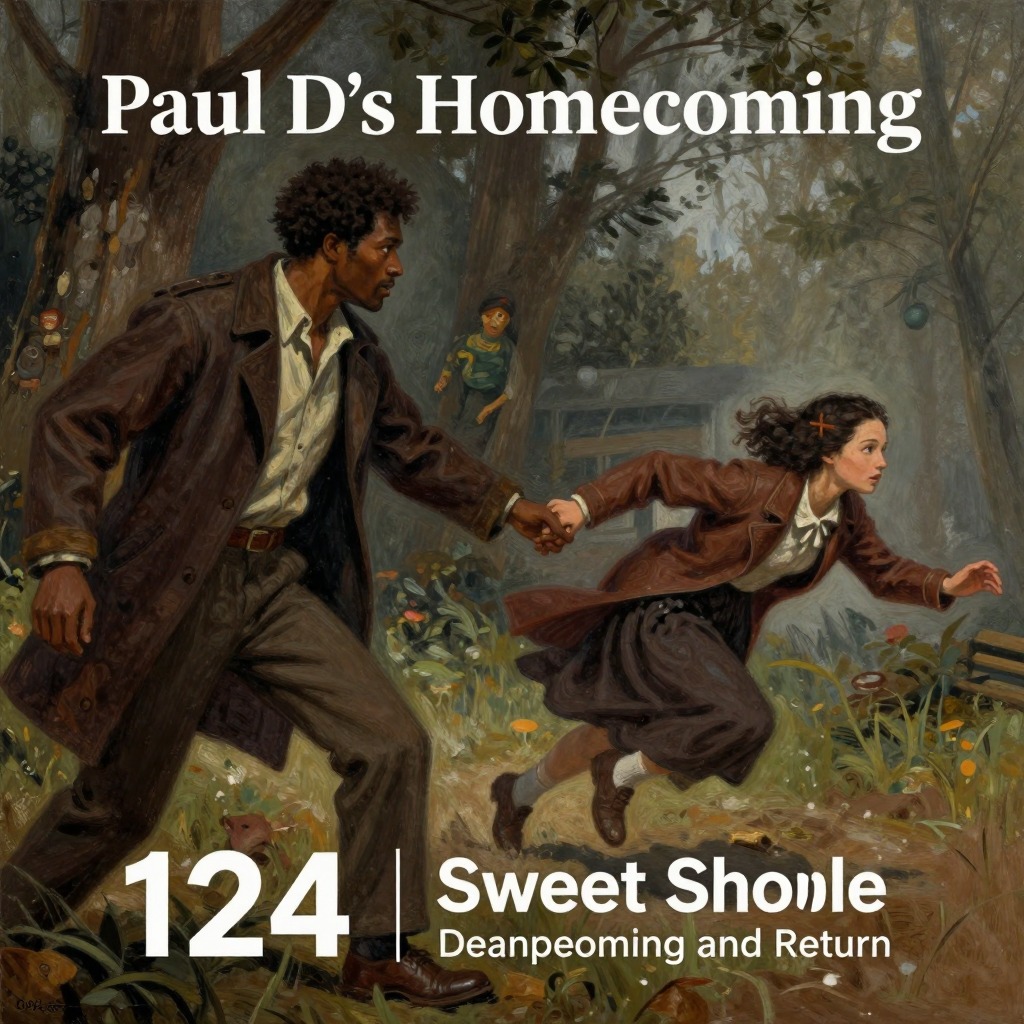
Sethe, Denver, and Paul D walk to the carnival on a scorching Thursday morning. Sethe, dressed in her one good wool dress and a hat, feels out of place, embarrassed by her formal attire. Denver, sullen at first, wears a bonnet, while Paul D, in high spirits, greets everyone within twenty feet. They do not hold hands, but their shadows do, a detail Sethe notices and takes as a good sign. The day is filled with small pleasures: Denver buys horehound, licorice, peppermint, and lemonade; Paul D buys everything she asks for and more, teasing Sethe into tents she is reluctant to enter. The crowd's kindness toward them—nodding, smiling, and saying "Hey, Denver"—is something Denver does not remember seeing before, and it pleases her enough to consider that Paul D might not be so bad after all.
The Significance of the Outing
For Sethe, the carnival represents a break from the isolation and haunting of 124. It is the first time in eighteen years she has been out in public, and the experience is both exhilarating and unsettling. She is acutely aware of how others might perceive her—living in a two-story house, surviving things they believe she should not have survived—and she worries about appearing to put on airs. Yet the day's joy is genuine, and the hand-holding shadows seem to promise a future. Paul D, who has been walking for seven years, feels he has finally found a place to belong, and the outing solidifies his hope of building a life with Sethe and Denver.
The carnival also marks a shift in Denver's attitude. Initially resistant, she gradually warms to Paul D, swaying with delight and enjoying the attention of the crowd. The experience of being part of a community, even briefly, is transformative for her, and it foreshadows her later ability to step outside the yard and seek help.
The Return and Beloved's Arrival
After the carnival, as they return home, the shadows of the three still hold hands, leading them. But when they round the curve in the road, they see a black dress and two unlaced shoes near the steps of 124, with Here Boy nowhere in sight. Sethe, for reasons she cannot immediately account for, feels her bladder fill to capacity and runs to the back of the house, voiding water endlessly, like a horse or like the flooding of the boat when Denver was born. This physical reaction is a premonition, a bodily recognition of something profound.
Inside, they find a young woman, soaking wet and exhausted, drinking cup after cup of water. She is poorly fed, younger than her clothes suggest, with flawless skin and three vertical scratches on her forehead. When asked her name, she replies, "Beloved," spelling it slowly, as though the letters are being formed as she speaks. Sethe drops the shoes, Denver sits down, and Paul D smiles, recognizing the careful enunciation of someone who cannot read but has memorized the letters of their name. The woman collapses on Baby Suggs' bed, and Denver, out of love and a breakneck possessiveness, begins to tend her, hiding her incontinence and praying the fever will pass.
The carnival, then, is not merely a day of pleasure but a threshold. It is the last moment of relative normalcy before Beloved's arrival disrupts the fragile peace of 124, setting in motion the novel's central haunting. The joy of the carnival, with its hand-holding shadows and communal warmth, stands in stark contrast to the consuming, possessive love that Beloved will bring, and it marks the beginning of the end of Sethe's tentative hope for a future with Paul D.