The feast
The feast at 124 Bluestone Road was the single most extravagant display of communal generosity in the novel, a celebration that began with two buckets of wild blackberries and swelled into a banquet for ninety people. It was the culmination of Baby Suggs' brief reign as an unchurched preacher, the moment when her 'great heart' overflowed into a reckless abundance that both united and divided the black community of Cincinnati. The feast's aftermath—the envy it bred, the disapproval it drew, and the tragedy it foreshadowed—marked the turning point that shattered the harmony of 124 and set the stage for the novel's central catastrophe.
Origins and the Gift of Blackberries
The feast was born from a single act of gratitude. Stamp Paid, the ferryman and agent who had helped Sethe cross the Ohio River, came by 124 about twenty days after her arrival. Looking at the baby he had once tied up in his nephew's jacket, and the mother he had handed a piece of fried eel to, he was moved by some private reason to walk six miles to a riverbank place only he knew, where blackberries grew so sweet and happy that eating them was like being in church. He slid down a ravine made almost inaccessible by brush, reached through brambles lined with thorns thick as knives that cut through his shirt sleeves and trousers, and suffered mosquitoes, bees, hornets, wasps, and the meanest lady spiders in the state. Scratched, raked, and bitten, he picked each berry with fingertips so gentle not a single one was bruised. When he returned to 124 late in the afternoon with two full buckets, Baby Suggs saw his shredded clothes, bleeding hands, and welted face and sat down laughing out loud. Buglar, Howard, the woman in the bonnet, and Sethe came to look and laughed along with her at the sight of the sly, steely old black man—agent, fisherman, boatman, tracker, savior, spy—standing in broad daylight whipped finally by two pails of blackberries.
Paying them no mind, Stamp took a berry and put it in the mouth of the three-week-old Denver. The women shrieked, warning that she was too little, that her bowels would be soup, that it would sickify her stomach. But the baby's thrilled eyes and smacking lips made them follow suit, sampling one at a time the berries that tasted like church. Finally Baby Suggs slapped the boys' hands away from the bucket and sent Stamp around to the pump to rinse himself. She had decided to do something with the fruit worthy of the man's labor and his love.
The Feast Itself
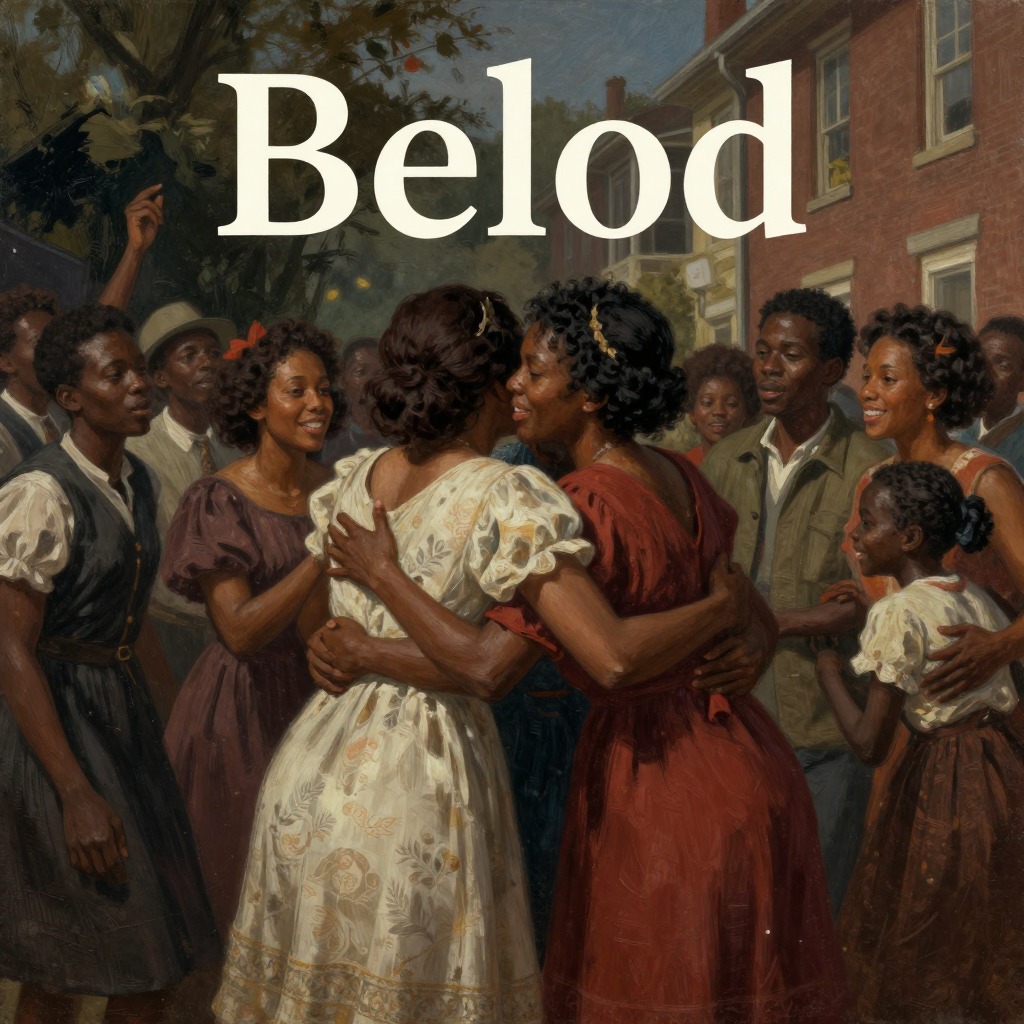
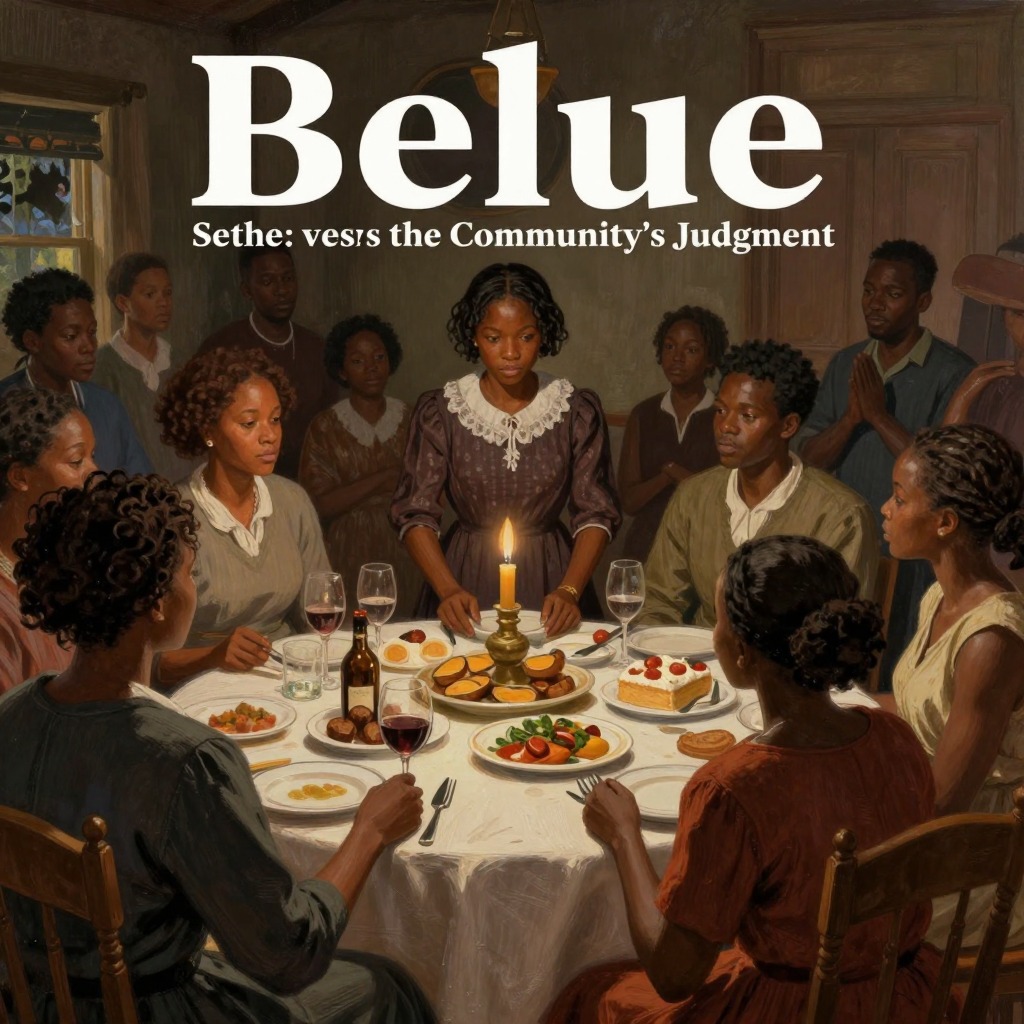
That is how it began. Baby Suggs made the pastry dough and thought she ought to tell Ella and John to stop by, because three pies, maybe four, were too much to keep for one's own. Sethe thought they might as well back it up with a couple of chickens. Stamp allowed that perch and catfish were jumping into the boat—didn't even have to drop a line. From Denver's two thrilled eyes it grew to a feast for ninety people. 124 shook with their voices far into the night. Ninety people who ate so well and laughed so much it made them angry.
The meal itself was a catalogue of abundance: fried perch that Stamp Paid handled with a hickory twig, holding his left palm out against the spit and pop of the boiling grease; corn pudding made with cream; tired, overfed children asleep in the grass, tiny bones of roasted rabbit still in their hands. Baby Suggs' three (maybe four) pies grew to ten (maybe twelve). Sethe's two hens became five turkeys. The one block of ice brought all the way from Cincinnati—over which they poured mashed watermelon mixed with sugar and mint to make a punch—became a wagonload of ice cakes for a washtub full of strawberry shrug. 124, rocking with laughter, goodwill, and food for ninety, made them angry.
The feast was the physical embodiment of Baby Suggs' preaching. In the Clearing, she had told the people that the only grace they could have was the grace they could imagine, and that they must love their flesh—their hands, their mouths, their necks, their hearts—because yonder, out there, whitepeople did not love it. The feast was her attempt to make that love tangible, to feed the community's bodies as she had fed their spirits. It was the secular counterpart to her sacred Call, the moment when her 'great big heart' was laid out on the table for all to share.
The Envy and Disapproval
The morning after, the people woke up and remembered the meal—and got angry. Too much, they thought. Where does she get it all, Baby Suggs, holy? Why is she and hers always the center of things? How come she always knows exactly what to do and when? Giving advice; passing messages; healing the sick, hiding fugitives, loving, cooking, cooking, loving, preaching, singing, dancing and loving everybody like it was her job and hers alone. Now to take two buckets of blackberries and make ten, maybe twelve, pies; to have turkey enough for the whole town pretty near, new peas in September, fresh cream but no cow, ice and sugar, batter bread, bread pudding, raised bread, shortbread—it made them mad.
Loaves and fishes were His powers—they did not belong to an ex-slave who had probably never carried one hundred pounds to the scale, or picked okra with a baby on her back. Who had never been lashed by a ten-year-old whiteboy as God knows they had. Who had not even escaped slavery—had, in fact, been bought out of it by a doting son and driven to the Ohio River in a wagon—free papers folded between her breasts—and rented a house with two floors and a well from the Bodwins. It made them furious. They swallowed baking soda, the morning after, to calm the stomach violence caused by the bounty, the reckless generosity on display at 124. Whispered to each other in the yards about fat rats, doom, and uncalled-for pride.
The scent of their disapproval lay heavy in the air. Baby Suggs woke to it and wondered what it was as she boiled hominy for her grandchildren. Later, as she stood in the garden, chopping at the tight soil over the roots of the pepper plants, she smelled it again. She lifted her head and looked around. The sky was blue and clear. Not one touch of death in the definite green of the leaves. She could hear birds and, faintly, the stream way down in the meadow. The puppy, Here Boy, was burying the last bones from yesterday's party. From somewhere at the side of the house came the voices of Buglar, Howard, and the crawling girl. Nothing seemed amiss—yet the smell of disapproval was sharp.
Resting on the handle of the hoe, she concentrated. She was accustomed to the knowledge that nobody prayed for her—but this free-floating repulsion was new. It wasn't whitefolks—that much she could tell—so it must be colored ones. And then she knew. Her friends and neighbors were angry at her because she had overstepped, given too much, offended them by excess. Baby closed her eyes. Perhaps they were right. Suddenly, behind the disapproving odor, way way back behind it, she smelled another thing. Dark and coming. Something she couldn't get at because the other odor hid it. She squeezed her eyes tight to see what it was but all she could make out was high-topped shoes she didn't like the look of.
Consequences and Aftermath
The feast's consequences were immediate and devastating. The community's envy and disapproval created a rift that left 124 isolated just when it most needed protection. The 'dark and coming thing' Baby Suggs sensed was the arrival of the four horsemen—schoolteacher, one nephew, one slave catcher, and a sheriff—who came to reclaim Sethe and her children under the Fugitive Slave Law. When they entered the yard, Sethe, recognizing schoolteacher's hat, flew into the woodshed and killed her baby daughter rather than let her be taken back to Sweet Home. The feast's abundance had made the community angry; the infanticide made them shun 124 entirely. Nobody warned them of the horsemen's approach, and Stamp Paid always believed it wasn't the exhaustion from a long day's gorging that dulled them, but some other thing—like, well, like meanness—that let them stand aside.
Baby Suggs never recovered. The feast had been her proudest moment, the proof of her belief that grace could be imagined and made real. When it was followed by bloodspill in her backyard, she concluded she had been wrong. She went to bed and stayed there, pondering color, until her big old heart quit. The twenty-eight days of unslaved life that Sethe had enjoyed—days of healing, ease, and real-talk, of knowing the names of forty or fifty other Negroes—ended with the feast's aftermath. The feast thus stands as the hinge between the novel's two halves: the brief, sunlit period of community and freedom, and the long, haunted years of isolation and grief that followed. Its memory lingered in the community, however; years later, when Denver sought help, the women who had once shunned 124 remembered the feast and the way station it had been, and their gifts of food—white beans, cold rabbit meat, eggs—were a quiet reparation for the envy that had helped destroy Baby Suggs.