Anagrammatic Name
The anagrammatic name constraint is a peculiar and revealing supernatural law that governs the vampire Mircalla, Countess Karnstein. It dictates that when she adopts a false identity, the name she chooses must be an exact anagram of her original name—reproducing every letter without omission or addition. This rule is not merely a curiosity; it functions as a hidden signature, a trace that persists through the vampire's deceptions and links her various incarnations across centuries.
Definition and Operation
The anagrammatic constraint is described as a limitation to which the vampire is apparently subject in certain situations. In the particular instance of Mircalla, she seemed to be bound to a name that, if not her real one, should at least reproduce, without the omission or addition of a single letter, those which compose it. This means that every alias she uses is a perfect rearrangement of the letters in "Mircalla." The rule is presented as a known property of this specific vampire, not necessarily a universal law for all such creatures, though it is treated as an established fact within the narrative.
Key Occurrences
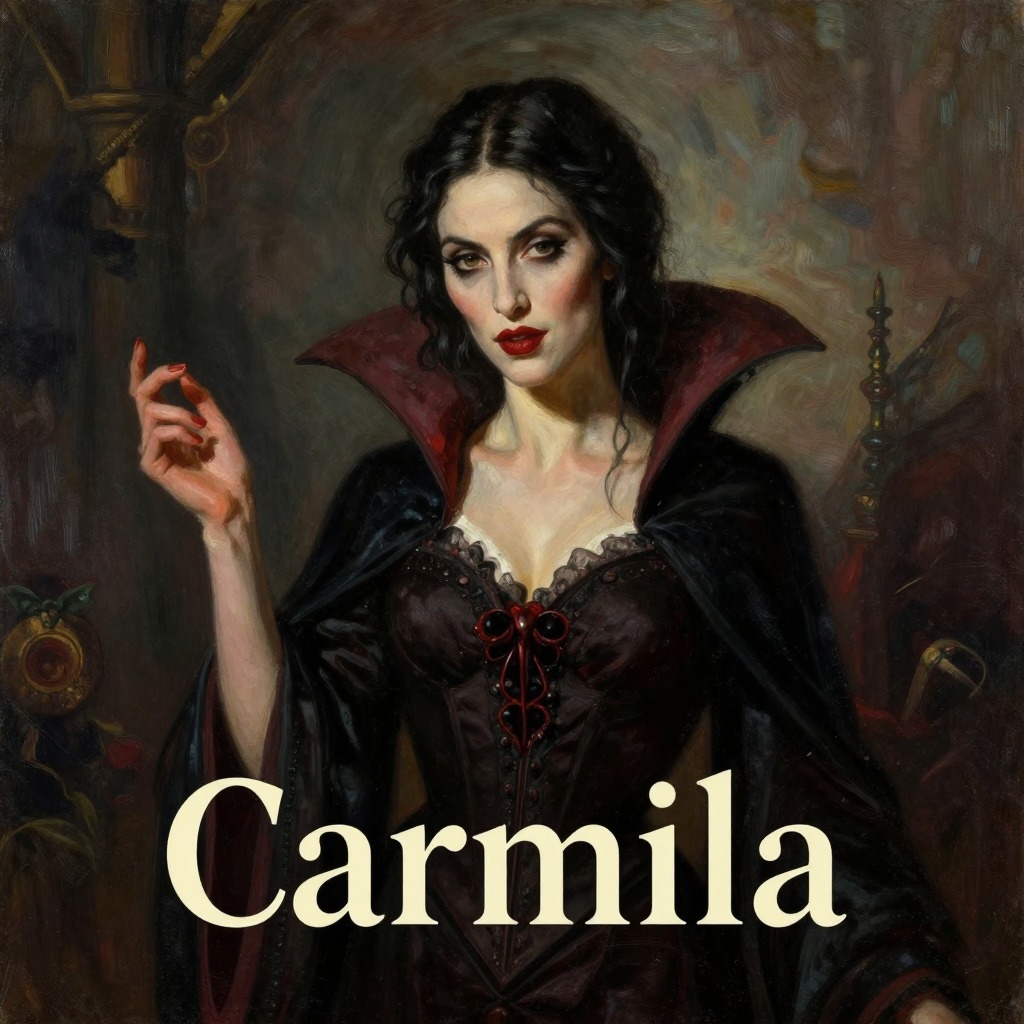
The constraint is demonstrated through the two false names the vampire uses in the story. When she appears to Laura and her family, she calls herself "Carmilla." When she previously insinuated herself into the household of General Spielsdorf and his ward Bertha Rheinfeldt, she used the name "Millarca." Both "Carmilla" and "Millarca" are exact anagrams of "Mircalla," each containing the same eight letters: C, A, R, M, I, L, L, A. The narrative explicitly confirms this: "Carmilla did this; so did Millarca."
Connections and Consequences
The anagrammatic name constraint serves as a subtle but crucial link between the vampire's different identities, allowing the reader—and eventually the characters—to recognize the continuity of the predator across time and space. It is a clue that the beautiful young guest who captivated Laura is the same entity that destroyed Bertha Rheinfeldt, and that both are the long-dead Countess Karnstein. The constraint also adds a layer of tragic irony: the vampire's compulsion to leave this linguistic fingerprint, this trace of her true self, ultimately aids in her identification and destruction. It is a ghostly law that the creature cannot escape, a remnant of her original identity that persists even as she seeks new victims.
Significance
The anagrammatic name constraint is a distinctive feature of the vampire lore in the story, blending the supernatural with a kind of linguistic determinism. It suggests that even in her monstrous transformation and predatory existence, Mircalla is bound by a rule that ties her to her mortal name and history. The constraint also functions as a narrative device that rewards attentive reading, turning the names themselves into a puzzle that reveals the vampire's true nature. It underscores the theme of hidden identity and the persistence of the past, as the dead Countess cannot fully erase her origins, even when she returns to prey on the living.