Imperial Commission
The Imperial Commission represents the formal legal and judicial apparatus that intervenes in the supernatural crisis plaguing Styria, converting the private vengeance of General Spielsdorf into a state-sanctioned, procedurally documented execution. Its involvement marks the point at which the narrative shifts from personal testimony and folk belief to institutional verification, lending the weight of official record to the otherwise incredible events.
Composition and Authority
The Commission is constituted as a body of multiple members, all chosen for their integrity and intelligence, operating under the legal framework of the Inquisition. Its proceedings are conducted with every care and solemnity, and it produces reports that are more voluminous than those existing upon any other class of cases. The Commission includes two medical men—one officially present and the other representing the promoter of the inquiry—who attest to the physical evidence of vampirism. The body's authority derives from its capacity to conduct formal investigations, open graves, and authorize the destruction of the undead according to established legal procedure.
The Investigation and Findings
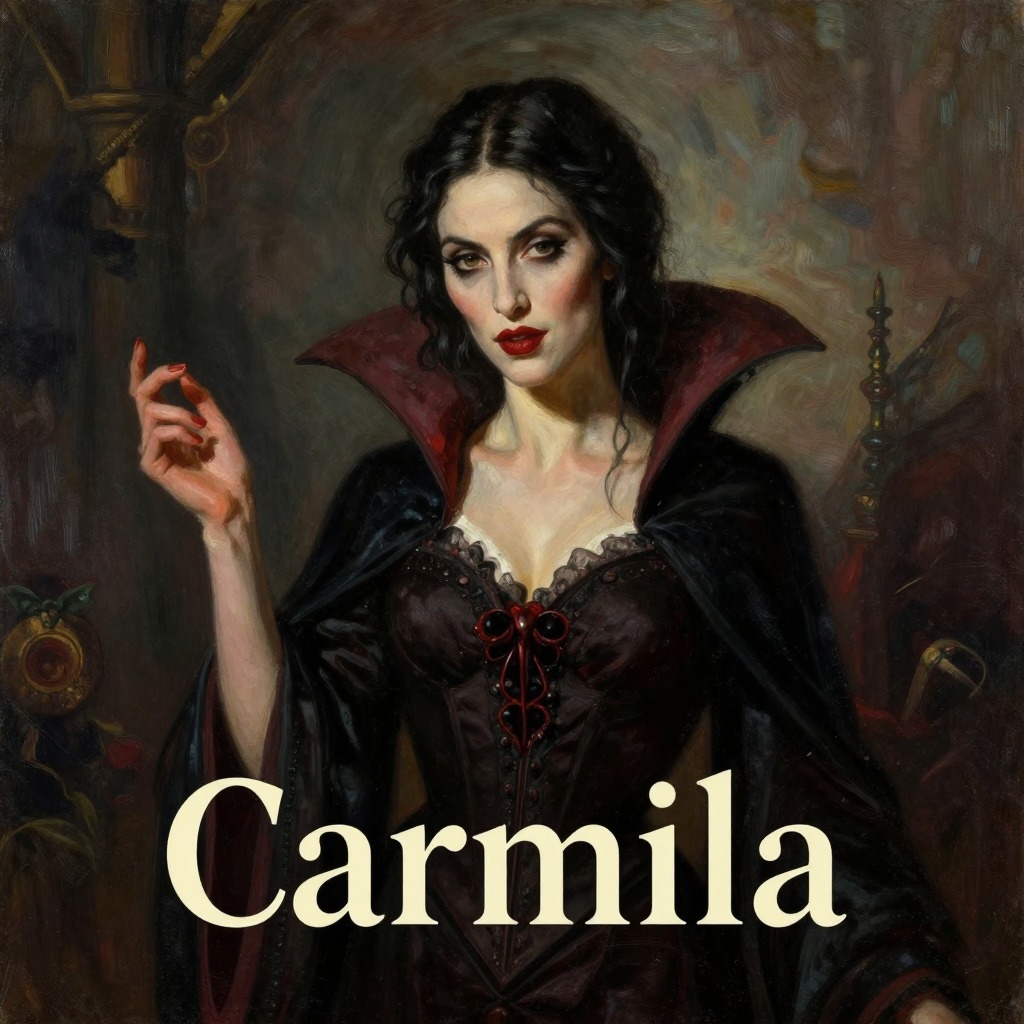
The Commission's formal proceedings take place in the Chapel of Karnstein the day after the confrontation in the ruined chapel. When the grave of Countess Mircalla is opened, General Spielsdorf and Laura's father recognize the face of their perfidious and beautiful guest, Carmilla, despite a hundred and fifty years having passed since her funeral. The features are tinted with the warmth of life, her eyes are open, and no cadaverous smell exhales from the coffin. The two medical men attest to a faint but appreciable respiration and a corresponding action of the heart. The limbs are perfectly flexible, the flesh elastic, and the leaden coffin floats with blood in which, to a depth of seven inches, the body lies immersed. These constitute all the admitted signs and proofs of vampirism.
The Execution and Aftermath
In accordance with ancient practice, the body is raised and a sharp stake driven through the heart of the vampire, who utters a piercing shriek at the moment, in all respects such as might escape from a living person in the last agony. The head is then struck off, and a torrent of blood flows from the severed neck. The body and head are placed on a pile of wood and reduced to ashes, which are thrown upon the river and borne away. Laura's father possesses a copy of the Commission's report, with the signatures of all present at these proceedings attached in verification of the statement. It is from this official paper that Laura summarizes her account of the final shocking scene. The territory has never since been plagued by the visits of a vampire.
Narrative Significance
The Imperial Commission serves as the narrative's ultimate guarantor of truth, providing documentary proof that the events actually occurred. Laura explicitly states that she has summarized her account from the Commission's official paper, grounding her otherwise incredible story in verifiable legal record. The Commission's involvement transforms the vampire from a figure of local superstition and personal trauma into a legally recognized phenomenon, subject to formal investigation and judicial execution. Its report, bearing multiple signatures, stands as the authoritative counterweight to the skepticism that might otherwise greet Laura's narrative, and its procedures—the opening of the grave, the medical examination, the stake through the heart, decapitation, and burning—follow the established legal and folkloric protocols for dealing with vampirism.