Kanly
Kanly is the formalized system of vendetta that governs deadly feuds between the Great Houses of the Imperium in Frank Herbert's Dune. It is a legalized form of warfare, a ritualized conflict conducted under the strict forms of the Great Convention and the Guild Peace, distinguishing it from both open battle and informal treachery. The concept is not merely a background detail but a central engine of the plot, as the ancient and bitter feud between House Atreides and House Harkonnen is conducted under its rules, shaping the strategies, betrayals, and ultimate fates of the major characters. To understand the conflict of Dune is to understand kanly, for it is the framework within which the entire struggle for Arrakis unfolds.
Definition and Legal Framework
Kanly is defined as a formal feud or vendetta carried out under the strictest limitations, as outlined in the terminology of the Imperium. It is a legalized form of conflict, distinct from the open warfare of a War of Assassins, and is governed by the Great Convention, the universal truce enforced by the Guild, the Great Houses, and the Imperium. The rules of kanly are designed to protect innocent bystanders, and the conduct of such a feud is monitored by a Judge of the Change, an official appointed by the Landsraad High Council and the Emperor. The use of the term itself is significant; when Duke Leto Atreides declares kanly against the Harkonnens, he uses "the nice old word so rich in tradition" to signal his intent to his enemies, making it clear that he is invoking a formal, binding code of conduct. This legalistic framing is crucial, as it allows the feud to proceed within the bounds of Imperial law, even as it sanctions assassination and destruction.
The Atreides-Harkonnen Feud
The primary example of kanly in the novel is the feud between House Atreides and House Harkonnen. This vendetta is ancient, rooted in the banishment of a Harkonnen for cowardice after the Battle of Corrin, and it is a driving force behind the plot. The Baron Vladimir Harkonnen's plan to destroy Duke Leto is conceived as an act of kanly, a formal and calculated campaign of annihilation. The Baron's Mentat, Piter de Vries, describes the plan as "a plan of the most exquisite treachery" designed to make Leto exchange Caladan for Dune, a move that will lead to his downfall. The rules of kanly dictate that the feud must be conducted with a certain formality; the Baron makes a peace gesture, which is refused by the Duke, and the conflict proceeds under the understanding that both sides are bound by the conventions of the vendetta. This formal structure is what allows the Harkonnens to use the Emperor's Sardaukar in disguise, as the legal fiction of kanly provides cover for their actions.
Rules and Conduct of the Vendetta
Kanly is not a lawless free-for-all but a highly structured form of conflict with specific rules and expectations. The rules are designed to limit the scope of violence and protect those not directly involved in the feud. For instance, the use of atomics is prohibited by the Great Convention, and the forms of kanly must be observed. This is why the Baron is careful to make his attacks appear as legitimate acts of vendetta, such as the attempt on Paul's life with a hunter-seeker, which is a common assassination weapon. The conduct of kanly also involves a certain level of psychological warfare, as seen in the Baron's desire for the Duke to know who is encompassing his doom. The Baron states, "The Duke must know when I encompass his doom... And the other Great Houses must learn of it. The knowledge will give them pause." This demonstrates that kanly is as much about political signaling and reputation as it is about direct violence. The rules also dictate the treatment of captives and the conduct of formal challenges, as seen in the final duel between Paul and Feyd-Rautha, which is conducted under the ancient kanly ritual.
Kanly in the Final Confrontation
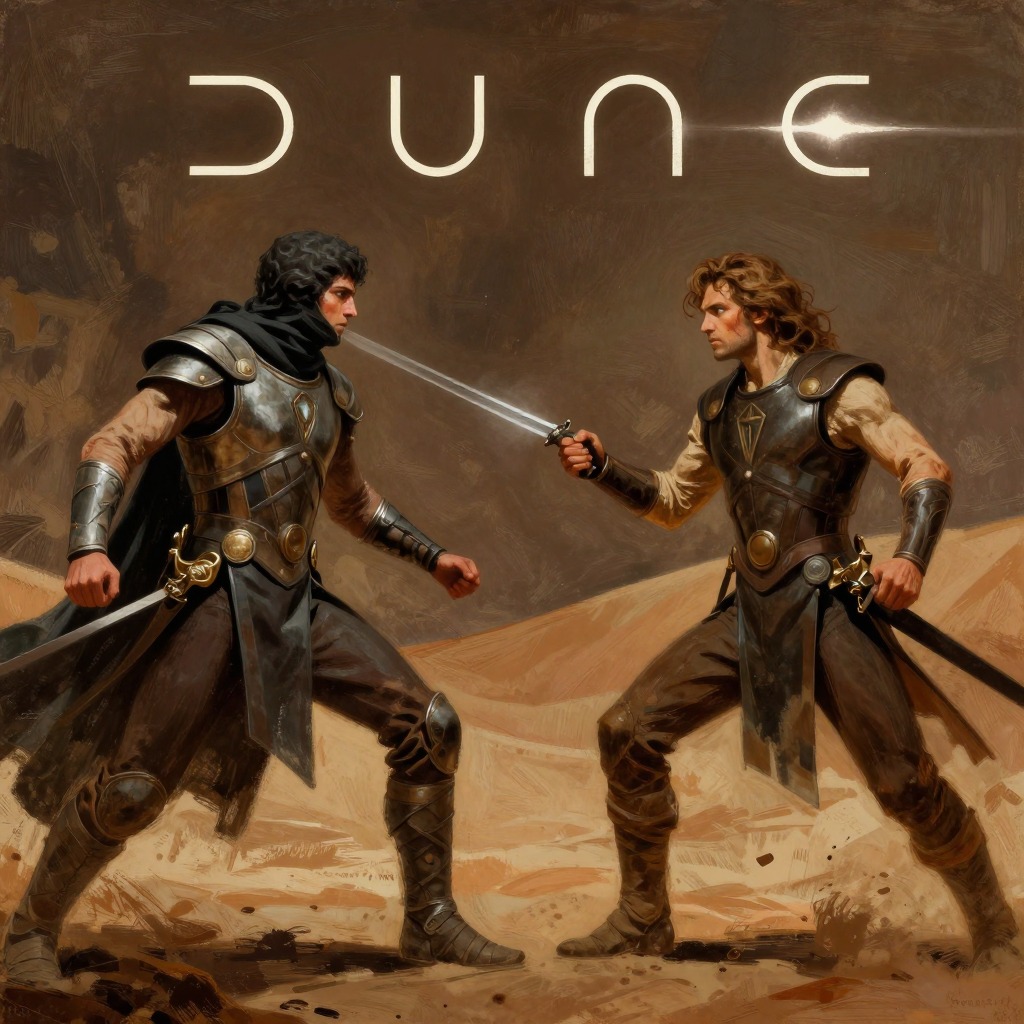
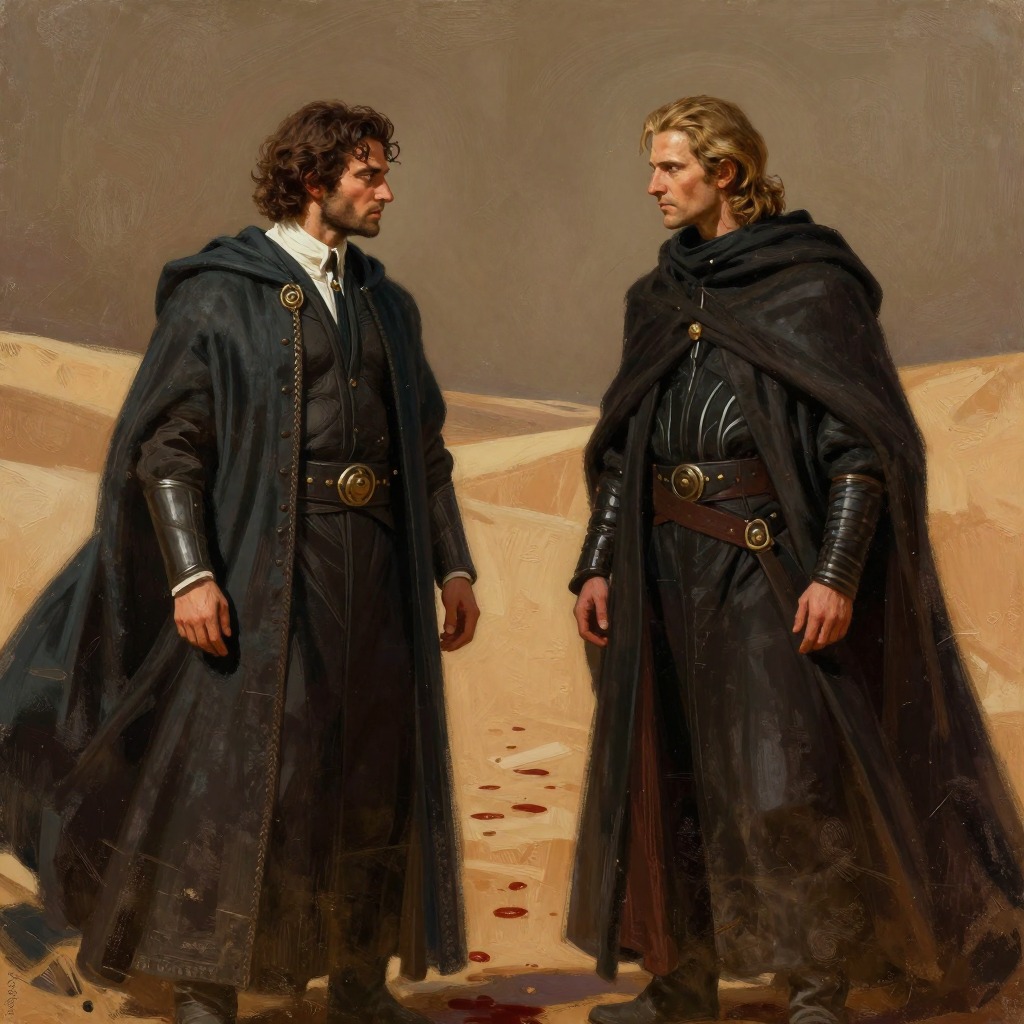
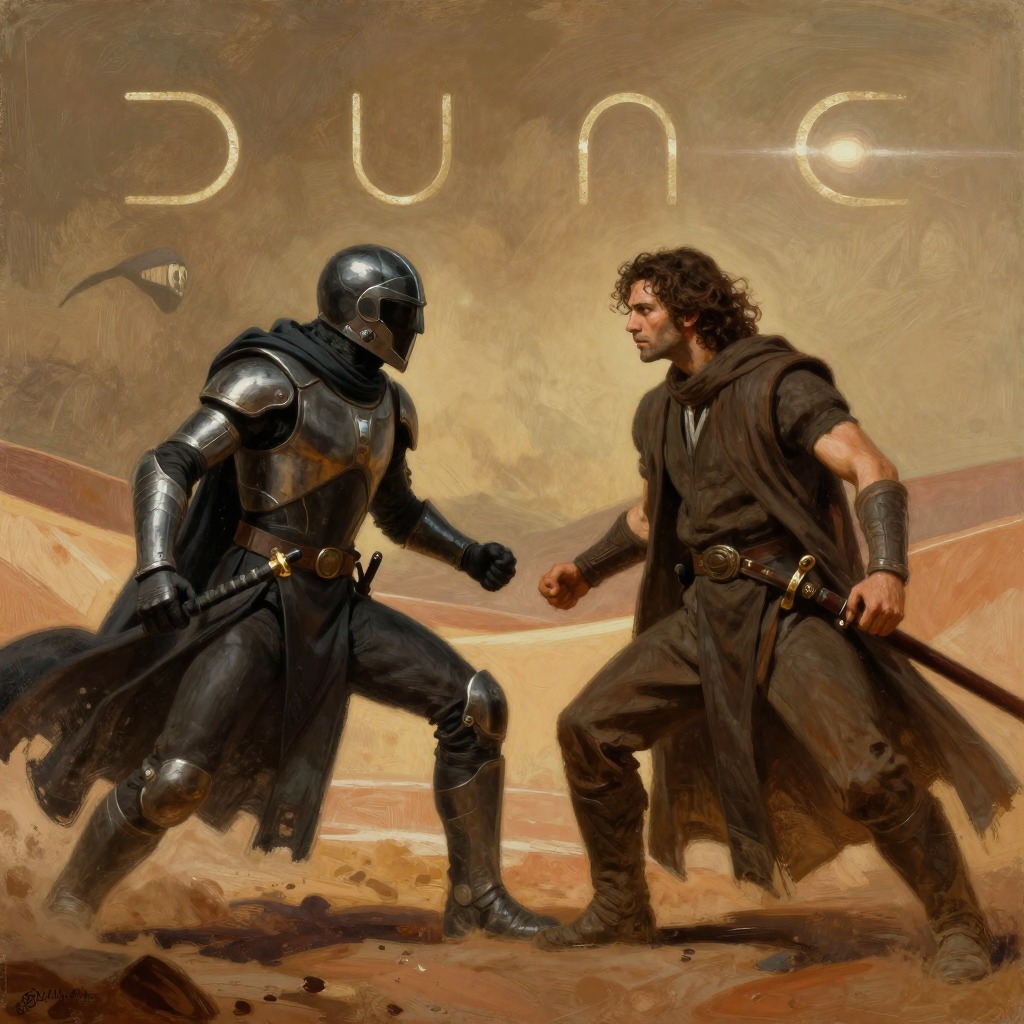
The concept of kanly reaches its climax in the final confrontation between Paul Atreides and Feyd-Rautha Harkonnen. When Paul, now the leader of the Fremen, confronts the Emperor and his entourage, he invokes the rules of kanly to challenge Feyd-Rautha to single combat. Paul declares, "It is now kanly and you know as well as I the rules that must prevail," signaling that the feud must be settled through a formal duel. This duel is conducted with the ritualistic language of the vendetta, with Feyd-Rautha calling out, "Is the Atreides ready?" and Paul responding with the Fremen curse, "May thy knife chip and shatter!" The duel is a direct application of the kanly rules, a formal and deadly contest that determines the outcome of the feud. Paul's victory in this duel is not just a personal triumph but a legal and political one, as it allows him to claim the throne and end the vendetta on his own terms. The duel thus serves as the ultimate expression of kanly, a ritualized conflict that resolves the ancient feud and reshapes the political landscape of the Imperium.
Significance and Thematic Resonance
Kanly is more than a plot device; it is a thematic exploration of the nature of power, honor, and violence in a feudal society. The rules of kanly represent a form of civilized warfare, a way for the Great Houses to pursue their ambitions while maintaining a semblance of order and legality. However, the novel also reveals the hypocrisy and brutality inherent in this system. The Baron Harkonnen uses the forms of kanly to mask his treachery, while the Emperor himself is complicit in the destruction of House Atreides, violating the spirit of the law even as he observes its letter. The concept of kanly also highlights the importance of reputation and political maneuvering in the Imperium, as the Great Houses are constantly aware of how their actions will be perceived by others. Ultimately, kanly serves as a lens through which Herbert examines the moral compromises and ruthless calculations that define the struggle for power, making it a central and enduring element of the Dune universe.