Mrs. Cole
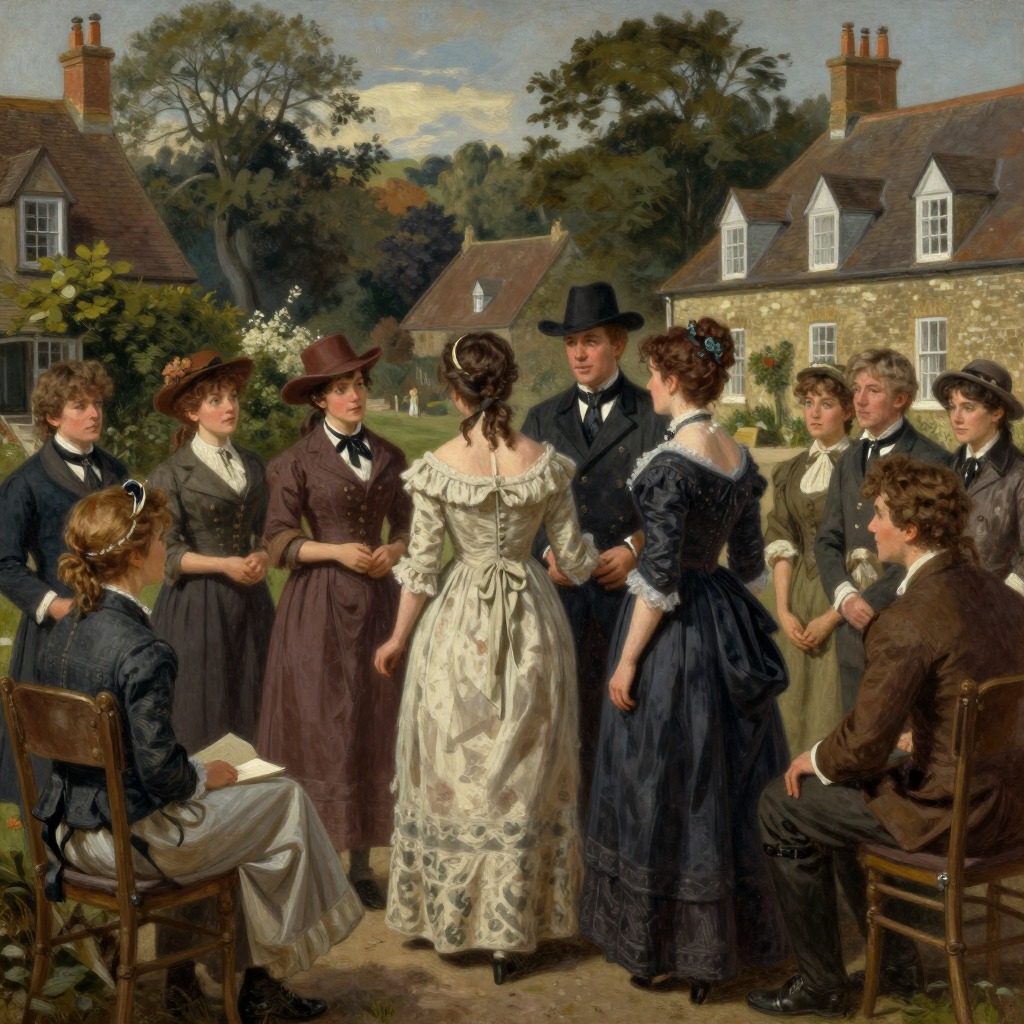
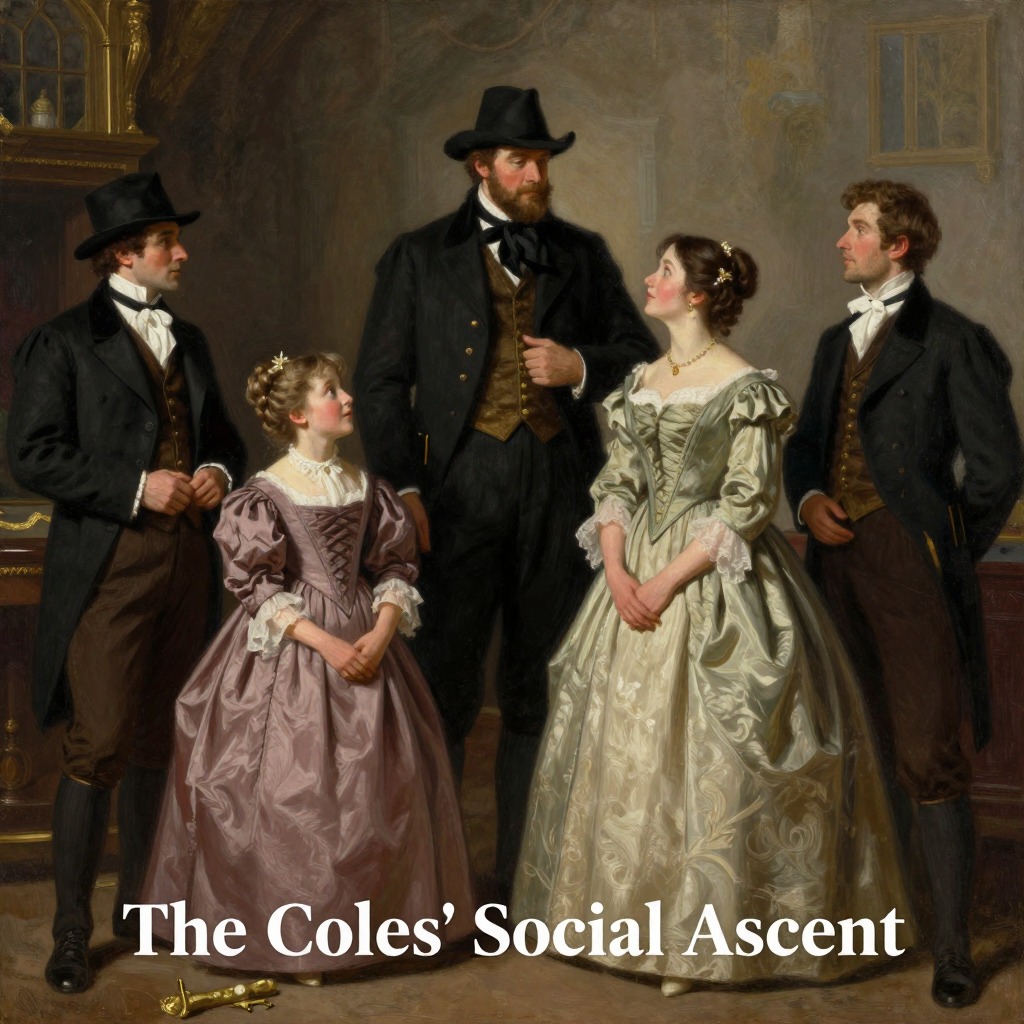
Mrs. Cole is a minor but socially significant figure in Highbury, a woman of trade origins whose rising fortune and social ambition quietly challenge the village's established hierarchy. Though she and her husband have been settled in Highbury for some years, their recent increase in means has prompted them to enlarge their house, add servants, and begin keeping dinner-company—a development that places them, in fortune and style of living, second only to the family at Hartfield. Emma Woodhouse, who regards the Coles as "very good sort of people—friendly, liberal, and unpretending," nevertheless feels that their presumption in inviting the superior families must be checked, and she resolves privately that nothing should tempt her to accept an invitation from them. Yet when the invitation finally arrives, Emma finds herself unexpectedly inclined to go, and with the encouragement of Mr. and Mrs. Weston, she allows herself to be persuaded, marking a significant concession of her own pride to the changing social realities of Highbury.
Social Position and Ambition
The Coles occupy a distinct place in Highbury's social landscape: they are of low origin, in trade, and only moderately genteel, yet their growing wealth has made them increasingly visible. On their first coming into the country, they lived quietly, keeping little company and that little unexpensively, but the last year or two brought them a considerable increase of means—the house in town yielded greater profits, and fortune in general smiled on them. With their wealth, their views increased; they added to their house, to their number of servants, to their expenses of every sort. Their love of society and their new dining-room prepared everybody for their keeping dinner-company, and a few parties, chiefly among the single men, had already taken place. The regular and best families—Donwell, Hartfield, and Randalls—Emma could hardly suppose they would presume to invite, and she regrets that her father's known habits would give her refusal less meaning than she could wish. The Coles, she believes, ought to be taught that it is not for them to arrange the terms on which the superior families will visit them.
The Dinner Party and Its Consequences
When the Coles' invitation does arrive, it finds Emma very differently affected than she had anticipated. Donwell and Randalls have received their invitations, but none has come for her father and herself; Mrs. Weston accounts for it by supposing the Coles know Mr. Woodhouse does not dine out, but Emma feels she should like to have had the power of refusal. The party to be assembled consists precisely of those whose society is dearest to her—Harriet Smith, the Bateses, and Frank Churchill, who has most earnestly lamented her absence and even raised the possibility of the evening ending in a dance. The bare possibility acts as a further irritation on her spirits, and her being left in solitary grandeur, even supposing the omission to be intended as a compliment, is but poor comfort. It is the arrival of this very invitation while the Westons are at Hartfield that makes their presence so acceptable; though her first remark is that "of course it must be declined," she so very soon proceeds to ask their advice that their prompt and successful counsel for her going carries the day. The Coles have expressed themselves so properly, with so much real attention in the manner of it and so much consideration for her father—they would have solicited the honour earlier but had been waiting the arrival of a folding-screen from London, which they hoped might keep Mr. Woodhouse from any draught of air—that Emma is very persuadable. The dinner itself proves a success: Emma is received with cordial respect, given all the consequence she could wish for, and finds herself seated next to Frank Churchill, who marks her as his peculiar object.
Role in the Narrative
Mrs. Cole functions as a catalyst for several key developments in the story. It is at her dinner party that the mysterious arrival of a pianoforte at the Bateses' house is first discussed, sparking Emma's suspicions about its donor and leading to her elaborate conjectures about Mr. Dixon and Jane Fairfax. It is also at this party that the first dancing of the season takes place, with Frank Churchill securing Emma's hand and leading her to the top of the set, an event that deepens the appearance of an attachment between them. Mrs. Cole herself is the source of the news about Mr. Elton's engagement to Miss Hawkins, having received a letter from him and immediately written to Miss Bates. She is also the one who, when the pianoforte is discussed, declares that she does not know when she has heard anything that has given her more satisfaction, noting how it has always hurt her that Jane Fairfax, who plays so delightfully, should not have an instrument. Through these small but consequential acts of communication and hospitality, Mrs. Cole quietly shapes the social life of Highbury and provides the occasions for some of the novel's most important revelations and misunderstandings.