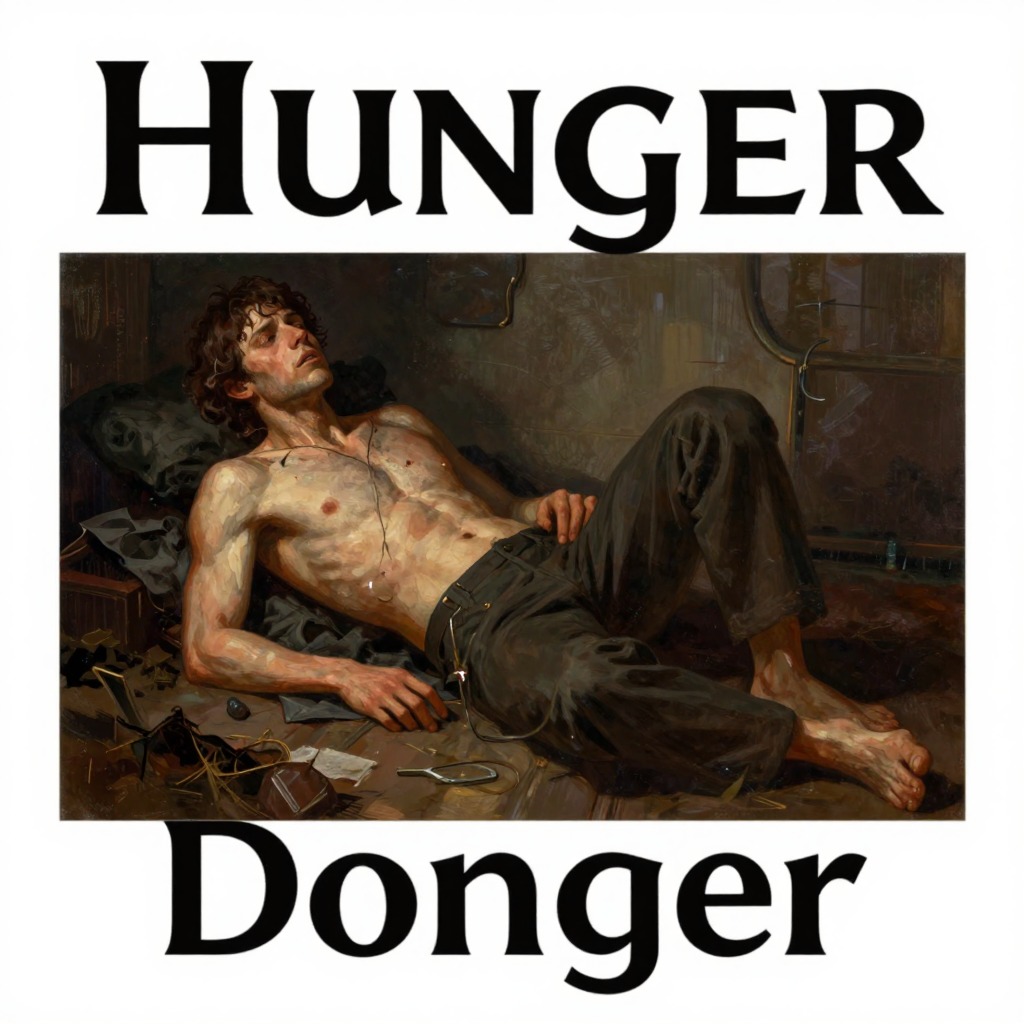
Confess to Shopkeeper
The Confess to Shopkeeper is a pivotal action in Part III of Knut Hamsun's Hunger, in which the starving narrator, after stealing five shillings from a provision shop, returns to the shop to confess his crime, only to find the shopkeeper's boy too fearful to act, leading to a bizarre and morally ambiguous confrontation that deepens the narrator's self-loathing.
Background and the Theft
The narrator's descent into theft begins when he enters a provision shop to ask for a candle on credit. The shopkeeper's boy, mistaking him for a paying customer who has already handed over a crown, gives him change for a crown—five shillings in silver. The narrator, stunned by the sight of the money, gathers it mechanically and leaves without correcting the error. This is his first outright dishonesty, a moment he later describes as his "first great fall." The theft weighs on him immediately; he spends the money on a plate of beef and hot milk, but the food causes him to vomit, and he is seized with bitterness and self-reproach. He later gives the entire sum to an old cake vendor near the chemist's under the sign of the elephant, an act he performs without a word, hoping to lift himself above dishonour and feel clean again. Yet the memory of the theft continues to torment him, and he becomes convinced that he must confess to the shopkeeper's boy to restore his sense of honour.
The Confrontation
Days later, as the narrator approaches the provision shop, he has a half-conscious feeling of approaching a danger, but he determines to stick to his purpose and give himself up. He runs quickly up the steps and meets a little girl carrying a cup, slips past her, and opens the door. Inside, he and the shopkeeper's boy stand face to face alone for the second time. The boy greets him with a remark about the weather, but the narrator, furious at this evasion, cries out, "Oh, I haven't come to prate about the weather." This violent preliminary takes the boy aback; his little huckster brain fails him, and it has never even occurred to him that the narrator has cheated him of five shillings. The narrator, impatient and trembling with excitement, demands, "Don't you know, then, that I have swindled you?" He explains every detail of how the theft happened—how the boy had given him change for a crown, how he had gathered up the money and closed his fingers over it. The boy, however, has no misgivings and shifts uneasily from one foot to the other, listening for footsteps in the next room and making signs to hush the narrator. He finally says, "It was a mean enough thing of you to do!"
The Narrator's Justification and Departure
The narrator, in his desire to contradict and aggravate the boy, insists that it was not quite as mean as the boy imagines. He declares that he did not keep the money—that could never have entered his head—and that he scorned to derive any benefit from it, as it was opposed to his thoroughly honest nature. When the boy asks what he did with it, the narrator replies that he gave it away to a poor old woman, every farthing of it, and that he does not forget the poor. The boy stands and thinks this over, becoming manifestly dubious about whether the narrator is an honest man or not. He finally asks, "Oughtn't you rather to have brought it back again?" The narrator, now angry, replies that he did not want to get the boy into trouble, and that this is the thanks one gets for being generous. He declares that he washes his hands of the boy, says "The devil take you!" and leaves, slamming the door behind him.
Aftermath and Self-Loathing
When the narrator returns to his room in the lodging house, wet through from the soft snow and trembling in his knees from the day's wanderings, he dismounts instantly from his high horse and sinks together once more. He regrets his attack upon the poor shop-boy, weeps, clutches himself by the throat to punish himself for his miserable trick, and behaves like a lunatic. He realizes that the boy had been in the most deadly terror for the sake of his situation and had not dared to make any fuss about the five shillings that were lost to the business. The narrator had taken advantage of that fear, had tortured him with his violent address, and stabbed him with every loud word he had roared out. He concludes that there is no longer any limit to the low things he might be tempted to do. This confession, rather than absolving him, deepens his sense of degradation and confirms his belief that he is sinking into a state of moral ruin from which there is no escape.