The Sign of the Cross
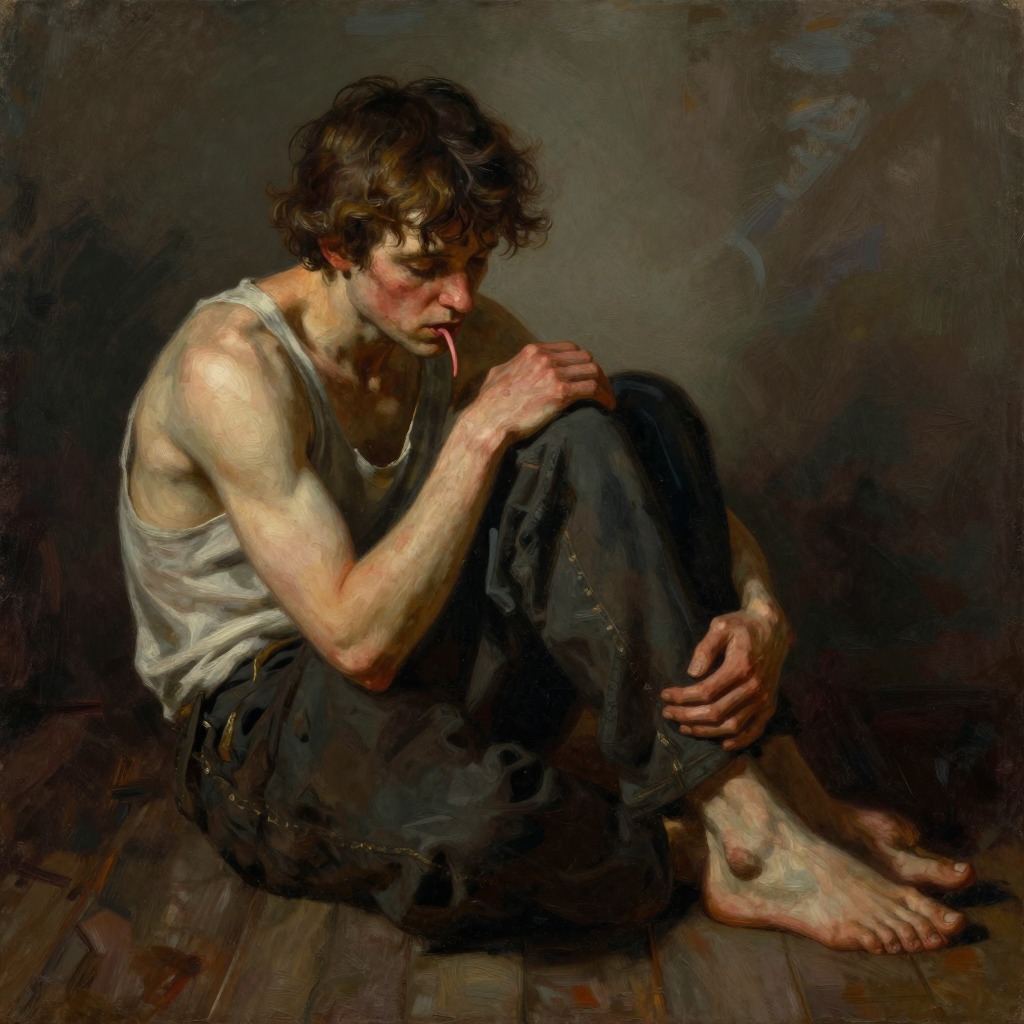
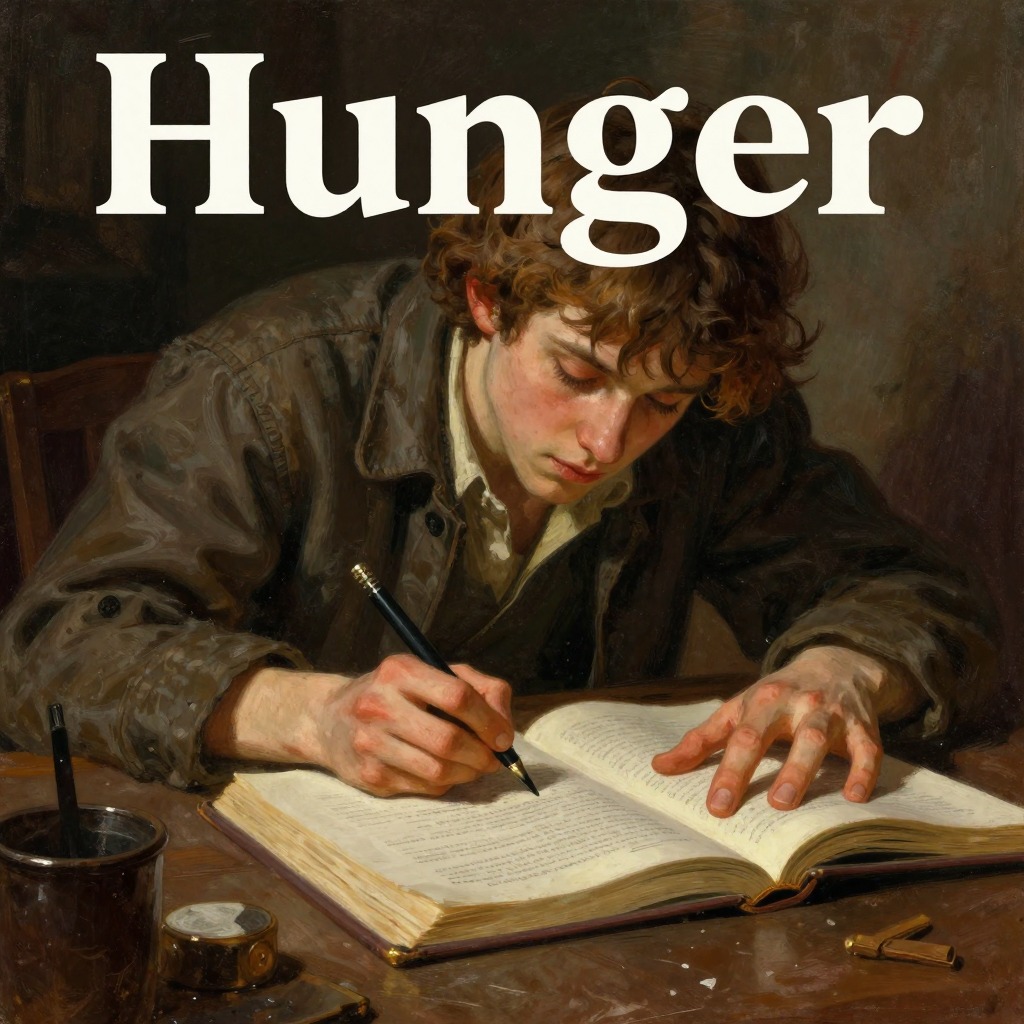
The Sign of the Cross is a one-act drama conceived by the starving narrator of Knut Hamsun's Hunger, a work he feverishly plans and begins writing during the depths of his physical and mental collapse, only to abandon it in despair when his creative faculties fail him. The play represents the narrator's most ambitious attempt to harness his dwindling mental powers for a commercial breakthrough, and its failure marks a critical turning point in his descent toward utter destitution and his eventual decision to leave Christiania. More than a mere plot device, the drama crystallizes the narrator's tortured relationship with artistic creation, his hunger for recognition, and the corrosive effects of poverty on the imagination itself.
Conception and Subject Matter
The idea for The Sign of the Cross comes to the narrator while he is living in a cheap lodging house in Vaterland, having exhausted the money from a half-sovereign given him by the editor known as the Commandor. He has been unable to complete an allegory about a bookshop fire, but a new idea seizes him: a one-act drama set in the Middle Ages. Its central figure is a magnificently fanatical harlot who has sinned in the temple, not from weakness or desire, but out of pure hatred for heaven. She commits her transgression right at the foot of the altar, using the altar-cloth under her head, driven by a delicious contempt for heaven. The narrator envisions her as deformed and repulsive—tall, very lean, rather dark, with large outstanding ears—a figure barely endurable to look at, whose long limbs gleam through her draperies at every stride. What fascinates him is her wonderful shamelessness and the desperately full measure of calculated sin she has committed. The subject matter, with its blend of religious transgression, grotesque physicality, and defiant spirituality, mirrors the narrator's own blasphemous rage against God, which he has expressed in earlier moments of crisis, cursing the "Gracious Monster on High" and renouncing all divine works and pomps.
Composition and Collapse
The narrator works on the drama for two hours without a pause, writing perhaps a dozen pages, often with much effort and long intervals in which he writes in vain and has to tear the page in two. He becomes tired, stiff with cold and fatigue, and is disturbed by the crying of children in the family room of the lodging house. He goes out for a long walk up Drammensveien, pondering how to continue. The next day, sitting by the harbor in the sunshine, he tries again, attempting to place a speech into a monk's mouth—a speech that ought to swell with pride and intolerance—but it is of no use. He skips the monk and tries to work out the Deemster's oration to the violator of the Temple, writing half a page before stopping. The right local color will not come; the bustle of the harbor—the shanties, the noise of the gangways, the rattle of iron chains—fits in so little with the musty air of the dim Middle Ages that is to envelop the drama like a mist. He bundles his papers together and gets up. Later, back in the lodging house, he attempts to write again, holding the paper on his knees and gazing persistently at the floor to avoid distraction, but nothing helps. He finds it impossible to get any farther, and begins to doubt the value of what he has already written. The whole idea seems contemptible rubbish. He questions whether one can even talk of conscience in the Middle Ages, reasoning that conscience was first invented by "Dancing-master Shakespeare." Yet when he rereads his pages, he discovers grand pieces of remarkable merit, and the intoxicating desire to finish the drama darts through him once more.
Final Destruction and Significance
The narrator's final attempt to work on the drama occurs when he sneaks into his former room at the lodging house, now occupied by a sailor. He sits on a chair near the door, spreading the papers on his knees, and writes uninterruptedly for a few minutes, filling page after page, chuckling softly in ecstasy. A singularly happy idea strikes him about a church bell that is to peal out at a certain point. But he hears a step on the stairs, trembles, and can write no more. The landlady discovers him and throws him out. Later, sitting on a step near the railway square, he takes out the manuscript and resolves to finish the last few scenes with might and main. He thinks until he sweats, re-reads from the beginning, but makes no progress. He writes down everything that strikes him, just to get finished quickly, lying to himself that a new supreme moment has seized him. But the words sound questionable; they contrast strongly with the speeches in the first scenes, and not a trace of the Middle Ages shines through the monk's words. In a fit of fury, he breaks his pencil between his teeth, jumps to his feet, tears the manuscript in two, tears each page in two, flings his hat down in the street, and tramples upon it. He whispers to himself, "I am lost!" The destruction of The Sign of the Cross is the narrator's final surrender to the conviction that his creative powers have been destroyed by hunger and poverty. Immediately afterward, he wanders to the wharf and signs on to the barque Copégoro, bound for Leith and then Cadiz, leaving Christiania behind. The drama thus stands as the last, failed attempt at artistic redemption before the narrator abandons his literary ambitions and his city altogether.