Council on Foreign Relations (CFR)
The Council on Foreign Relations (CFR) is a private American think tank whose New York headquarters serves as the setting for a pivotal confrontation between Bertrand Zobrist and Elizabeth Sinskey, the director of the World Health Organization. In this meeting, Zobrist lays out his radical views on overpopulation and his belief that drastic, even catastrophic, measures are necessary to save humanity, setting the ideological conflict of the novel in motion.
Nature and Reputation
Founded in the 1920s as a private think tank, the CFR had among its past membership nearly every secretary of state, more than a half-dozen presidents, a majority of CIA chiefs, senators, judges, as well as dynastic legends with names like Morgan, Rothschild, and Rockefeller. The membership’s unparalleled collection of brainpower, political influence, and wealth had earned the Council on Foreign Relations the reputation of being “the most influential private club on earth.” Its New York headquarters is an unobtrusive neoclassical building on the corner of Park and Sixty-eighth that had once been the home of a Standard Oil tycoon, its exterior blending seamlessly with the elegant landscape surrounding it.
The Confrontation with Zobrist
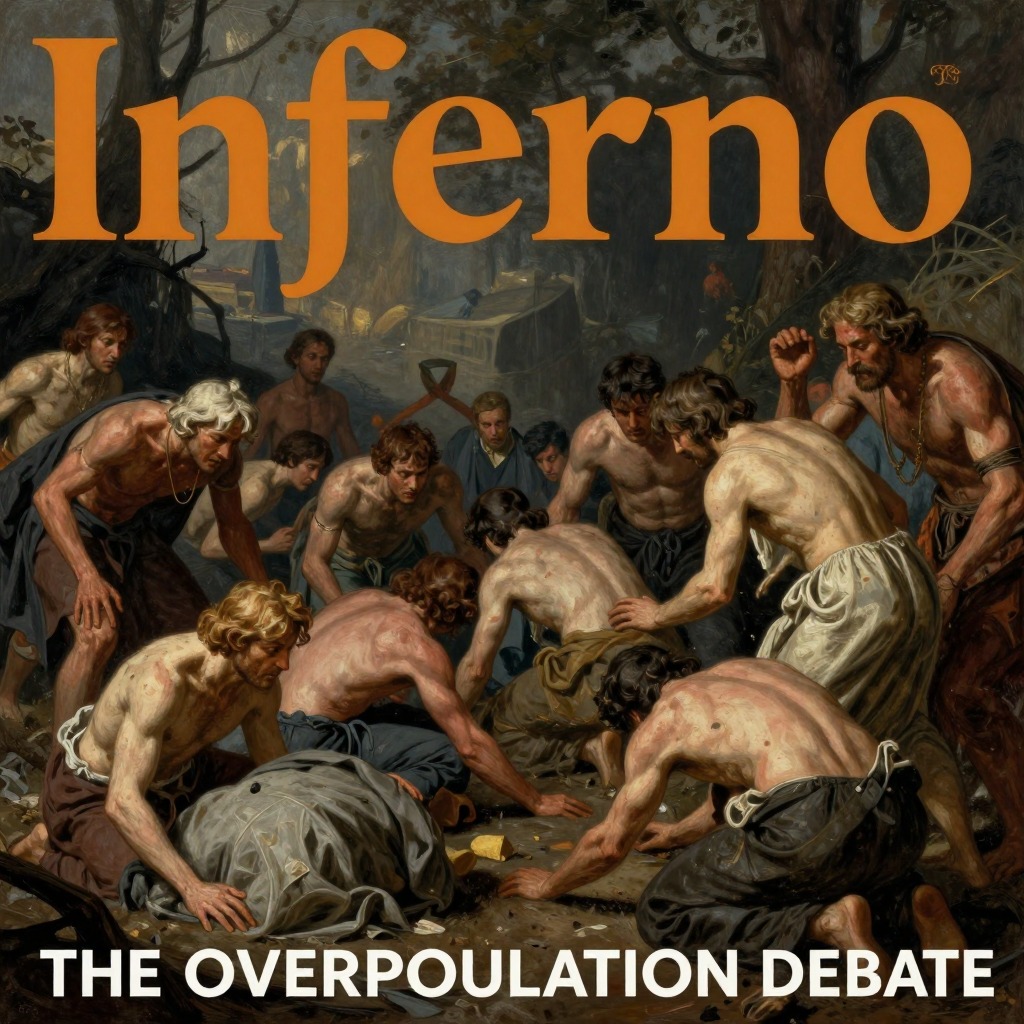
Two years before the novel's main events, Elizabeth Sinskey, then serving as the director of the World Health Organization, flew to Manhattan from Geneva after delivering a lecture at the UN on pandemic disease. She was summoned to the CFR by a UN employee with a high-level diplomatic badge, who told her that someone from the Council on Foreign Relations wanted to speak to her. Inside a small, dark conference room illuminated only by the glow of a video screen, she was met by a very tall and lanky silhouette—Bertrand Zobrist. Zobrist, who had attended her UN lecture, immediately challenged her, calling her presentation “myopic” and criticizing the WHO for not dealing with overpopulation “head-on.” He used the image of a grim Doré painting of Dante’s Inferno to illustrate his point, declaring, “that’s where we’re headed.” Zobrist then lectured Sinskey on the staggering power of geometric progression, using the example of a sheet of paper folded fifty times to reach the sun, and presented a graph from the WHO itself showing accelerating environmental decline. He argued that all these problems were symptoms of a single disease: overpopulation. When Sinskey defended the WHO’s efforts, including distributing condoms in Africa, Zobrist derided them as “swinging a flyswatter at an incoming asteroid.” He stated that the ideal global population for long-term survival was around four billion, and when Sinskey pointed out the current population was seven billion, he asked, “Is it?” implying that drastic action was still possible.
Consequences and Aftermath
Sinskey, horrified by Zobrist’s implications, declared his ideas “criminal” and considered his speech a terrorist threat. She took a photograph of his face, vowing to put him on the watch lists of the WHO, the CDC, and the ECDC as a potential bioterrorist. Zobrist, in turn, warned her that he could explore his ideas on his own, with or without her cooperation. The confrontation ended with Zobrist declaring, “Then it appears our dance has begun.” This meeting directly led to Sinskey’s relentless pursuit of Zobrist, which ultimately drove him underground, where he was hidden by the Consortium. The CFR meeting is the foundational event that establishes the ideological battle between Zobrist’s apocalyptic Transhumanism and Sinskey’s institutional public health approach, and it is the reason Sinskey later recruits Robert Langdon to help decipher Zobrist’s clues.