Prologue, a few days before the main story
The Shade's Suicide
A man known only as the Shade flees through Florence, pursued by unknown assailants. He climbs the Badia tower and, after a brief confrontation, leaps to his death. Before jumping, he speaks of his creation, Inferno, which he describes as a gift to the future, a salvation for mankind. He believes his sacrifice will protect his masterpiece from those who would stop it.
Early morning, Monday, March 18
Langdon Wakes Up in Florence Hospital
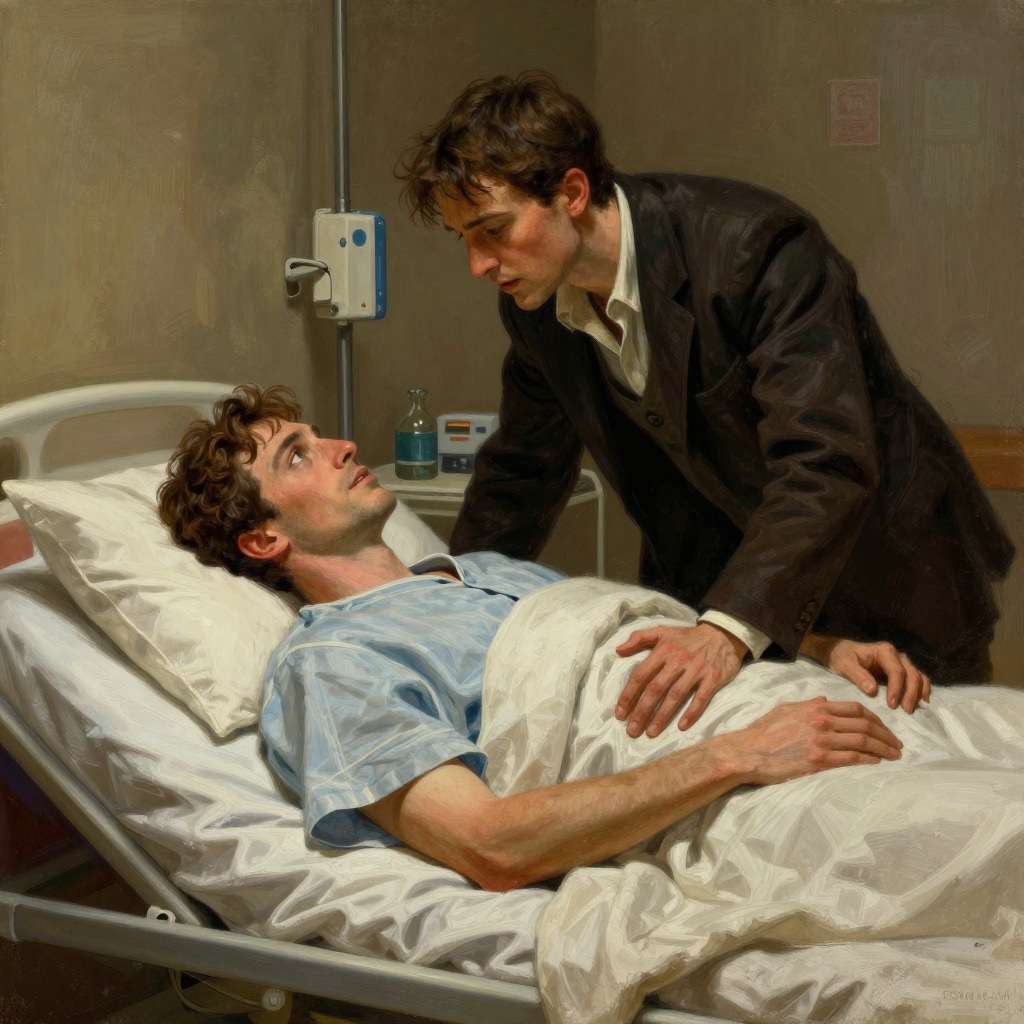
Robert Langdon awakens in a hospital bed in Florence, Italy, with no memory of how he got there. He has a head wound and is suffering from retrograde amnesia. He is attended by Dr. Sienna Brooks and Dr. Marconi. Langdon is disoriented and confused, unable to recall the past two days. He has a recurring nightmare of a veiled woman and a bloodred river.
Early morning, Monday, March 18
Vayentha's Hospital Shooting
While Langdon is being treated, a spike-haired woman, Vayentha, arrives at the hospital and shoots Dr. Marconi, who dies. Sienna Brooks locks the door and helps Langdon escape through a bathroom and stairwell. They flee the hospital in a taxi, with Vayentha in pursuit, firing at them. The taxi driver speeds away, and Sienna removes an IV catheter from Langdon's arm, causing him to lose consciousness.
Early morning, Monday, March 18
Discovery of the Biotube and Projector
Sienna takes Langdon to her apartment. She reveals a hidden pocket in his jacket containing a titanium biotube with a biohazard symbol. Langdon opens it with his thumbprint, finding a carved bone cylinder seal. Inside the seal is a modern laser pointer that projects a modified version of Botticelli's Map of Hell. The image contains hidden letters and a plague doctor figure.
Early morning, Monday, March 18
Deciphering the Code Cerca Trova
Langdon and Sienna analyze the projected image. Langdon realizes the ten letters in the Malebolge, CATROVACER, are a scrambled version of the Italian phrase 'cerca trova' (seek and find). This phrase is a famous hidden message in Giorgio Vasari's mural in the Palazzo Vecchio. Langdon also realizes his delirious mumbling of 'very sorry' was actually 'Vasari, Vasari.'
Early morning, Monday, March 18
The Taxi Chase
After leaving the hospital, Langdon and Sienna are pursued by Vayentha. They escape in a taxi, which is shot at. The taxi driver, frightened, speeds away. Sienna removes the IV catheter from Langdon's arm, causing him to lose consciousness. They arrive at Sienna's apartment building.
Morning, Monday, March 18
The Trike Chase
After the SRS team storms Sienna's apartment, she and Langdon escape on a Trike. They are pursued by the SRS team in a van. A soldier fires at them, but they escape. During the chase, Langdon sees the silver-haired woman from his visions in the back of the van, apparently a captive.
Morning, Monday, March 18
Jumping the Wall into Boboli Gardens
Langdon and Sienna are trapped by a police roadblock at the Porta Romana. They hide behind a Porta-Potty and then blend in with a group of art students to enter the Istituto Statale d'Arte. Following a student's tip, they jump over a wall into the Boboli Gardens to evade the police and the SRS team.
Morning, Monday, March 18
Sienna's Dim Mak on the Guard
Langdon and Sienna reach the Buontalenti Grotto in the Boboli Gardens. Langdon tries to open a small gray door, which is locked from the inside. Sienna uses a pressure-point technique (dim mak) to subdue the guard, Ernesto Russo, who opens the door. They enter the Vasari Corridor.
Previous night, Sunday, March 17
Theft of Dante's Death Mask
Security footage from the Palazzo Vecchio reveals that Langdon and Ignazio Busoni stole Dante's death mask from its display case. Langdon, wearing gloves, removes the mask and places it in a Ziploc bag, which Busoni puts in his briefcase. They do this while Marta Alvarez is away from the andito.
Late night, Sunday, March 17
Ignazio Busoni Dies of Heart Attack
Ignazio Busoni suffers a fatal heart attack in an alleyway near the Duomo. Before dying, he leaves a voicemail for his secretary, Eugenia Antonucci, with a message for Langdon. He says the mask is safely hidden and gives a clue: 'Paradise Twenty-five.' He also says 'the gates are open to you.'
Late morning, Monday, March 18
Vayentha Falls to Her Death
In the attic of the Palazzo Vecchio, Vayentha confronts Langdon. She aims her gun at him, but Sienna attacks her from behind. Vayentha falls over a railing, crashes through Vasari's Apotheosis of Cosimo I canvas, and plummets to the floor of the Hall of the Five Hundred, dying instantly.
Late morning, Monday, March 18
Duke of Athens Stairway Escape
After Vayentha's death, Langdon and Sienna escape the Palazzo Vecchio through the Duke of Athens Stairway. They exit through a small door onto the Via della Ninna. Sienna removes her wig, revealing her bald head, and puts it on Langdon as a disguise. They blend into the crowd.
Late morning, Monday, March 18
Baptistry Escape
Langdon and Sienna enter the Baptistry of San Giovanni through the Gates of Paradise, which Ignazio Busoni left unlocked. They find Dante's death mask hidden in the baptismal font. Langdon wipes off the seven Ps on the back of the mask, revealing a hidden poem written by Bertrand Zobrist.
Late afternoon, Monday, March 18
Light Well Escape Attempt
In St. Mark's Basilica, Langdon and Sienna are cornered by the SRS team. They descend into the crypt and attempt to escape through a light well. Sienna climbs out, but Langdon is captured by Agent Brüder's men and dragged back inside. Sienna flees into the crowd.
Late evening, Monday, March 18
Discovery of Dissolved Solublon Bag
Agent Brüder wades into the lagoon of the Yerebatan Sarayi cistern. He finds Zobrist's titanium plaque but discovers the Solublon bag has already dissolved. Only a tattered remnant remains attached to the tether. The virus has been released.
Late evening, Monday, March 18
Sienna Reveals the Sterility Plague
After the stampede at the cistern, Langdon chases Sienna to the Spice Bazaar and the waterfront. She steals a boat but then returns. She confesses that Zobrist created a sterility plague, a viral vector that randomly renders one-third of the human population infertile. She explains that the virus has already spread globally.
Late night, Monday, March 18
Sienna Agrees to Cooperate with WHO
Langdon convinces Sienna to trust him and Dr. Sinskey. They go to the Swiss Consulate in Istanbul, where Sienna reveals the full details of Zobrist's letter to Sinskey. Sinskey, despite her initial distrust, agrees to work with Sienna and invites her to a WHO summit in Geneva.
Late evening, Monday, March 18
Stampede at the Cistern
Sienna, disguised in a burka, runs through the cistern, shouting in Turkish and causing a panic. The crowd stampedes toward the exit. Sinskey orders the doors sealed, but Sienna escapes through the closing doors. Langdon chases her but is caught in the stampede and pushed out.
Late evening, Monday, March 18
Spice Bazaar Chase
Langdon pursues Sienna through the streets of Istanbul. She boards a bus, but Langdon follows in a Bentley. Sienna sees him and jumps off the bus, running into the Spice Bazaar. Langdon chases her through the crowded market, but she escapes by knocking over a barrel of chestnuts.
Late evening, Monday, March 18
Boat Theft and Return
Sienna steals a powerboat from the docks and speeds away. Langdon watches from the shore. After a moment, she turns the boat around and returns. She tells Langdon she can't run anymore and confesses the truth about Zobrist's sterility plague.
Two years before the main story
Zobrist Confronts Sinskey at CFR
Bertrand Zobrist, a brilliant geneticist, summons Dr. Elizabeth Sinskey to the Council on Foreign Relations in New York. He presents his apocalyptic views on overpopulation and criticizes the WHO's inaction. He suggests that a drastic culling of the population is necessary. Sinskey is horrified and threatens to have him watched as a potential bioterrorist.
Six days before the main story
Zobrist's Suicide
After being chased by WHO agents, Bertrand Zobrist flees up the Badia tower in Florence and jumps to his death. His suicide is witnessed by Sienna Brooks, who had been searching for him. Zobrist's death triggers a series of events, including the Consortium's efforts to fulfill his final wishes.
Afternoon, a day after the main events
Langdon Returns Dante's Death Mask
Langdon returns to Florence and attends Ignazio Busoni's funeral. Afterward, he goes to the Palazzo Vecchio and secretly returns Dante's death mask to its display case. He leaves the mask with the hidden poem on its back, now a permanent part of its history.
Prologue, a few days before the main story
The Shade's Suicide
A man known only as the Shade flees through Florence, pursued by unknown assailants. He climbs the Badia tower and, after a brief confrontation, leaps to his death. Before jumping, he speaks of his creation, Inferno, which he describes as a gift to the future, a salvation for mankind. He believes his sacrifice will protect his masterpiece from those who would stop it.
Early morning, Monday, March 18
Vayentha's Hospital Shooting
While Langdon is being treated, a spike-haired woman, Vayentha, arrives at the hospital and shoots Dr. Marconi, who dies. Sienna Brooks locks the door and helps Langdon escape through a bathroom and stairwell. They flee the hospital in a taxi, with Vayentha in pursuit, firing at them. The taxi driver speeds away, and Sienna removes an IV catheter from Langdon's arm, causing him to lose consciousness.
Early morning, Monday, March 18
The Taxi Chase
After leaving the hospital, Langdon and Sienna are pursued by Vayentha. They escape in a taxi, which is shot at. The taxi driver, frightened, speeds away. Sienna removes the IV catheter from Langdon's arm, causing him to lose consciousness. They arrive at Sienna's apartment building.
Morning, Monday, March 18
The Trike Chase
After the SRS team storms Sienna's apartment, she and Langdon escape on a Trike. They are pursued by the SRS team in a van. A soldier fires at them, but they escape. During the chase, Langdon sees the silver-haired woman from his visions in the back of the van, apparently a captive.
Morning, Monday, March 18
Jumping the Wall into Boboli Gardens
Langdon and Sienna are trapped by a police roadblock at the Porta Romana. They hide behind a Porta-Potty and then blend in with a group of art students to enter the Istituto Statale d'Arte. Following a student's tip, they jump over a wall into the Boboli Gardens to evade the police and the SRS team.
Morning, Monday, March 18
Sienna's Dim Mak on the Guard
Langdon and Sienna reach the Buontalenti Grotto in the Boboli Gardens. Langdon tries to open a small gray door, which is locked from the inside. Sienna uses a pressure-point technique (dim mak) to subdue the guard, Ernesto Russo, who opens the door. They enter the Vasari Corridor.
Previous night, Sunday, March 17
Theft of Dante's Death Mask
Security footage from the Palazzo Vecchio reveals that Langdon and Ignazio Busoni stole Dante's death mask from its display case. Langdon, wearing gloves, removes the mask and places it in a Ziploc bag, which Busoni puts in his briefcase. They do this while Marta Alvarez is away from the andito.
Late night, Sunday, March 17
Ignazio Busoni Dies of Heart Attack
Ignazio Busoni suffers a fatal heart attack in an alleyway near the Duomo. Before dying, he leaves a voicemail for his secretary, Eugenia Antonucci, with a message for Langdon. He says the mask is safely hidden and gives a clue: 'Paradise Twenty-five.' He also says 'the gates are open to you.'
Late morning, Monday, March 18
Vayentha Falls to Her Death
In the attic of the Palazzo Vecchio, Vayentha confronts Langdon. She aims her gun at him, but Sienna attacks her from behind. Vayentha falls over a railing, crashes through Vasari's Apotheosis of Cosimo I canvas, and plummets to the floor of the Hall of the Five Hundred, dying instantly.
Late morning, Monday, March 18
Duke of Athens Stairway Escape
After Vayentha's death, Langdon and Sienna escape the Palazzo Vecchio through the Duke of Athens Stairway. They exit through a small door onto the Via della Ninna. Sienna removes her wig, revealing her bald head, and puts it on Langdon as a disguise. They blend into the crowd.
Late morning, Monday, March 18
Baptistry Escape
Langdon and Sienna enter the Baptistry of San Giovanni through the Gates of Paradise, which Ignazio Busoni left unlocked. They find Dante's death mask hidden in the baptismal font. Langdon wipes off the seven Ps on the back of the mask, revealing a hidden poem written by Bertrand Zobrist.
Late afternoon, Monday, March 18
Light Well Escape Attempt
In St. Mark's Basilica, Langdon and Sienna are cornered by the SRS team. They descend into the crypt and attempt to escape through a light well. Sienna climbs out, but Langdon is captured by Agent Brüder's men and dragged back inside. Sienna flees into the crowd.
Late evening, Monday, March 18
Discovery of Dissolved Solublon Bag
Agent Brüder wades into the lagoon of the Yerebatan Sarayi cistern. He finds Zobrist's titanium plaque but discovers the Solublon bag has already dissolved. Only a tattered remnant remains attached to the tether. The virus has been released.
Late evening, Monday, March 18
Sienna Reveals the Sterility Plague
After the stampede at the cistern, Langdon chases Sienna to the Spice Bazaar and the waterfront. She steals a boat but then returns. She confesses that Zobrist created a sterility plague, a viral vector that randomly renders one-third of the human population infertile. She explains that the virus has already spread globally.
Late night, Monday, March 18
Sienna Agrees to Cooperate with WHO
Langdon convinces Sienna to trust him and Dr. Sinskey. They go to the Swiss Consulate in Istanbul, where Sienna reveals the full details of Zobrist's letter to Sinskey. Sinskey, despite her initial distrust, agrees to work with Sienna and invites her to a WHO summit in Geneva.
Late evening, Monday, March 18
Stampede at the Cistern
Sienna, disguised in a burka, runs through the cistern, shouting in Turkish and causing a panic. The crowd stampedes toward the exit. Sinskey orders the doors sealed, but Sienna escapes through the closing doors. Langdon chases her but is caught in the stampede and pushed out.
Late evening, Monday, March 18
Spice Bazaar Chase
Langdon pursues Sienna through the streets of Istanbul. She boards a bus, but Langdon follows in a Bentley. Sienna sees him and jumps off the bus, running into the Spice Bazaar. Langdon chases her through the crowded market, but she escapes by knocking over a barrel of chestnuts.
Late evening, Monday, March 18
Boat Theft and Return
Sienna steals a powerboat from the docks and speeds away. Langdon watches from the shore. After a moment, she turns the boat around and returns. She tells Langdon she can't run anymore and confesses the truth about Zobrist's sterility plague.
Two years before the main story
Zobrist Confronts Sinskey at CFR
Bertrand Zobrist, a brilliant geneticist, summons Dr. Elizabeth Sinskey to the Council on Foreign Relations in New York. He presents his apocalyptic views on overpopulation and criticizes the WHO's inaction. He suggests that a drastic culling of the population is necessary. Sinskey is horrified and threatens to have him watched as a potential bioterrorist.
Six days before the main story
Zobrist's Suicide
After being chased by WHO agents, Bertrand Zobrist flees up the Badia tower in Florence and jumps to his death. His suicide is witnessed by Sienna Brooks, who had been searching for him. Zobrist's death triggers a series of events, including the Consortium's efforts to fulfill his final wishes.
Afternoon, a day after the main events
Langdon Returns Dante's Death Mask
Langdon returns to Florence and attends Ignazio Busoni's funeral. Afterward, he goes to the Palazzo Vecchio and secretly returns Dante's death mask to its display case. He leaves the mask with the hidden poem on its back, now a permanent part of its history.