The Stars
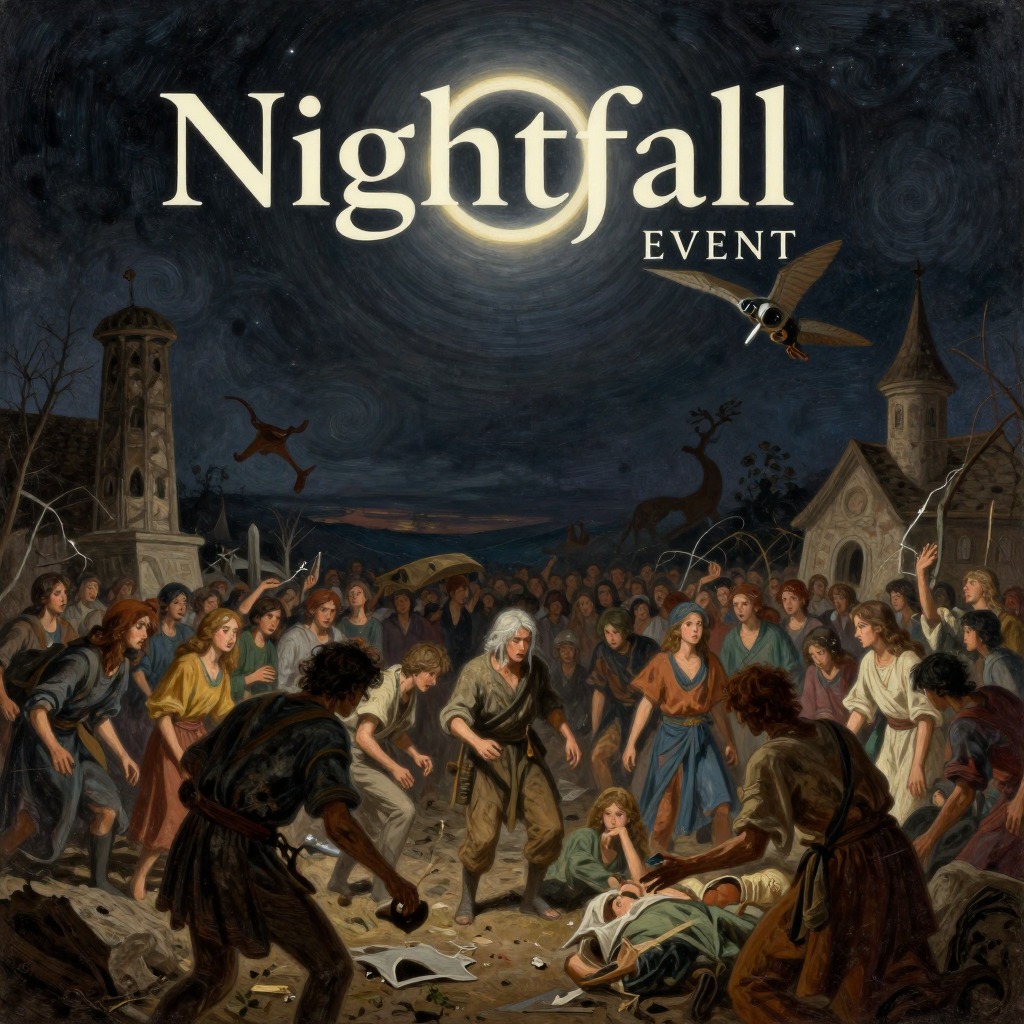
The Stars are the central apocalyptic phenomenon in the novel, a vast multitude of distant suns that become visible only when Kalgash's six familiar suns are completely obscured during a total eclipse of Dovim. Their sudden, overwhelming appearance triggers universal madness, mass conflagrations, and the collapse of civilization, fulfilling the prophecies of the Apostles of Flame and confirming the cyclical destruction of worlds.
Definition and Nature
The Stars are not the six suns of the Kalgash system. The Apostles of Flame, through their spokesman Folimun 66, distinguish them explicitly: "the Stars are specifically different from the six suns" . In their scripture, the Book of Revelations, the Stars are described as "the instruments of the gods" that will "shoot flame down out of a black sky" . The astronomer Beenay 25, speculating before the eclipse, theorizes that the Stars are "other suns in the universe" so far away that their light is normally drowned out by the constant glare of the six nearby suns (E02080–E02081). He calculates that such distant suns, at four to eight light-years away, would appear as small points of light and would not cause detectable gravitational perturbations (E02082–E02084). The Apostles' Book of Revelations speaks of "countless number" of Stars , and Beenay's speculation of a dozen or two is far exceeded by the actual event.
Prophecy and Expectation
The Apostles of Flame have long predicted the coming of the Stars. Mondior 71, the cult's figurehead, declares that when the Year of Godliness ends, "the suns will all disappear and these hideous Stars of his will shoot flame down out of a black sky to wipe out the wicked" . Folimun 66, the real leader, quotes the Book of Revelations: "From the Stars there then reached down the Heavenly Flames, that was the bearer of the will of the gods; and where the flames touched, the cities of Kalgash were consumed even to utter destruction" . The scientists, initially skeptical, come to believe that the eclipse will bring Darkness but not the Stars. Athor 77, the Observatory director, admits, "I have no idea. That part of the Apostles' teachings may very well be a fable" . The astronomer Faro 24 and Yimot 70 attempt to simulate the Stars by punching holes in a roof and covering them with caps, but when they pull the switch, they experience "nothing" — just a roof with holes and bright points of light . This experiment fails to produce the psychological impact of the real event.
The Appearance of the Stars
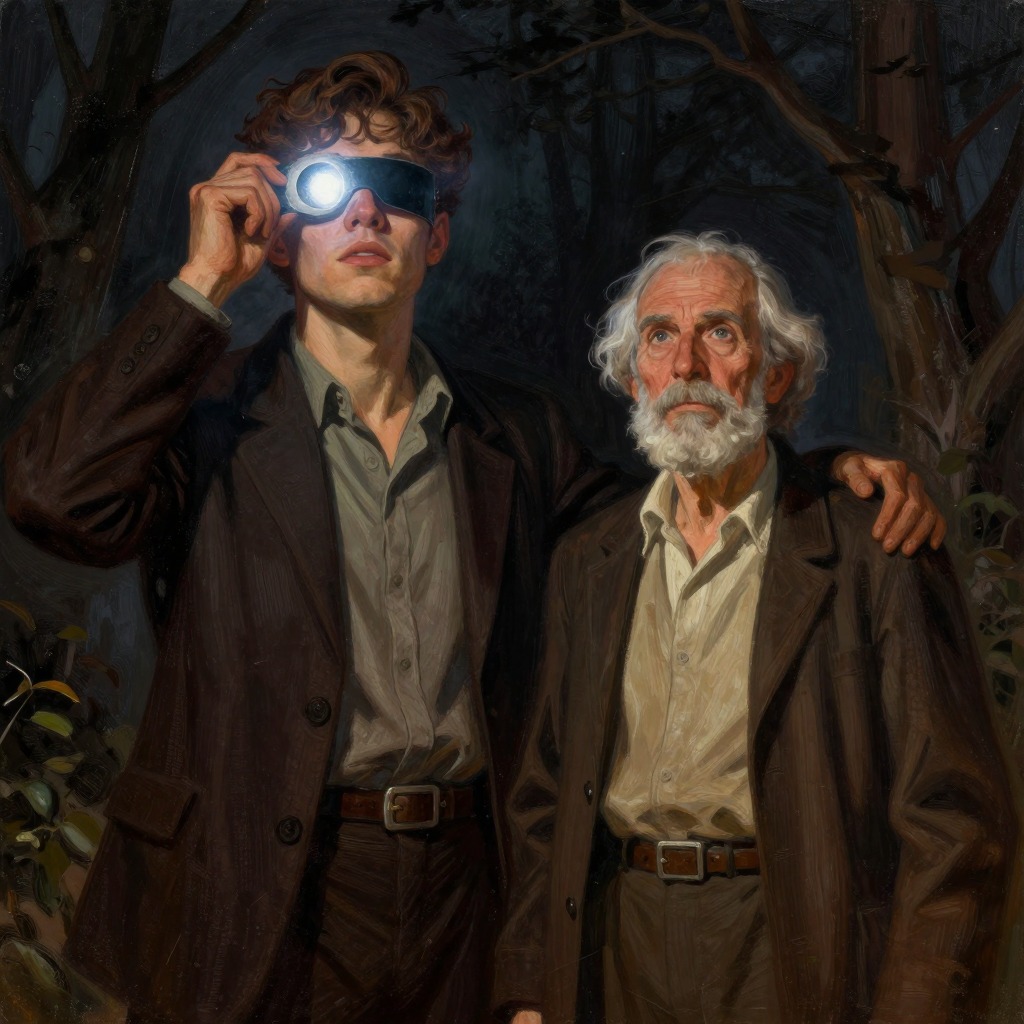
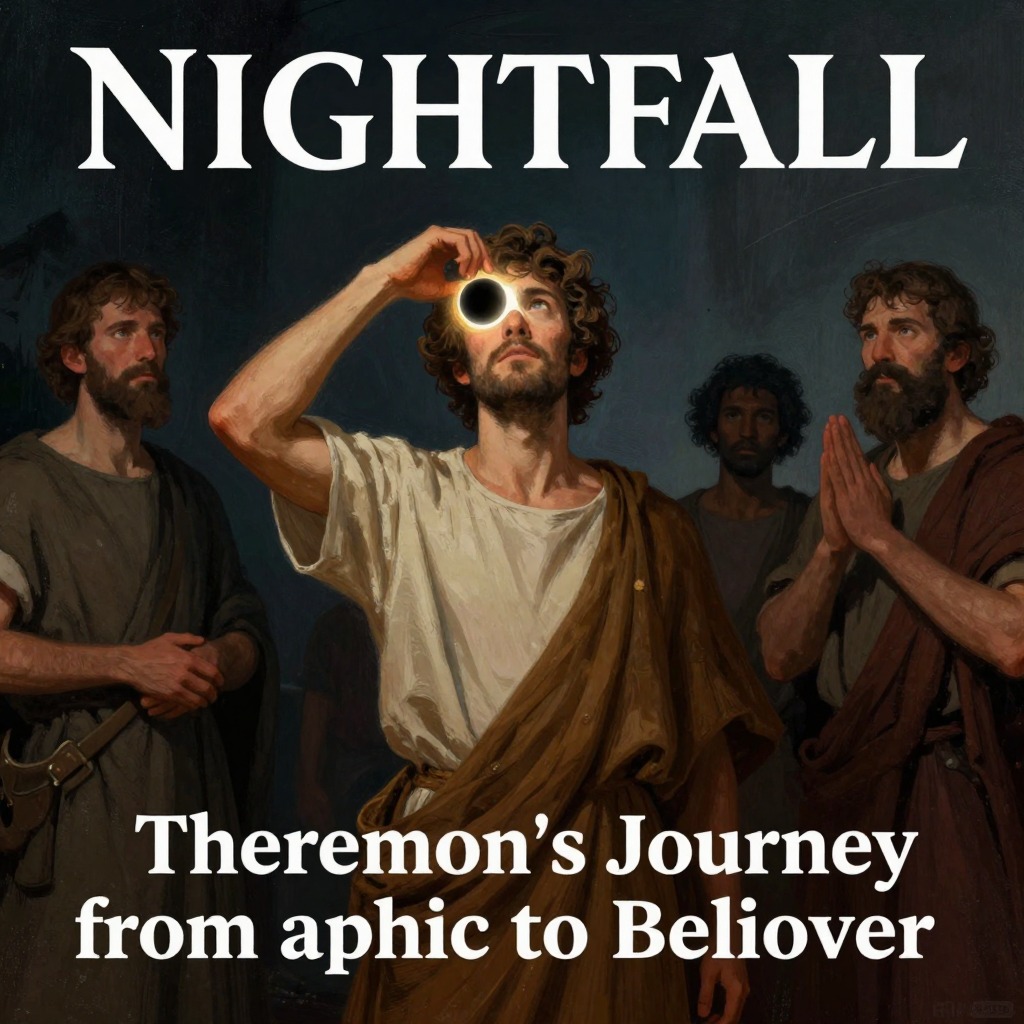
When the eclipse reaches totality and Dovim is completely obscured, the Stars appear. The journalist Theremon 762, who had mocked the predictions, witnesses them: "Through it shone the Stars! Not the one or two dozen of Beenay's pitiful theory. There were thousands of them, blazing with incredible power, one next to another next to another next to another, an endless wall of them, forming a dazzling shield of terrifying light that filled the entire heavens" (E02267–E02268). The light is described as "soul-searing splendor" and "more frighteningly cold in its awful indifference than the bitter wind" . The impact is immediate and devastating. Theremon feels his mind "shrinking down to a tiny cold point under that unceasing onslaught" . He realizes he is going mad: "It was very horrible to go mad and know that you were going mad" . The astronomer Athor 77, who had dedicated his life to understanding the heavens, breaks down completely, crying, "Stars—all the Stars—we didn't know at all. We didn't know anything. We thought six stars is a universe" . The graduate student Yimot 70, who sees them only for a few seconds, describes them as "awesome" and says he could feel his mind spinning .
Consequences: Madness and Fire
The appearance of the Stars triggers universal madness. Sheerin 501, the psychologist, had predicted that prolonged Darkness would cause insanity, but the Stars amplify the effect beyond anything he imagined. The mob that storms the Observatory is driven by the sight of the Stars, and the fires that consume Saro City are lit by people desperate for light. As Sheerin explains, "When the Darkness comes, people will want light—of any sort. Torches. Bonfires. Burn anything!" . The archaeological evidence from the Hill of Thombo, discovered by Siferra 89, shows that this cycle of destruction has occurred repeatedly at intervals of approximately two thousand and forty-nine years, each time accompanied by the appearance of the Stars (E01406–E01408). The Thombo tablets, which are later stolen by the Apostles, contain accounts of the destruction of cities by fire and the work of "angry gods who periodically find it necessary to punish mankind for wickedness" . The Apostles' Book of Revelations describes the aftermath: "the souls of men departed from them and fled upward to the Stars, and their abandoned bodies became even as beasts" .
Aftermath and Significance
After the eclipse ends and Onos rises, the Stars disappear, but their impact lingers. Theremon, recovering his sanity, remembers the Stars as a "terrible, hideous, unthinkable cold blaze" . The world is left in ruins, with fires still burning and the population largely insane. The Apostles of Flame, who had prepared for the event, emerge as the dominant force, claiming that their prophecies have been fulfilled. Folimun 66 reveals that the Stars are a natural phenomenon, not a divine punishment, but he intends to use the fear they generated to establish a theocratic government (E03621–E03622). The novel ends with Theremon and Siferra deciding to join the Apostles, recognizing that the Stars have created a world where only a charismatic religious authority can restore order. The Stars thus serve as both the instrument of destruction and the catalyst for a new, potentially oppressive, social order.